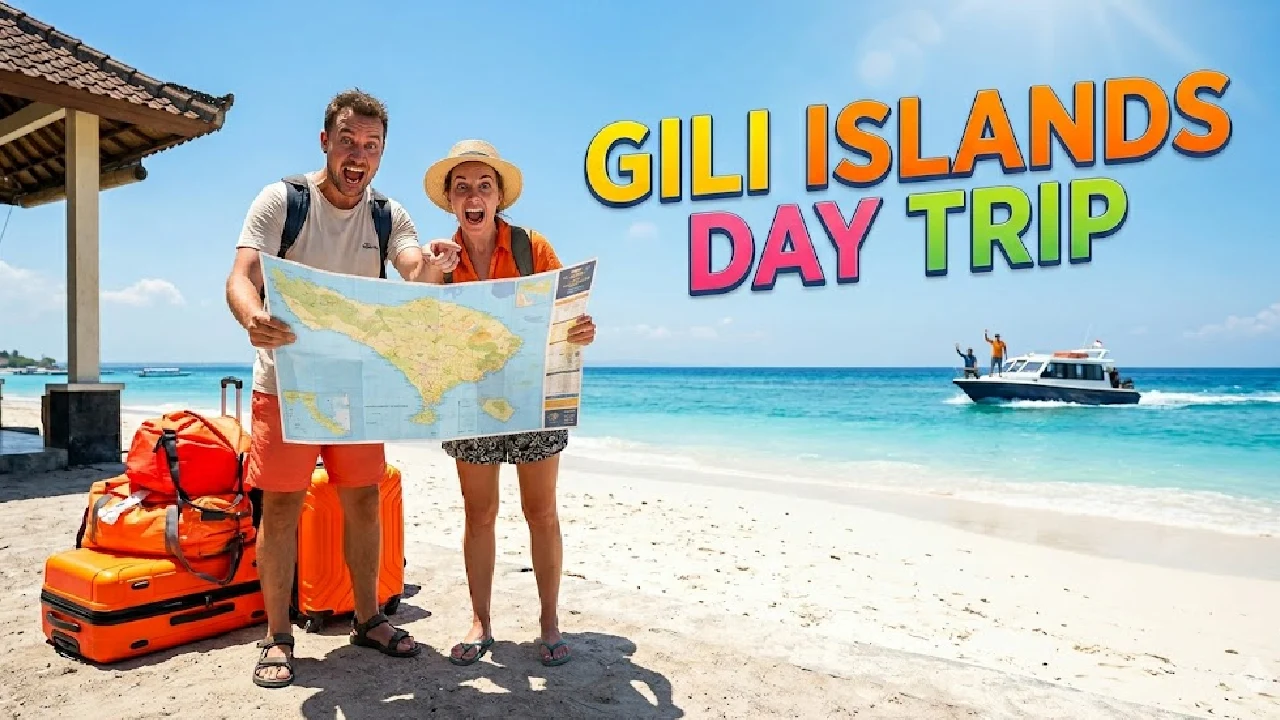
Let’s be ruthlessly honest: navigating Bali’s legendary gridlock can sometimes trigger a desperate urge to escape to a pristine, exhaust-free tropical haven. Visualizing powdery white sand and crystal-clear turquoise water is incredibly tantalizing. However, the moment you actually sit down to map out the logistics—from pinpointing the optimal departure harbor to battling the very real anxiety of seasickness—the whole endeavor can quickly morph into a massive headache.
You are definitely not alone in this! Countless travelers find themselves completely overwhelmed when planning a gili islands day trip from bali, especially given the sheer volume of aggressive gili island tour from bali packages floating around online that often overpromise and underdeliver. Well, consider this article your ultimate logistical cheat sheet. I am going to unapologetically dismantle the entire process. From mapping out the absolute most efficient kuta to gili islands transit route and comparing high-speed ferry fleets, to revealing clandestine coral reefs where you can casually swim alongside ancient sea turtles. Grab a coffee, pull out your itinerary planner, and let’s optimize your island-hopping adventure so it remains 100% drama-free!
Demystifying the Gili Islands Concept
Before diving into the nitty-gritty transit details, we need to completely obliterate one of the most pervasive tourist misconceptions out there. The Gilis project an energetic frequency that is drastically different from mainland Bali.
Geographically Located in Lombok, NTB
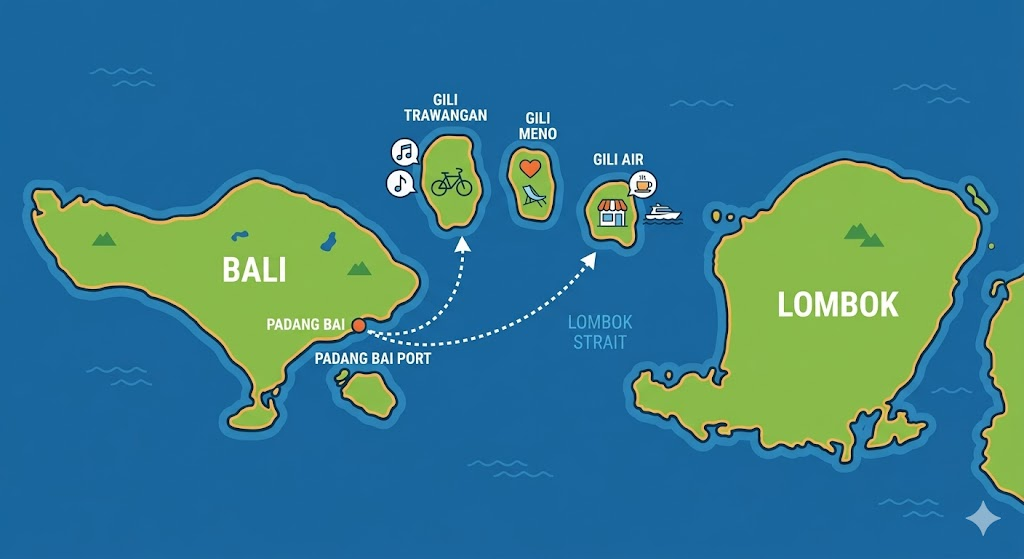
A shocking number of visitors assume the Gilis are just tiny specks hugging the Balinese coastline, similar to Nusa Penida. In reality, search engines and administrative borders clearly recognize the Gilis as territory belonging to Lombok, West Nusa Tenggara (NTB) [1]. Consequently, embarking on this journey means you are literally crossing the Lombok Strait—a formidable deep-water trench that acts as the Wallace Line, dividing the ecozones of Asia and Australasia. Navigating this open ocean stretch typically demands a solid 1.5 to 2.5 hours, heavily dependent on your chosen launchpad [2].
Three Islands, Three Drastically Different Personalities
The “Gilis” is a collective term for a micro-archipelago of three distinct islands. Each boasts a radically different character profile, making it absolutely crucial to align your choice with your personal travel style [3]:
- Gili Trawangan (Gili T): The High-Octane Party Hub. As the largest and undeniably most chaotic sibling, this is where the action happens. If your perfect day involves aggressive snorkeling, bouncing between vibrant beach clubs, and dancing until sunrise, Gili T is your undisputed playground
[3]. - Gili Air: The Perfect Equilibrium. Gili Air masterfully splices the infectious social energy of Trawangan with the isolated serenity of Meno
. Expect wonderfully safe swimming beaches, chic acoustic cafes, and a remarkably welcoming atmosphere that perfectly suits families and slow-traveling backpackers. - Gili Meno: The Secluded Honeymoon Sanctuary. Sandwiched in the middle, Meno is the smallest, quietest, and least developed of the trio
[3]. You won’t find bustling paved roads here—just profound silence and uninterrupted coastal beauty. If absolute privacy or a deeply romantic escape is the ultimate goal, Meno delivers a flawless castaway experience “.
Why is this Destination Peaking in 2024?
The allure of the Gilis extends far beyond basic beach aesthetics. It’s the intoxicating blend of painstakingly restored marine ecology and an aggressively slow-paced lifestyle that compels people to cross the ocean.
The Intoxicating Charm of a Motor-Free Utopia
The absolute most iconic regulation across the Gilis is the strict, uncompromising ban on motorized vehicles [4]. You won’t find a single car or scooter here. Instead, the island pulses to the rhythm of bicycles, walking tourists, and Cidomos—traditional horse-drawn carts “. While the ethics of Cidomos are frequently debated online, local cooperatives and NGOs like Horses of Gili are actively enforcing stricter welfare regulations to ensure these animals are protected [5]. Breathing in an atmosphere that is 100% devoid of toxic exhaust fumes is a profound luxury in the modern travel landscape.
Groundbreaking Marine Conservation (Biorocks & Turtles)
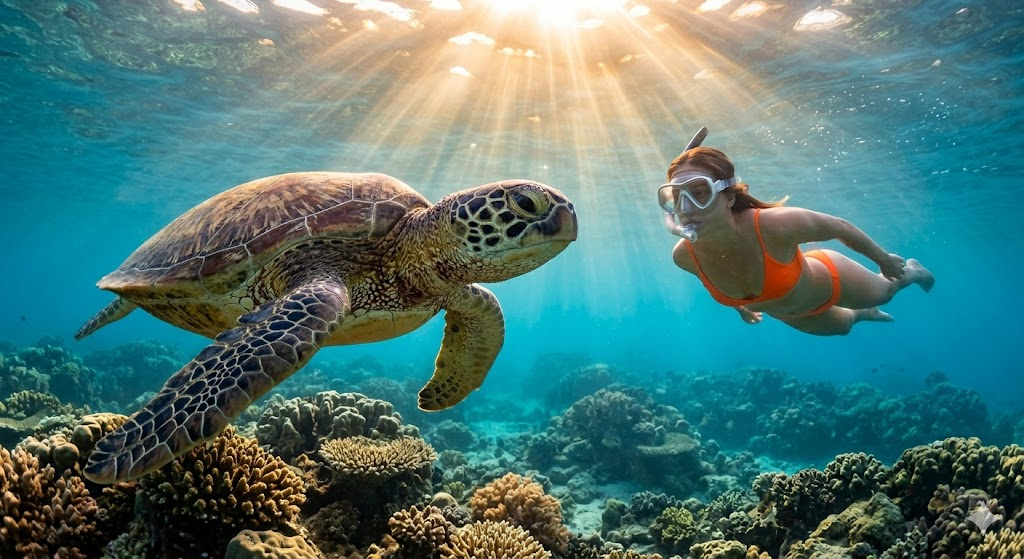
Decades ago, destructive blast fishing severely traumatized the local reefs [6]. Today, however, the underwater ecosystem is thriving thanks to the relentless efforts of the Gili Eco Trust and their implementation of Biorock technology [6]. By pulsing low-voltage electricity through submerged steel structures, they literally supercharge coral growth [6]. Furthermore, the islands operate dedicated turtle hatcheries, safely incubating eggs and protecting vulnerable hatchlings from predators before releasing them into their natural habitat [7].
Epic Underwater Art Installations

If you’ve seen viral photos of the Gilis, you’ve likely seen The Nest. Created by visionary sculptor Jason deCaires Taylor, this breathtaking bioremediation project features 48 life-size human figures arranged in a hauntingly beautiful circle just 4 meters beneath the surface off Gili Meno [8]. Now completely colonized by vibrant corals and tropical fish, free-diving here feels exactly like exploring a lost, sunken civilization [8].
Executing Your Kuta to Gili Islands Transit Masterplan
Let’s break down the tactical execution. For travelers anchoring their stay in southern Bali (Kuta, Seminyak, or Legian), your harbor selection will literally make or break your entire day.
Step 1: Navigating the Land Transfer Conundrum
The ultimate secret to a flawless kuta to gili islands transition is geographical leverage [2].
- Via Serangan / Sanur: This is the modern traveler’s holy grail. Utilizing the Bali Mandara Toll Road, you can zip from Kuta to Serangan Harbor in a breezy 20-30 minutes
[2]. It allows you to sleep in and absolutely drastically reduces your exposure to Bali’s infamous central gridlock. - Via Padang Bai: Situated far in East Bali, reaching this port from Kuta demands a grueling 1.5 to 2-hour overland drive
[2]. While the subsequent boat ride is shorter, the early morning land transit is often exhausting.
Step 2: Selecting Your Fast Boat Arsenal
Once at the harbor, it’s time to ride the waves. Depending on the route, you’re looking at 1.5 to 2 hours from Padang Bai, or roughly 2.5 hours from the southern ports [2]. Here is how the operator tiers stack up [9]:
| Operator Category | Example Fleet | One-Way Price Estimate | Defining Perks |
| Premium / Luxury | Blue Water Express | $45 – $65 | Air-conditioned VIP lounges, cutting-edge vessel stabilization, impeccable safety records, and complimentary amenities [9]. |
| Mid-Range / Comfort | Eka Jaya Fast Ferry | $35 – $50 | Massive, ultra-stable aluminum vessels that aggressively combat seasickness. Features a fantastic open rooftop deck for sunbathing [9]. |
| Budget / Backpacker | Wahana Virendra | $17 – $28 | Wallet-friendly, highly frequent departure schedules, and no-frills reliability for the classic backpacker [9]. |
Step 3: The Highly Compressed Day Trip Itinerary
If you are stubbornly committed to squeezing a gili island tour from bali into a single 24-hour window, prepare for a military-grade schedule [10]:
- 06:30 – 08:00: Pre-dawn hotel extraction and harbor transfer
[10]. - 09:00 – 11:30: Ticketing chaos and the actual open-water crossing
[10]. - 12:00 – 15:00: Your actual island time. A chaotic 3-hour window to cram in a quick snorkel tour, snap a photo at the statues, and inhale a hurried lunch
[10]. - 15:00 – 15:30: Sprinting back to the pier to catch the mandatory final fast boat returning to Bali
[10]. - 18:00 – 20:00: Arriving back on the mainland and sitting in evening rush-hour traffic
[10].
Advanced Strategies: Why Staying Overnight Obliterates the Day Trip
Here is the ultimate truth bomb: While street vendors will aggressively push a gili islands day trip from bali, practically every seasoned backpacker and travel forum veteran agrees that an in-and-out mission is a massive disservice to yourself [11].
Evading the Dreaded “Transit Fatigue”
Imagine spending upwards of 7 hours confined to minivans and ferries, just to unlock 3 measly hours of beach time. The Lombok Strait is notoriously choppy, meaning seasickness is a highly probable threat [12]. Committing to a minimum 2-night stay changes the entire dynamic [11]. You gain the freedom to rent a bicycle and loop the island at your own pace, lounge on the iconic overwater swings during high tide, and critically—you get to witness the legendary sunsets! Because the last boat to Bali leaves at 3:00 PM, day-trippers are physically incapable of experiencing the island’s famous golden hour [10].
Unlocking Authentic Sasak Culinary Experiences
A rushed 3-hour visit restricts your culinary exploration to basic, overpriced beachfront Nasi Goreng. Staying overnight grants you access to the spectacular nocturnal food scenes and authentic Lombok (Sasak) cuisine [1]. You absolutely must devour:
- Ayam Taliwang: A violently flavorful, smoky grilled chicken drenched in a marinade of bird’s eye chilies, shrimp paste, and palm sugar
[1]. - Plecing Kangkung: The mandatory sidekick to Taliwang. Fresh water spinach smothered in a fiery, raw tomato and shrimp paste sambal
[1]. - Sate Rembiga: Incredibly tender, heavily spiced beef skewers that ditch the standard peanut sauce for a sharp, unapologetically bold local marinade
[1].
Catastrophic Rookie Mistakes to Avoid at All Costs
Do not let poor planning sabotage your tropical aesthetic. Consult this tactical checklist to avoid the traps that routinely ensnare first-timers:
| The Classic Blunder | The Devastating Impact | The Clever Workaround |
| The “Two Kutas” Mix-Up | Booking a driver to “Kuta” and ending up stranded because you selected Kuta Lombok instead of Kuta Bali (or vice versa) [2]. | Always triple-check your port transfer bookings. Kuta Bali requires a 20-min drive to Serangan; Kuta Lombok requires a 1.5-hour drive to Bangsal [2]. |
| Hauling Massive Suitcases | Dragging 25kg of hard-shell luggage through deep sand because there are literally zero cars to help you. | Repack aggressively. Leave your mammoth suitcase at your Bali hotel’s luggage storage and bring a lightweight duffel or backpack. |
| Underestimating the Ocean | Spending the entire transit aggressively vomiting over the side of the boat [12]. | Swallow a motion sickness tablet 30 minutes prior to boarding, and strategically secure a seat in the lower, rear section of the cabin for maximum stability. |
| Expecting Solitude at The Nest | Plunging into the water only to be kicked in the face by 50 other snorkelers vying for the same Instagram shot “. | Charter a private boat at 7:00 AM. You will completely bypass the massive tour groups that dominate the site by mid-morning. |
FAQ – Your Burning Inquiries Answered
Are there direct flights or bridges connecting Bali and the Gilis?
Absolutely not. The ocean trench is far too deep for a bridge, and the islands are far too small for an airport runway. Flying requires transiting through Lombok International Airport, driving 1.5 hours north to a harbor, and catching a speedboat [13]. The direct fast boat from Bali remains the undisputed king of efficiency.
Which specific snorkeling spot guarantees turtle sightings?
If interacting with ancient sea turtles is your primary objective, you need to navigate to Turtle Point on the northeast perimeter of Gili Trawangan [14]. This shallow, seagrass-rich lagoon is a massive feeding ground for Green and Hawksbill turtles [14]. The golden rule? Look, photograph, but never touch or chase them.
Sanur/Serangan or Padang Bai: Which is definitively superior?
It is entirely dictated by your base camp. If you are deeply embedded in Ubud or East Bali, Padang Bai is the logical choice [2]. However, if your villa is located in the southern tourist triangle (Kuta, Seminyak, Canggu), departing from Serangan or Sanur will save you hours of grueling, soul-crushing traffic [2].
Read Also:
- Bali 10 Days Package: The Ultimate 2026 Island Exploration Guide
- Nusa Penida West and East Tour: The Ultimate Full Day Itinerary
Conclusion
So, are the logistical puzzle pieces finally snapping into place for your upcoming gili islands day trip from bali? The formula is actually quite elegant: strategically match your departure harbor to your current location, rigorously vet your fast boat operator, and, for the love of all things travel, try to carve out at least 2 nights for the experience! Giving yourself that buffer allows you to fully digest the rich Sasak cuisine and soak in the surreal, exhaust-free sunsets that make the kuta to gili islands trek so profoundly worthwhile.
Start cross-referencing schedules for operators like Blue Water Express or Eka Jaya right now, and definitely drop a comment below letting me know which island vibe (Trawangan, Meno, or Air) you are leaning towards! If you’re still tangled up in transit confusion, leave your exact itinerary in the comments and I’ll personally help you untangle it. Share this guide with your travel crew to ensure your upcoming island hop is seamlessly executed and entirely devoid of drama. Have an epic trip!