
Have you ever stared at those jaw-dropping drone shots of Bali’s southern cliffs and caught yourself wishing you were soaring up there instead of scrolling on your phone? Let’s be real: booking adventure sports in a foreign country can feel incredibly overwhelming. Between sketchy weather forecasts, hidden fees, and figuring out which cliff to actually jump off, it’s easy to just default to another boring day at a beach club.
But here is the thing—paragliding in South Bali is arguably the most accessible, visceral thrill you can experience on the Island of the Gods. You don’t need a pilot’s license, you don’t need extreme fitness, and you definitely don’t need to empty your bank account. In this comprehensive guide, I am going to break down everything I’ve learned about coastal ridge soaring in Bali. From decoding the pricing tiers to avoiding the dreaded mid-air motion sickness, you’re about to get the inside scoop so you can lock in that unforgettable flight with total confidence.
What is Coastal Ridge Soaring in South Bali?
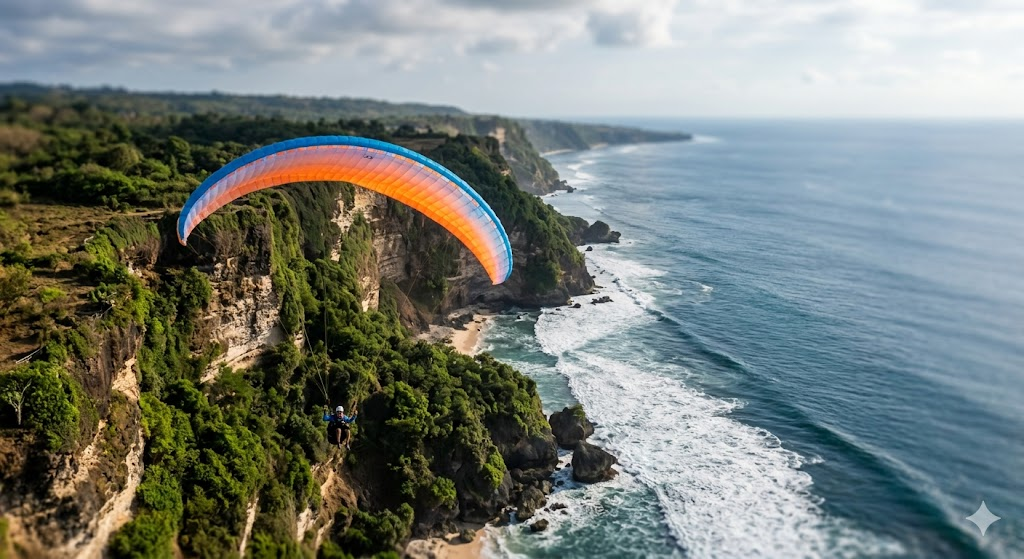
Before you strap yourself into a harness, it helps to understand exactly what kind of aviation magic you are signing up for. Unlike jumping out of a plane, paragliding off the Bukit Peninsula relies on a brilliant aerodynamic phenomenon known as coastal ridge soaring.
When the powerful, consistent trade winds from the Indian Ocean smash into the towering 100-meter limestone cliffs of South Bali, the air has nowhere to go but up. This creates a massive, invisible band of lifting air. You aren’t falling; you are literally surfing the wind currents, gliding parallel to the stunning coastline.
The Tandem Experience: Zero Experience Required
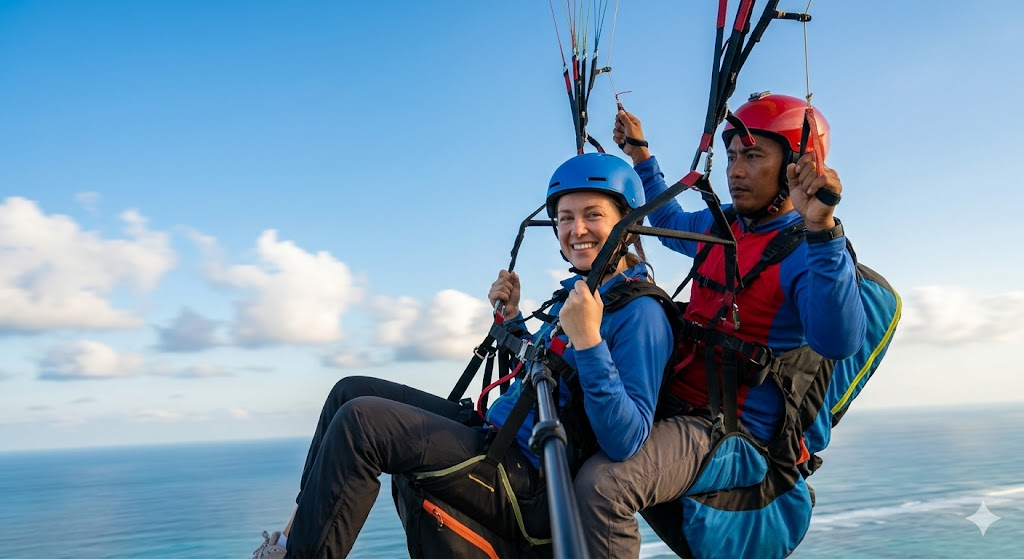
If the thought of piloting an aircraft makes your palms sweat, take a deep breath. Almost all commercial flights in Bali are tandem paragliding operations.
This means you are securely harnessed in front of a highly trained, certified pilot who holds a T2 (Tandem 2) commercial rating. They handle the inflation of the canopy, the complex micro-meteorological calculations, and the precision landing. Your only job? Follow their running instructions at takeoff, sit back in your ergonomic seat, and try not to drop your jaw at the view.
The Top Flight Zones Decoded
Not all cliffs are created equal. Depending on the wind direction and your operator, you will likely launch from one of these primary zones:
- Timbis Beach (Pandawa): The undisputed heavyweight champion of Bali paragliding. Boasting a solid 4.4 rating from over 800 reviews, Timbis offers ultra-smooth wind conditions, beginner-friendly takeoffs, and a massive 10-kilometer coastal flight path.
- Nyang Nyang Beach: For the adrenaline junkies. This secluded spot features aggressive 100-meter cliff launches, powerful lift, and epic views of a half-buried shipwreck. Prepare for a “top landing,” meaning you land exactly where you took off.
- Melasti & Sawangan: Situated near the luxury resorts of Nusa Dua and Ungasan, these spots offer smooth sea breezes and jaw-dropping views of winding cliffside roads and turquoise waters. Operators like Riug Paragliding dominate the Sawangan airspace.
Why You Absolutely Need to Try This
You might be wondering if the experience actually lives up to the hype. Trust me, it absolutely does, and the benefits go way beyond just getting a cool video for your social media.
Unmatched Bird’s-Eye Views of the Indian Ocean
When you are soaring 200 feet above the cliffs, your perspective of Bali changes entirely. You aren’t just looking at the ocean; you are looking through it. The altitude allows you to see the intricate, vibrant reef structures beneath the crystal-clear water, hidden white-sand coves that are inaccessible by foot, and ancient temples perched on the jagged limestone edges. It is a visual feast that no ground-level tourist guide can ever replicate.
The Ultimate Adrenaline Rush (With Maximum Safety)
There is a beautiful paradox to paragliding. The initial launch—running toward the edge of a sheer drop-off—spikes your adrenaline and triggers your fight-or-flight response.
But the moment your feet leave the ground, the chaos vanishes. You are instantly cradled in a silent, serene, bird-like glide. The equipment is rigorously tested, featuring EN-certified harnesses, heavy-duty carabiners, and a mandatory reserve parachute. You get the visceral thrill of extreme sports without the associated terrifying risks.
Seamless Integration with Cultural Itineraries
Here is the real secret: the best paragliding trips don’t just end when you land. Top-tier operators like Bali Agung Tours have mastered the art of the bundle.
Instead of dealing with sketchy taxis, you can book a customized adventure sports package. Picture this: you get picked up from your hotel in a private, climate-controlled car around 10:00 AM. After a 20-minute flight over Timbis, your driver whisks you away to the iconic Uluwatu Temple. You explore the 11th-century cliffside temple, catch the hypnotic Kecak Fire Dance right as the sun sets over the ocean, and cap the night off with a fresh seafood feast on the sands of Jimbaran Bay. That is how you execute a flawless Bali day trip.
Your Step-by-Step Guide to Planning the Perfect Flight
Ready to pull the trigger? Don’t just show up at the cliff and hope for the best. Follow these specific steps to ensure your aerial adventure goes off without a hitch.
Step 1: Budget and Book the Right Package
Let’s talk numbers. For the 2025/2026 season, the standard market rate for a 15-to-20-minute tandem flight ranges between IDR 900,000 and IDR 1,900,000 (roughly $50 to $120 USD).
If you are hunting for bargains, OTAs like Klook or Trip.com sometimes offer entry-level slots for as low as $33 to $44, but these usually strip out extras like hotel transfers or GoPro footage. For a stress-free experience, I highly recommend booking a combo package with a specialized agency. You can contact Bali Agung Tours directly at +62 817-4108-800 to arrange private transfers and bundle your flight with other watersports for around IDR 350,000+ extra per person.
Step 2: Pick the Perfect Season
Paragliding is heavily weather-dependent. The absolute best time to fly is during the Indonesian dry season, from May to October.
During these months, the trade winds blow consistently from the southeast, providing the perfect aerodynamic lift. If you book during the wet season (November to March), you risk sitting on the cliff for hours waiting for the wind to cooperate, or getting canceled entirely due to erratic thermal instability and rain.
Step 3: Check Your Physical Requirements
While you don’t need to be an Olympic athlete, operators enforce strict safety parameters based on equipment engineering limits.
- Weight Limit: You generally need to weigh between 25 kg and 110 kg (up to 242 lbs). Heavy winds might restrict very light passengers.
- Age Range: Welcoming everyone from adventurous 5-year-olds up to fit 65-year-olds.
- Mobility: You must be physically capable of jogging a few steps forward during the takeoff sequence.
“The most crucial part of your flight happens on the ground. When the pilot yells ‘Run!’, you have to lean forward and jog against the pull of the wing. If you sit down too early, you sabotage the launch!”
Step 4: Conquer Motion Sickness Before It Starts
This is the part nobody talks about until it’s too late. Paragliding involves constant three-dimensional movement—swaying, circling, and catching thermal bumps. If you get seasick on boats, you might get “air-sick” in the sky.
To prevent nausea from ruining your flight, avoid eating heavy, greasy meals before takeoff. Stick to light hydration. Consider wearing acupressure wristbands or chewing crystallized ginger right before you launch. Once you are airborne, keep your eyes locked on the distant horizon rather than staring straight down at your spinning feet.
Advanced Tips for Maximum Enjoyment
Want to elevate your experience from good to unforgettable? Keep these insider tactics in mind.
Hunt Down the Hidden Launch Spots
While Timbis is fantastic, it can get incredibly congested during peak season, leading to standby times of up to two hours. If you crave a more serene vibe, ask your operator if they can launch from Gunung Payung instead. It is located just a stone’s throw from Timbis but offers much quieter airspace, gentle winds, and a beautifully unspoiled stretch of white sand below.
Secure Your Media Package Upfront
Do not try to hold your smartphone while flying—it is a massive safety hazard and a great way to donate your iPhone to the Indian Ocean. Almost all premium operators will include a GoPro session in your flight fee, capturing high-definition video and wide-angle photos via a telescoping pole managed by the pilot. Always confirm if the SD card or digital transfer is included in your base price, or if it is a post-flight upsell.
Common Mistakes You Absolutely Must Avoid
Even the most perfect weather can’t save a flight if you make these rookie errors. Here is a quick breakdown of what not to do:
| The Mistake | The Impact | How to Avoid It |
| Dressing too light | Shivering mid-air. It gets remarkably chilly 200 feet up with sustained ocean winds. | Wear a light windbreaker jacket and long pants. |
| Wearing loose sandals | Losing your footwear over the cliff, or tripping during the running launch sequence. | Wear secure, closed-toe sports shoes or sturdy sneakers. |
| Sitting down on launch | Stalling the glider. The wing loses lift and you drag your pilot backward. | Keep your legs moving and stay leaning forward until you are physically lifted off the ground. |
| Hiding your nausea | Projectile vomiting on yourself (or your pilot) mid-flight. | Tell your pilot immediately! They will stop spinning and fly in a smooth, straight line. |
FAQ – Frequently Asked Questions
Is paragliding in Bali actually safe?
Absolutely. The commercial industry in South Bali is highly regulated. You are flying with extensively trained, certified pilots using gear that meets rigorous European (EN) and FAI standards. Every tandem harness is also equipped with a reserve parachute for extreme emergencies. Furthermore, standard packages usually include basic accidental insurance coverage up to IDR 100,000,000.
How long does the actual flight last?
You can expect to be airborne for anywhere between 15 to 30 minutes. However, remember that aviation is at the mercy of Mother Nature. If the wind drops suddenly, your pilot will prioritize safety and land earlier. Plan for the entire excursion—including briefing, gearing up, and waiting for the optimal wind window—to take about 1.5 to 2 hours at the cliff site.
Can I bring my own camera?
Most operators strictly prohibit passengers from holding personal cameras or smartphones during the launch and flight, as it distracts you from following instructions and poses a drop hazard. Rely on the pilot’s mounted GoPro—they know exactly how to get the best angles while keeping their hands free to manage the brake toggles.
Read also:
Wrap Up
So, there you have it! Paragliding in South Bali is far more than just a quick adrenaline hit; it is a meticulously orchestrated aerial ballet that offers the absolute best views of the Bukit Peninsula. Whether you choose the beginner-friendly winds of Timbis or the dramatic drops of Nyang Nyang, pairing your flight with a cultural tour via operators like Bali Agung Tours guarantees a flawless day out.
Just remember to book during the dry season, dress smartly, keep your eyes on the horizon, and most importantly—keep running until your feet leave the ground!
Ready to take the leap? Try reaching out to a local operator to check their 2026 availability today, and let me know in the comments below which cliff you are most excited to launch from! If you found this guide helpful, don’t forget to share it with your travel buddies so you can start planning your epic Bali itinerary together. See you in the sky!