The allure of Bali—with its cascading emerald rice terraces, dramatic clifftop temples, and vibrant coastal beach clubs—continues to captivate travelers from across the globe. For couples based in Maharashtra’s cultural and technological hub, orchestrating a romantic getaway or honeymoon to the Island of the Gods requires a meticulous approach to financial forecasting. Understanding the exact bali trip cost from pune is paramount for executing a seamless vacation without encountering unexpected financial friction. Because no direct flights currently exist between Pune Airport (PNQ) and Ngurah Rai International Airport (DPS) in Denpasar, the journey inherently involves a multi-leg itinerary. This logistical reality dictates that the total expenditure must account for domestic transit to a major international hub like Mumbai, international airfare, mandatory Indonesian government levies, accommodation across various highly segmented price tiers, and internal island transportation.
This comprehensive 2026 budget guide dissects every granular expense a couple will encounter. By evaluating data across budget, mid-range, and ultra-luxury travel archetypes, the following analysis provides the critical insights required to build an accurate, predictable, and shock-proof financial plan for a spectacular Balinese retreat. The economic breakdown ensures that couples can focus entirely on the romantic experience rather than the anxiety of volatile travel economics.
The Domestic Leg: Navigating Transit from Pune to Mumbai

The initial phase of the expedition involves transiting from Pune to Chhatrapati Shivaji Maharaj International Airport (BOM) in Mumbai. Covering an approximate distance of 143 to 168 kilometers depending on the specific route and mode of transport, travelers face a complex trade-off between baseline cost, transit comfort, and luggage capacity. For couples carrying heavy international luggage intended for a week-long vacation, comfort and seamless airport drop-offs often outweigh the absolute lowest price point. The domestic transit market offers a spectrum of options, each carrying distinct financial and logistical implications.
Private Cab Services and Rideshare Aggregators
Hiring a private cab remains the overwhelmingly popular option for couples traveling from Pune to Mumbai. The primary advantage is the convenience of door-to-door service, which eliminates the physical strain of hauling luggage across transit terminals. The pricing landscape for cab services is highly segmented based on the vehicle category, the booking platform, and advance reservation timelines.
Rideshare platforms like Uber Intercity offer highly competitive base rates, with intercity rides occasionally advertised as low as ₹1,187 when promotional discounts are aggressively applied. However, real-world standard sedan pricing on Uber typically hovers around ₹2,153. For couples requiring larger SUVs capable of holding extensive luggage, the cost scales to approximately ₹3,610. While rideshares offer flexibility, they can sometimes lack the predictability required for catching an international flight.
Dedicated outstation cab aggregators provide a more structured, scheduled service, though often at a slight premium. MakeMyTrip, a dominant player in this space, offers a wide selection of vehicles starting from a baseline of ₹1,792 for compact hatchbacks. However, for international travel where comfort is prioritized, larger vehicles are highly recommended. A Toyota Innova Hycross booked via MakeMyTrip ranges between ₹4,564 and ₹5,885, with additional kilometer fares (ranging from ₹24.7/km to ₹89.0/km) activating after a base 144-kilometer allowance. For eco-conscious travelers or those seeking a premium electric vehicle experience, modern options like the BYD eMAX 7 are priced around ₹7,512. At the extreme high end, luxury large cars can reach up to ₹18,486, representing a massive premium for domestic transit.
Premium fleet operators like Kadcabs cater strictly to the SUV and group-travel market, offering fixed rates that eliminate the anxiety of surge pricing. A Toyota Crysta (categorized as SUV Prime) booked through Kadcabs carries a fixed taxi fare of ₹5,360. Base SUV models, such as the Kia Carens, can be secured for a fixed rate of ₹4,350. For couples traveling alongside other families or friends, larger Tempo Travellers (ranging from 13 to 20 seats) scale from ₹9,510 to ₹10,830.
The Railway Network Alternative
For the hyper-budget-conscious traveler willing to navigate transfers, the Indian railway network provides a highly economical alternative. Trains departing from Pune Junction to Mumbai’s Dadar station operate on an hourly basis, with an average travel time of 2 hours and 43 minutes. The financial outlay is dictated entirely by the chosen class of travel. Basic Sleeper Class tickets represent the absolute floor for this journey, costing between ₹170 and ₹210. Moving up the comfort tier, Third AC (3A) tickets range from ₹470 to ₹600, while Second AC (2A) tickets cost between ₹600 and ₹800. For maximum railway comfort, First Class (1A) tickets, including services on the premium Vande Bharat Express, command between ₹1,000 and ₹1,400.
While trains completely avoid the unpredictability of Mumbai-Pune Expressway traffic bottlenecks, the secondary cost and physical hassle of transferring from Dadar station to Mumbai International Airport via local taxi must be factored into both the overall budget and the pre-flight timeline. This friction often makes trains less appealing for couples heavily laden with luggage.
Public and Private Bus Services
State and private bus networks offer a middle-ground solution, balancing low costs with point-to-point highway transit. The Maharashtra State Road Transport Corporation (MSRTC) operates frequent public buses from Pune’s Swargate station. Travel times on these buses frequently stretch to 5 or 6 hours depending on city traffic, with tickets starting at a very accessible ₹400. Private operators offer air-conditioned buses that provide slightly faster routes (averaging 5 hours) with fares starting at ₹449. While affordable, the extended travel time and limited luggage storage make buses the least optimal choice for luxury-seeking honeymooners.
Domestic Aviation Integration
Air India operates direct domestic flights between Pune Airport and Mumbai, covering the 118-kilometer aerial distance in roughly 55 minutes. Economy class tickets for this short hop generally start at ₹3,633, while Business class fares peak at approximately ₹18,636 depending on seasonal demand. While aviation seems like the fastest option on paper, a deeper analysis reveals significant logistical inefficiencies. The cumulative time spent traveling to Pune Airport, navigating domestic security, waiting for boarding, and enduring baggage claim upon arrival in Mumbai often negates the actual time saved in the air. For the vast majority of travelers, private ground transportation remains the superior choice for overall convenience and timeline management.
| Transit Mode (Pune to Mumbai) | Vehicle / Service Class | Estimated Cost Range (INR) | Typical Travel Time |
| Rideshare (Uber) | Sedan / SUV | ₹2,153 – ₹3,610 | 3 – 4 Hours |
| Premium Outstation Cab | Innova Crysta / BYD eMAX | ₹4,350 – ₹7,512 | 3 – 4 Hours |
| Indian Railways | Sleeper to 1st Class AC | ₹170 – ₹1,400 | 2 Hours 43 Mins |
| Intercity Bus | Public / Private AC | ₹400 – ₹650 | 5 – 6 Hours |
| Domestic Flight | Economy (Air India) | ₹3,633 | 55 Mins (Flight time) |
International Airfare: Mumbai to Denpasar Market Dynamics
Once safely arrived at Chhatrapati Shivaji Maharaj International Airport (BOM), the primary financial variable of the entire expedition begins: the international flight to Denpasar (DPS). Because direct flights on this specific route do not exist, travelers must connect through major Southeast Asian aviation hubs such as Singapore, Kuala Lumpur, or Bangkok. The aviation market for the BOM-DPS route is highly dynamic, characterized by intense price fluctuations based on seasonal demand, airline premium status, and the advance booking window utilized by the traveler.
Historical pricing data indicates that January typically offers the most economical fares, a period when post-holiday demand plummets. During this optimal window, prices can drop to between $255 and $335 (roughly ₹21,000 to ₹28,000) for a standard round trip. Conversely, the month of May represents the peak pricing threshold for this route, driven by early summer vacation demand.
Full-Service Carrier Economics
Full-service carriers offer a premium transit experience that includes checked baggage allowances, inflight meals, and seamless interline connections. This integrated service is particularly beneficial for honeymooning couples seeking a stress-free transit environment, as the airline bears the responsibility for missed connections during layovers.
Singapore Airlines, universally recognized for its unparalleled service quality, routes passengers through the highly rated Changi Airport. Fares for a round-trip economy ticket from Mumbai to Bali on Singapore Airlines start at ₹40,537. Depending on availability, booking proximity, and specific dates, these upper-range economy fares can expand dramatically, ranging from ₹67,407 to ₹131,461.
Air India provides highly competitive pricing for this sector, often routing through hubs in collaboration with partner airlines. An economy round-trip ticket can occasionally be secured for as low as ₹28,137 when booked well in advance. Typical, un-discounted pricing for Air India on this route generally ranges between $390 and $690 (approximately ₹32,000 to ₹57,000).
Low-Cost and Hybrid Carrier Strategies
For couples operating on a tighter budget, combining low-cost carriers or utilizing hybrid airlines can unlock substantial savings. Platforms analyzing flight data frequently unearth round-trip options on airlines like IndiGo or Batik Air for roughly $444 (₹37,000). A one-way ticket on Batik Air, featuring a layover, can be found for as low as $234 (₹19,500). However, the low-cost carrier market is highly sensitive to last-minute booking penalties. Couples attempting to book a weekend getaway at the last minute on combined carriers (such as IndiGo paired with Garuda Indonesia) will face surging fares, occasionally reaching $857 (₹71,000) for a round trip.
Couples seeking the ultimate luxury experience before even landing in Bali can opt for Business Class. Carriers like Malaysia Airlines offer round-trip premium cabins starting at $1,149 (₹95,000).
A deeper second-order insight regarding aviation pricing to Bali reveals that travelers can execute a “split-ticket” strategy to artificially lower costs. By booking a budget flight from Mumbai to a major hub like Kuala Lumpur or Singapore on an airline like AirAsia, spending a night exploring the city, and subsequently booking a separate regional flight to Denpasar, couples can occasionally shave ₹8,000 to ₹15,000 off their total travel bill. However, this strategy introduces the inherent risk of missed connections, as independent tickets do not offer rebooking protections if the initial flight experiences severe delays. For the most predictable financial outcome, booking a unified economy return ticket 2 to 3 months in advance will yield a stabilized cost of ₹44,000 to ₹70,000 per couple.
| Airline Category / Carrier | Service Tier | Starting Return Fare (INR) | Typical Fare Range (INR) |
| Air India | Full Service | ₹28,137 | ₹32,000 – ₹57,000 |
| Singapore Airlines | Premium Full Service | ₹40,537 | ₹67,407 – ₹131,461 |
| IndiGo / Batik Air | Budget / Hybrid | ₹37,000 | ₹37,000 – ₹71,000 |
| Malaysia Airlines | Business Class | ₹95,000 | ₹95,000+ |
Administrative Mandates: Visas, Levies, and 2026 Regulations

Upon touching down at Ngurah Rai International Airport, travelers immediately interface with Indonesia’s evolving and increasingly strict tourism regulations. The 2026 administrative landscape requires absolute adherence to three distinct financial checkpoints: the Visa on Arrival, the Bali Tourism Levy, and the rigorously enforced Proof of Funds mandate. These are non-negotiable costs that must be factored into the foundational budget before any leisure spending is calculated.
The Visa on Arrival (VoA) and e-VOA Systems
Indian passport holders visiting Bali for tourism purposes are eligible for the Visa on Arrival (classification B1), which grants a validity period of 30 days and can be extended once for an additional 30 days. The official cost of this visa remains firmly at IDR 500,000 per person. Translated to Indian currency, this fluctuates between ₹2,700 and ₹3,000 depending on real-time forex exchange rates. Consequently, for a traveling couple, the visa expenditure stands at IDR 1,000,000, or roughly ₹5,400 to ₹6,000.
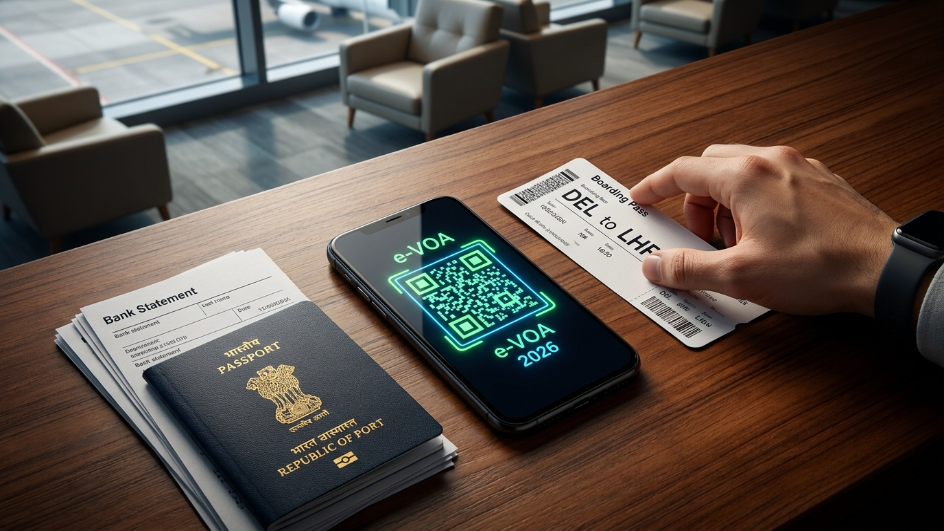
The traditional method involves physically queuing at the VoA counters upon exiting the aircraft, paying the fee (cash or card), receiving a receipt, and presenting it to customs officials. However, when multiple international flights land simultaneously, these queues become an exhausting bottleneck. To bypass this friction, travelers are strongly advised to secure an e-VOA prior to departure via the official Indonesian immigration portal (evisa.imigrasi.go.id). The digital application costs the same IDR 500,000 but generates a QR code sent via email. Upon arrival in Bali, travelers can scan this QR code at automated e-gates, entirely skipping the manual desk and drastically reducing airport transit time.
For couples planning extended retreats beyond the initial 30 days, a 60-day Tourist Visa (C1) is available for IDR 1,500,000 (approximately ₹8,250 to ₹8,700). It is critical to adhere to these timelines, as overstaying a visa incurs a severe penalty of IDR 1,000,000 (approx. ₹5,500) per day.
The Love Bali Tourism Levy
In a decisive move to combat environmental degradation and generate capital for the preservation of Balinese cultural heritage, the provincial government instituted a mandatory tourism tax for all international arrivals starting in February 2024. This levy is permanently fixed at IDR 150,000 (approximately ₹800) per individual entering the island. For a traveling couple, this amounts to IDR 300,000, or ₹1,600.
While physical payment counters exist at the airport, historical data from the first two years of the policy revealed that compliance rates shockingly lagged below 40%, generating only IDR 318 billion. This prompted Governor Wayan Koster to urge international tourists to pre-pay the levy digitally to ensure sustainable infrastructure improvements in high-traffic areas like Canggu and Uluwatu. Couples should process this payment through the official “Love Bali” portal (lovebali.baliprov.go.id) before boarding their flight in Mumbai, ensuring immediate receipt of the necessary clearance QR code and avoiding further delays upon arrival.
The Critical 2026 Proof of Funds Mandate
The most consequential administrative update for the 2026 travel season is the strict enforcement of the “Proof of Funds” requirement. In a bid to deter illegal employment and ensure tourists can adequately support themselves, Indonesian immigration officials at Ngurah Rai International Airport now actively screen incoming travelers for financial solvency. This screening places higher scrutiny on young couples, budget travelers, and those arriving on late-night flights.
The official benchmark requirement dictates that travelers must demonstrate access to USD 100 per day of their intended stay. This translates to roughly ₹8,500 per day, per person. Therefore, a couple planning a standard 7-day vacation must be able to prove they have combined access to a minimum of USD 1,400, or approximately ₹1,16,000. For longer 14-day trips, this requirement scales to between ₹1,20,000 and ₹1,40,000 per person.
Because immigration officers hold discretionary power during these checks, the quality of the financial documentation is paramount. Couples are advised to carry original printed bank statements from the previous three months featuring official bank letterheads and physical branch seals (documents from major institutions like HDFC, ICICI, SBI, and Axis are widely recognized by Bali immigration). Bank-issued balance certificates, printed credit card statements displaying available high limits, and official loading receipts for forex travel cards are also considered gold-standard proof. In some instances, secondary verification can be achieved by presenting live screenshots of mobile banking applications.
Conversely, travelers must avoid presenting outdated passbook photocopies, salary slips without corresponding bank balances, or investment portfolios (like mutual funds) that do not demonstrate immediately liquid cash. The psychological and financial risk of ignoring this mandate is severe: failure to satisfy the inspecting officer results in being moved to a secondary inspection area, receiving a “refused entry” stamp, and facing immediate deportation back to the departure city on the next available flight entirely at the traveler’s expense.
| Administrative Requirement | Cost Per Person (IDR) | Cost Per Couple (INR) | Actionable Strategy |
| Visa on Arrival (VoA) | IDR 500,000 | ₹5,400 | Apply via evisa.imigrasi.go.id to use e-gates |
| Bali Tourism Levy | IDR 150,000 | ₹1,600 | Pay via lovebali.baliprov.go.id before flying |
| Proof of Funds (7 Days) | N/A (Liquidity Check) | ₹1,16,000 (To Show) | Carry sealed bank statements & return tickets |
Accommodation Economics: Engineering the Island Stay
Bali’s hospitality sector is a fascinating study in extreme economic diversity, offering everything from hyper-budget communal living to some of the most exclusive, architecturally stunning ultra-luxury resorts on the planet. For a couple planning a 7-night itinerary, accommodation will form the absolute bedrock of the daily experience and dictate the largest variable portion of the total budget. The island’s distinct regions cater to vastly different aesthetics: Ubud provides dense jungles and spiritual tranquility, Seminyak and Canggu offer vibrant coastal nightlife, and Nusa Dua stands as a sanctuary of isolated, manicured luxury.
The Backpacker and Budget Tier (₹10,500 – ₹14,000 Total for 7 Nights)
The budget tier is designed for highly active couples who prioritize outdoor exploration and view their accommodation merely as a clean place to sleep. In trendy, surf-oriented coastal areas like Canggu, well-rated modern hostels and basic guesthouses provide clean, air-conditioned private rooms for IDR 150,000 to IDR 225,000 (₹800 to ₹1,200) per night. Establishments like Kosta Hostel exemplify this value, offering clean facilities, good Wi-Fi, and complimentary breakfast within this price bracket.
In the cultural and spiritual heart of Ubud, traditional Balinese homestays offer incredibly intimate experiences. Properties such as Rumah Dharma provide rooms complete with views of lush rice paddies for an astonishing ₹1,000 to ₹1,500 per night. Other highly rated budget options include Champlung Sari Hotel in Ubud, which offers a quiet environment surrounded by lush greenery near the Monkey Forest, and Swan Inn, known for its authentic Balinese-style houses.
For urban accessibility, Denpasar hosts efficient options like POP! Hotel, while Legian offers the colorful Bliss Surfer Hotel and Zest Hotel Legian, which features a rooftop pool at highly reasonable rates. Venturing out to neighboring islands like Nusa Penida, standard guesthouses typically range from ₹1,200 to ₹1,800 per night.
A critical insight for budget travelers is the geographical trap of Kuta. While Kuta frequently advertises budget hotel rooms for around ₹1,500 a night, the area is plagued by extreme traffic congestion and noise pollution. The financial savings gained on the room rate are rapidly erased by the inflated transportation costs and hours wasted in traffic attempting to reach key attractions in Ubud or Uluwatu.
The Mid-Range Tier (₹21,000 – ₹42,000 Total for 7 Nights)
The mid-range tier in Bali provides an astonishing return on investment, delivering levels of luxury and privacy that would cost triple in Western or Indian domestic markets. The defining architectural feature of mid-range Balinese accommodation is the private pool villa.
In Ubud, couples can secure independent villas featuring infinity pools, outdoor tropical bathrooms, and sweeping vistas of the jungle or agricultural terraces for just ₹3,000 to ₹4,500 per night. Properties like Villa Kayu exemplify this tier, offering high-end privacy, breakfast, and rice field views that elevate the romantic experience without devastating the budget. In the more densely developed southern beach towns like Seminyak, real estate commands a higher premium. Comparable mid-range boutique hotels or smaller private villas in Seminyak, such as The Grey Boutique Inn or Kokonut Suites, average between ₹5,000 and ₹7,000 per night.
This tier strikes the absolute perfect balance for most travelers from Pune, offering exceptional comfort, highly photogenic environments, and serene privacy while leaving ample capital for elevated dining and extensive excursions.
The Ultra-Luxury Tier (₹70,000 – ₹1,40,000+ Total for 7 Nights)
For couples whose budgets are unconstrained, Bali hosts a globally renowned collection of five-star resorts that redefine opulence. Accommodations at this echelon focus on bespoke personalized service, architectural grandeur, and exclusive access to the island’s most dramatic natural beauty.
In Ubud, luxury takes the form of jungle retreats. The Viceroy Bali offers sheer opulence, with valley-view villas, heated private pools, and dedicated butler service commanding roughly ₹18,000 per night. The Four Seasons Resort Bali at Sayan is nestled among tropical forests and the Ayung River, offering river-facing villas with traditional architecture that attract travelers seeking spiritual regeneration at premium price points. Similarly, Mandapa, a Ritz-Carlton Reserve, provides an exclusive retreat with private swimming pools and world-class wellness programs.
Coastal luxury titans demand equally peak pricing. The Mulia in Nusa Dua features majestic sea views and personal plunge pools tailored for honeymooners. The Ayana Resort and Spa in Jimbaran covers 90 hectares, boasting 12 swimming pools and clifftop villas offering breathtaking ocean isolation. Along the extreme southern cliffs, Six Senses Uluwatu and Alila Villas Uluwatu offer contemporary, eco-friendly architecture with open-plan designs and private plunge pools. The St. Regis Bali Resort is famous for its Lagoon Villas with direct water access, while the Bvlgari Resort Bali blends Italian elegance with Balinese hospitality atop a dramatic cliff. A 7-night stay at any of these properties rapidly shifts the accommodation budget into the ₹1,00,000+ territory, strictly classifying the trip as a premium luxury expedition.
| Accommodation Tier | Recommended Regions | Estimated Price Per Night (INR) | Total Cost for 7 Nights (INR) |
| Budget / Guesthouse | Canggu, Ubud, Nusa Penida | ₹800 – ₹1,800 | ₹10,500 – ₹14,000 |
| Mid-Range (Private Villas) | Ubud, Seminyak | ₹3,000 – ₹7,000 | ₹21,000 – ₹42,000 |
| Ultra-Luxury Resorts | Nusa Dua, Uluwatu, Sayan | ₹15,000 – ₹80,000+ | ₹70,000 – ₹1,40,000+ |
Island Logistics: Ground Transportation and the Private Driver Economy
The topographical layout of Bali, combined with its narrow, winding infrastructure and a near-total absence of formal public transit networks, makes ground transportation a vital logistical pillar of the vacation. The choices essentially boil down to renting a two-wheeler, relying on point-to-point ride-hailing apps, or engaging a dedicated private driver for the duration of the trip. The financial and psychological implications of these choices are profound.
The Economics and Risks of Scooter Rentals
For the most aggressive budget tracks, renting a scooter is highly economical, costing between IDR 70,000 and IDR 100,000 (₹380 to ₹540) per day. Over a 7-day period, combined with roughly ₹500 in fuel, a couple can theoretically manage all their transportation needs for ₹4,200 to ₹5,600.
However, a deeper analysis reveals significant, often underreported risks. Bali’s traffic is notoriously chaotic, particularly in the southern corridors of Kuta, Legian, and Canggu. The sheer density of commercial trucks, erratic local drivers, and tourist congestion creates a high-stress environment. Furthermore, travelers must possess an International Driving Permit (IDP) featuring a motorcycle endorsement; without one, routine police checkpoints will result in fines that quickly erase any rental savings. For a honeymooning couple prioritizing relaxation, romance, and safety, scooters introduce an unnecessary layer of physical exhaustion and exposure to tropical rainstorms.
The Private Driver Advantage (Detailed INR/IDR Breakdown)
The undisputed gold standard for traversing Bali comfortably, safely, and efficiently is hiring a private car with a dedicated, English-speaking local driver. This service entirely insulates couples from the stress of navigation, the exhaustion of tropical heat, the danger of erratic traffic, and the aggressive negotiations often required with local street taxis.
The industry standard for hiring a private driver in Bali falls between IDR 600,000 and IDR 900,000 per day, equating to roughly ₹3,250 to ₹4,350. This flat rate generally covers a 10-hour to 12-hour full-day excursion and comprehensively includes the cost of the vehicle (typically a well-maintained, air-conditioned SUV like a Toyota Innova), fuel, and the driver’s services as an impromptu local guide.
For couples requiring shorter trips, half-day rates (spanning 5 to 8 hours) range from IDR 400,000 to IDR 650,000 (₹2,150 to ₹3,500). If a vehicle is needed only for quick, point-to-point errands or airport transfers, hourly rates hover between IDR 100,000 and IDR 150,000, usually subject to a 4-hour minimum booking. Over a 7-day mid-range itinerary, allocating ₹14,000 to ₹21,000 for a private driver ensures complete logistical freedom without breaking the bank.
It is vital for accurate financial planning to understand that the base daily rate applies primarily to the standard southern and central tourist corridors (covering Seminyak, Kuta, Ubud, and Uluwatu). When crafting itineraries that venture into Bali’s remote frontiers, regional fuel and distance surcharges apply:
- Traveling to the highland volcanic regions of Kintamani or Bedugul adds a typical surcharge of IDR 100,000.
- Visiting the famous photogenic Gates of Heaven at Lempuyang Temple incurs a surcharge of IDR 200,000.
- Expeditions to the northern dolphin-watching coast of Lovina or the eastern diving hubs of Amed and Tulamben carry surcharges of IDR 250,000.
Furthermore, while tipping is not strictly mandatory in Indonesian culture, it is highly expected and deeply appreciated within the private driver industry, especially considering the grueling 12-hour shifts navigating dense traffic. A standard, respectful tip ranges from IDR 50,000 to IDR 100,000 per day (₹270 to ₹540). For exceptional service—where the driver actively assists with photography, translates complex cultural nuances, and navigates extreme traffic with a smile—tips of IDR 150,000+ are customary and deserved.
Keep your holiday budget strictly predictable. Bali Agung Tours offers fixed-rate daily car rentals and packages so your Bali Trip Cost from Pune stays exactly as planned. Operating out of Denpasar (Jl Padang Galak 88), Bali Agung Tours provides highly professional English-speaking drivers, transparent pricing devoid of hidden surge multipliers, and a fleet of pristine vehicles, ensuring that transportation remains a joyous part of the vacation rather than a logistical hurdle.
| Driver Service Tier | Typical Duration | Estimated Cost in IDR | Estimated Cost in INR |
| Full Day Hire | 10 – 12 Hours | IDR 600,000 – 900,000 | ₹3,250 – ₹4,350 |
| Half Day Hire | 5 – 8 Hours | IDR 400,000 – 650,000 | ₹2,150 – ₹3,500 |
| Hourly Rate | Min. 4 Hours | IDR 100,000 – 150,000/hr | ₹540 – ₹810 / hr |
| Standard Gratuity | Per Day | IDR 50,000 – 100,000 | ₹270 – ₹540 |
Gastronomy: The Economics of Dining in Bali
The culinary landscape of Bali is a major experiential draw, offering everything from hyper-local, deeply authentic street food to avant-garde, globally recognized gastronomy. Food budgets scale exponentially based on the venue’s aesthetic, geographic location, and target demographic.
Couples operating on a strict budget can comfortably and deliciously eat for ₹7,000 to ₹10,500 over 7 days by embracing local ‘warungs’ (traditional, family-owned Indonesian eateries). In these authentic establishments, a hearty plate of Nasi Goreng (the beloved Indonesian fried rice) costs approximately IDR 25,000 (₹135), while Nasi Campur (a highly customizable mixed rice dish featuring various meats, peanuts, and vegetables) is priced around IDR 35,000 (₹190). A traditional Balinese coffee (Kopi) adds a mere IDR 15,000 (₹80) to the bill. On average, a meal at a local warung runs between ₹100 and ₹200, allowing budget travelers to keep their daily food expenditure between ₹500 and ₹1,200. Eating like a local not only aggressively slashes expenses but provides the most authentic immersion into Balinese culture.
For a mid-range food budget of ₹28,000 to ₹42,000 for the week, couples can pursue a highly effective hybrid strategy. This involves enjoying affordable warung lunches to fuel afternoon explorations, followed by sophisticated dinners at mid-tier restaurants or trendy, design-forward cafes in Seminyak and Ubud. Dining at a well-regarded mid-tier restaurant in these areas typically costs between ₹400 and ₹800 per meal. Experiencing a meal at a stylish beach club in Seminyak or a sunset dinner on Jimbaran beach elevates the cost to roughly ₹1,500 to ₹3,000 per couple. Dining at this tier averages around ₹3,000 to ₹5,000 daily.
The luxury track, budgeting between ₹56,000 and ₹98,000 for 7 days, unlocks the absolute pinnacle of Bali’s dining scene. This tier includes the iconic, Instagram-ready floating breakfasts served directly in private villa pools, lavish champagne lunches at exclusive venues like Sundays Beach Club or El Kabron, and multi-course tasting menus at world-class culinary institutions. Fine dining in Ubud at boundary-pushing establishments like Locavore or Room4Dessert ranges from ₹2,000 to ₹4,000 per person. An unforgettable, ultra-romantic dining experience inside the private bamboo cocoons at Kubu at Mandapa can cost a couple up to ₹12,000 for a single evening.
Sightseeing and Excursions: Valuing the Experience
Bali is not merely a passive destination for lounging; it is an island demanding relentless activity and exploration. The cost of excursions varies wildly, ranging from free natural landmarks to high-octane luxury adventures.
Accessible Natural and Cultural Exploration (₹16,800 – ₹25,200 total)
Nature and spirituality are highly accessible in Bali, requiring minimal financial outlay. Walking through the iconic Tegallalang Rice Terraces requires only small, discretionary tips for the local farmers maintaining the intricate paths. Cultural immersion at majestic temples involves very low entry barriers, typically ranging from ₹50 to ₹500 per person. For instance, experiencing the mesmerizing sunset Kecak fire dance at the dramatic clifftop Uluwatu Temple costs approximately IDR 150,000 (₹810) per person. Visiting the sacred, purifying waters of the Tirta Empul water temple costs just IDR 50,000 (₹270) plus a nominal fee for the required sarong rental.
For the adventurous operating on a budget, an organized day trip to the rugged, towering cliffs of Nusa Penida (which includes fast boat transfers and a guided island tour) can be secured for roughly IDR 450,000 to IDR 550,000 (₹2,450 to ₹3,230) per person. Similarly, joining a group trek up the active Mount Batur volcano to witness the sunrise over the caldera costs about IDR 500,000 (₹2,700) per person.
Mid-Range Engagements (₹42,000 – ₹70,000 total)
Scaling the activity budget allows for more private, guided, and physically engaging experiences that define the mid-range vacation. Couples can engage deeply with the local culture by booking an authentic Balinese cooking class (approximately ₹2,800) or retreating for a comprehensive 2-hour traditional flower bath and spa treatment in Ubud (ranging from ₹2,500 to ₹4,000).
Action-oriented couples can book exhilarating white-water rafting expeditions down the lush Ayung River for roughly ₹3,200 per person, or embark on a guided jungle ATV ride through muddy village trails for ₹3,500. Upgrading the standard Nusa Penida trip to include dedicated snorkeling tours alongside majestic Manta Rays pushes the excursion cost to around ₹4,500 per person.
Premium Luxury Adventures (₹84,000 – ₹1,40,000 total)
For those willing to invest heavily in once-in-a-lifetime memories, Bali offers unparalleled luxury experiences that rival any destination globally. Instead of hiking Mount Batur in a crowded large group, couples can hire a private guide for an exclusive sunrise trek complete with a mountaintop breakfast cooked using volcanic steam for ₹7,000. World-class rejuvenation at the globally acclaimed COMO Shambhala spa commands ₹8,000 to ₹12,000 per treatment.
For ultimate exclusivity, couples can charter private premium yachts to explore the Nusa islands in total privacy, a bespoke service ranging from ₹15,000 to ₹25,000. To capture the trip flawlessly, hiring a professional private photographer to trail the couple for a day through aesthetic landscapes like the Gates of Heaven costs between ₹8,000 and ₹15,000. The absolute zenith of luxury activities is a private helicopter tour soaring dramatically over the volcanic craters of Mount Agung or Batur, costing an exhilarating ₹25,000 to ₹35,000.
The Hidden Necessity: Travel Insurance and Contingency Planning
When meticulously planning a budget, travel insurance is frequently and dangerously overlooked. However, for a multi-leg journey from Pune to Bali, it is an absolute necessity to protect the financial investments detailed above. Overseas medical costs in private Balinese hospitals can rapidly drain a traveler’s capital in the event of an emergency. Furthermore, insurance provides critical protection against trip cancellations, lost luggage during the transit through Mumbai or international layovers, and flight delays.
Couples engaging in Bali’s popular adventure activities—such as surfing in Canggu, scuba diving in Amed, or hiking Mount Batur—must ensure their policy includes specific add-ons for adventure sports, as standard policies often exclude high-risk injuries. Providers like Allianz Travel Insurance, World Nomads (ideal for adventurers), and AXA offer comprehensive global coverage. For travelers departing from India, domestic providers like Bajaj Allianz and TATA AIG offer highly budget-friendly international travel insurance policies specifically tailored to cover medical expenses, cancellations, and baggage losses. Allocating a small portion of the budget to comprehensive insurance ensures that unforeseen events do not result in catastrophic financial ruin.
Comprehensive 7-Day Itinerary and Financial Simulation
To contextualize the vast array of data points into a tangible format, examining a simulated 7-day mid-range itinerary highlights exactly how daily costs accumulate for a couple. This simulation balances cultural immersion, romantic luxury, and adventure.
Day 1: Arrival and Acclimatization in Seminyak
After arriving at Ngurah Rai International Airport and clearing the e-gates using the pre-paid VoA, the couple meets their private driver. They transit to a mid-range boutique hotel in Seminyak (₹6,000). The evening involves a relaxing stroll and a welcome dinner at a beachfront cafe (₹2,500).
Daily Cost Impact: ₹8,500
Day 2: Coastal Exploration and Uluwatu
The private driver (₹3,800) takes the couple down the southern peninsula. They spend the afternoon at a mid-tier beach club, paying an entrance fee that doubles as a food and beverage credit (₹3,000). By late afternoon, they arrive at Uluwatu Temple, paying the entrance and Kecak fire dance tickets (₹1,620). Dinner is enjoyed at a local warung near the temple (₹800).
Daily Cost Impact: ₹9,220
Day 3: Transition to the Cultural Heart of Ubud
The couple checks out and drives north toward Ubud, stopping at the Tirta Empul water temple for a purification ritual (₹540). They check into a stunning private pool villa overlooking the rice terraces (₹4,500). In the afternoon, they enjoy a luxurious 2-hour couples spa treatment (₹6,000). Dinner is at a renowned mid-tier Ubud restaurant (₹3,500).
Daily Cost Impact: ₹14,540
Day 4: Adventure and Gastronomy
An early start takes the couple to the Ayung River for a guided white-water rafting experience (₹6,400 for two). After returning to the villa to relax by the pool, they venture out for a highly romantic, upscale fine-dining experience in central Ubud to celebrate their trip (₹8,000).
Daily Cost Impact: ₹14,400
Day 5: The Nusa Penida Day Trip The couple embarks on a full-day excursion to Nusa Penida. This includes the fast boat transfer, island tour to Kelingking Beach, and lunch (roughly IDR 1,100,000 or ₹6,460 for two). Returning exhausted to Ubud, they opt for a cheap, comforting warung dinner (IDR 90,000 or ₹500). Daily Cost Impact: ₹6,960
Day 6: Temples, Terraces, and Sunset Views The couple visits the Tegallalang Rice Terraces early in the morning for photography (nominal tips, ₹200). They rent a scooter for the day to explore the immediate local area at their own pace (IDR 100,000 or ₹540). They splurge on a lavish lunch overlooking the jungle (IDR 360,000 or ₹1,950) and have a simple local dinner (IDR 100,000 or ₹540). Daily Cost Impact: ₹3,230
Day 7: Departure Logistics After a final villa breakfast, the couple hires a taxi or their private driver for the airport transfer (IDR 250,000 or ₹1,350). They spend any leftover Rupiah on airport food before boarding their flight back to Mumbai (IDR 170,000 or ₹920). Daily Cost Impact: ₹2,270
Total In-Country Expenditure (Excluding Flights, Visas, and Pune-Mumbai Transit): ₹59,120 for the couple.
Consolidated 2026 Budget Matrices for Couples
To synthesize the exhaustive data points detailed above into actionable financial blueprints, the following matrices provide a clear, uncompromising look at the total expected capital required for a couple traveling from Pune to Bali for a 7-night duration. These totals account strictly for the baseline logistical, accommodation, and experiential costs; they do not include discretionary retail shopping (such as buying local art or clothing), heavy alcohol consumption (which is heavily taxed in Indonesia), or emergency medical expenditures.
Matrix 1: The Backpacker / Hyper-Budget Track
This matrix is optimized for students, long-term travelers, and couples prioritizing extreme savings over physical luxury, relying heavily on public transit, hostels, and local street food.
| Major Expense Category (Calculated For 2 Adults) | Estimated Cost Range (INR) |
| Transit: Pune to Mumbai (Train/Bus) | ₹1,000 – ₹2,500 |
| Flights: BOM to DPS (Budget/Advance Booking) | ₹74,000 – ₹80,000 |
| Mandatory Visas & Tourist Levies | ₹7,000 |
| Accommodation (Hostels/Basic Guesthouses) | ₹10,500 – ₹14,000 |
| Ground Transport (Scooter Rentals & Fuel) | ₹4,200 – ₹5,600 |
| Food & Dining (Strictly Local Warungs) | ₹14,000 – ₹21,000 |
| Sightseeing & Basic DIY Activities | ₹16,800 – ₹25,200 |
| Miscellaneous (SIM Cards, Small Tips, Bottled Water) | ₹10,000 |
| Total Estimated Couple Budget | ₹1,37,500 – ₹1,65,300 |
Matrix 2: The Mid-Range Comfort Track (The Optimal Choice)
This matrix represents the most balanced approach, optimized for honeymooners seeking high-value private villas, the safety of private drivers, and a comfortable mix of local and upscale dining.
| Major Expense Category (Calculated For 2 Adults) | Estimated Cost Range (INR) |
| Transit: Pune to Mumbai (Private Outstation Cab) | ₹4,500 – ₹7,500 |
| Flights: BOM to DPS (Standard Full-Service Airlines) | ₹80,000 – ₹1,10,000 |
| Mandatory Visas & Tourist Levies | ₹7,000 |
| Accommodation (Private Pool Villas in Ubud/Seminyak) | ₹21,000 – ₹42,000 |
| Ground Transport (Private Car & English-Speaking Driver) | ₹14,000 – ₹21,000 |
| Food & Dining (Mix of Trendy Cafes & Authentic Warungs) | ₹28,000 – ₹42,000 |
| Sightseeing, Spas & Mid-Tier Guided Activities | ₹42,000 – ₹70,000 |
| Miscellaneous (Insurance, Shopping Buffer) | ₹16,000 |
| Total Estimated Couple Budget | ₹2,12,500 – ₹3,15,500 |
Matrix 3: The Ultra-Luxury Track
This matrix is optimized for entirely unconstrained budgets requiring five-star resorts, exclusive privacy, fine dining, and premium aerial or marine activities.
| Major Expense Category (Calculated For 2 Adults) | Estimated Cost Range (INR) |
| Transit: Pune to Mumbai (Premium Electric SUV/Innova) | ₹7,500 – ₹10,500 |
| Flights: BOM to DPS (Premium Economy/Business Class) | ₹1,30,000 – ₹2,00,000+ |
| Mandatory Visas & Tourist Levies | ₹7,000 |
| Accommodation (Clifftop / 5-Star Branded Villas) | ₹70,000 – ₹1,40,000+ |
| Ground Transport (Luxury Alphard / Premium Transfers) | ₹21,000 – ₹28,000 |
| Food & Dining (Exclusive Fine Dining & Beach Clubs) | ₹56,000 – ₹98,000 |
| Sightseeing (Private Yachts, Helis, Premium Spas) | ₹84,000 – ₹1,40,000 |
| Miscellaneous (High-End Retail, Extensive Tipping) | ₹30,000 |
| Total Estimated Couple Budget | ₹4,05,500 – ₹6,53,500+ |
Read also:
- Mumbai to Bali Package with Flight: 2026 Complete Itinerary & Costs
- Bali Packages from Nagpur: Best Family Itineraries & Visa on Arrival
Concluding Strategic Insights for 2026
Executing a structurally sound financial plan for a Bali trip departing from Pune relies heavily on mitigating the logistical friction between the two domestic cities and optimizing the early booking window for international airfare. The data distinctly highlights that the most significant fiscal variables—and the areas where couples exert the most control—are the chosen standard of accommodation and the method of internal island transport.
The most salient economic insight from the 2026 landscape is the sheer, unmatched value proposition of the mid-range tier. For approximately ₹2,50,000 in total capital expenditure, a couple can orchestrate a deeply romantic, highly comfortable 7-day itinerary that includes a private pool villa, daily fine dining, cultural immersion, and the stress-free utility of a dedicated private driver. Attempting to replicate this level of service and aesthetic beauty in domestic high-end locations or Western markets would require a budget exponentially higher.
Furthermore, couples must remain highly vigilant and proactive regarding Indonesia’s evolving regulatory framework. The stringent 2026 enforcement of the Proof of Funds requirement acts as an invisible, highly consequential barrier; failing to accurately document and demonstrate liquidity of roughly ₹1,16,000 upon arrival can abruptly terminate the vacation, resulting in immediate deportation. Navigating these administrative layers—pre-paying the Love Bali levy to avoid queues, securing the digital e-VOA, and organizing physical, bank-sealed financial statements—is just as crucial to the success of the trip as selecting the right flight or luxury hotel. By integrating these precise economic data points and logistical strategies into their financial blueprint, couples can ensure their transition from the urban density of Pune to the tropical serenity of Bali is not only financially predictable but entirely seamless and profoundly memorable.