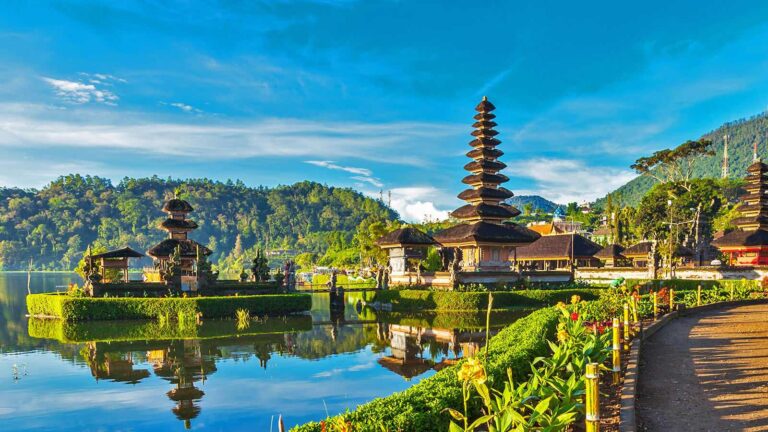
Bali is often celebrated globally as the Island of a Thousand Temples, a lush, volcanic paradise where the spiritual and the physical realms are inextricably woven together. In this vibrant cultural landscape, daily life is dictated not just by the rising and setting of the sun, but by a complex, beautiful rhythm of offerings, prayers, and ancient rituals. To truly comprehend the heart of this island, one must look beyond the pristine beaches and bustling cafes to understand the foundational element that sustains both the land and the faith of its people: water.
In the Balinese Hindu tradition, water is not merely a physical resource used for agricultural irrigation or physical hydration. It is a dynamic, living force, a divine conduit capable of profound spiritual transformation. The religion practiced on the island is so deeply intertwined with this element that it was historically referred to as Agama Tirtha, which translates directly to the “Religion of Holy Water.” Water is the ultimate purifier, the great equalizer, and the essential medium through which humans communicate with the divine, wash away the stains of earthly existence, and restore cosmic balance to their lives.
Nowhere is this profound reverence for water more palpable, more visually striking, and more deeply experienced than at the tirta empul holy water temple. Nestled in the verdant, mist-shrouded highlands of Manukaya village in Tampaksiring, Gianyar regency, this ancient sanctuary is built around a powerful natural mountain spring that has surged from the earth for over a millennium. The name “Tirta Empul” translates loosely from the local language to mean “holy water spring” or “water gushing from the earth,” perfectly encapsulating the site’s primary physical and spiritual feature.
For centuries, this temple has served as the island’s premier destination for a profound religious practice known as melukat, an intense bali purification ceremony designed to comprehensively cleanse the physical body, the cluttered mind, and the heavy spirit of negative energies. Today, the temple stands as a fascinating intersection of the ancient and the modern. It remains a fiercely active place of worship that beats in rhythm with the daily struggles and triumphs of the Balinese people, while simultaneously operating as a bucket-list destination for international travelers seeking an authentic, transformative ubud water temple tour.
Travelers from every corner of the globe arrive daily to witness the quiet, intense devotion of local pilgrims and, increasingly, to step into the cold waters and participate in the purification rituals themselves. However, navigating this sacred space requires far more than just a ticket and a bathing suit. It requires a deep dive into the temple’s mythological origins, an understanding of its intricate architectural layout, a profound respect for the philosophy behind the cleansing ritual, and strict adherence to the behavioral and sartorial protocols that govern the sanctuary.
Unearthing the History: The Warmadewa Dynasty
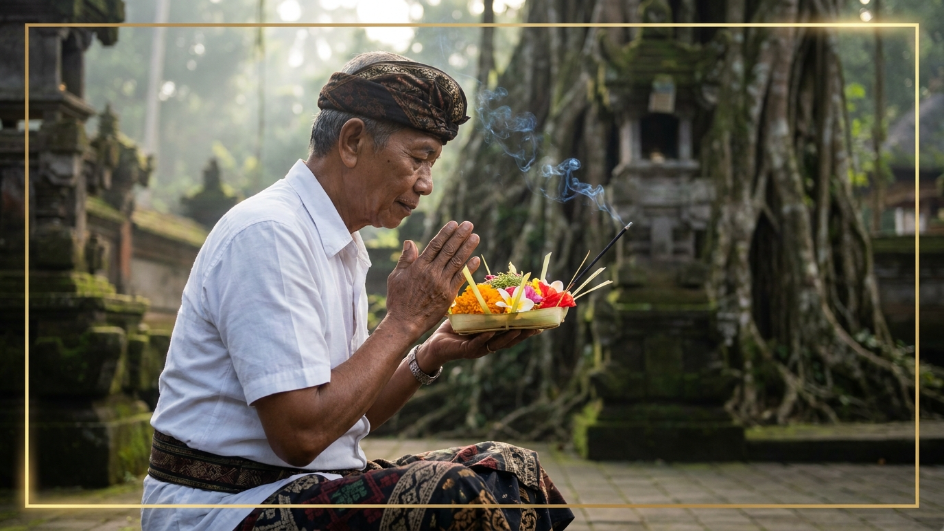
To understand the gravity of the tirta empul holy water temple, it is essential to trace its roots back through the annals of history, peeling back the layers of time to an era when ancient kings ruled the island. From an archaeological and historical perspective, the temple complex was established in the year 962 AD, an incredibly early date that highlights the site’s enduring legacy. This foundation occurred during the reign of King Sri Candrabhayasingha Warmadewa, a prominent ruler of the influential Warmadewa dynasty.
The Warmadewa dynasty was a powerful royal lineage responsible for significant infrastructural, cultural, and spiritual developments across ancient Bali. Their reign marked a period of immense prosperity and structural organization. King Candrabhayasingha commissioned the construction of this sprawling temple complex around the large, bubbling natural spring, possessing the foresight to recognize its vital importance not just for spiritual matters, but for the very survival of his kingdom.
This specific spring is one of the primary sources feeding the Tukad Pakerisan River, a vital waterway that snakes through the lush valleys of central Bali. The waters from this river sustained the complex, ancient subak systems—the traditional, community-managed agricultural irrigation networks that allowed the island’s famous terraced rice paddies to flourish. By building a major temple at the water’s source, the king effectively sanctified the water supply for the entire region below, intertwining agricultural prosperity with divine favor.
The temple was primarily dedicated to Vishnu, the Hindu god of water, preservation, and the sustenance of life. This dedication solidified the site’s role as a sanctuary of life-giving forces. For over a thousand years, the stone walls of this complex have witnessed empires rise and fall, foreign occupations, and the rapid modernization of the globe, yet the spring has never stopped flowing, and the devotees have never stopped coming.
The Epic Myth of Indra and the Evil King Mayadenawa

While archaeological dates provide a neat chronological anchor, the true spiritual heartbeat of the temple is rooted in a dramatic, cinematic mythological epic. In Balinese culture, the line between documented history and divine mythology is beautifully blurred. Historical records and oral epics are woven together, creating a narrative where divine intervention is viewed as a tangible, historical event that shaped the very geography of the island. The story of the temple’s creation is recorded in an ancient manuscript known as the Usana Bali, and it remains one of the most culturally significant tales told on the island.
The Rise of a Tyrant
The creation of the holy spring is attributed to a catastrophic cosmic battle between the forces of absolute good, represented by the powerful god Bhatara Indra, and the forces of chaotic malevolence, embodied by an arrogant, wicked king named Mayadenawa. According to the ancient legends, King Mayadenawa was a ruler of immense, terrifying spiritual power. However, his abilities corrupted his mind, filling him with unchecked hubris. Drunk on his own authority, he declared himself superior to the divine.
In a massive affront to the cosmic order, Mayadenawa outlawed the worship of the gods across his kingdom. He violently forbade his subjects from performing religious ceremonies, destroying shrines, and utilizing powerful dark magic to maintain a tyrannical, fearful grip over the island of Bali. This period of enforced godlessness disrupted the delicate balance of the universe, throwing the cosmos into chaos and plunging the island into a dark age of suffering.
The Divine Intervention
Seeing the devastation and hearing the silent cries of the oppressed Balinese people, the divine realms could no longer remain passive. Lord Indra, the king of heaven and the god of thunder and rain, mobilized his celestial army and descended to the earthly plane to overthrow the wicked king and restore the cosmic balance of Dharma (righteousness).
The ensuing battle was fierce and landscape-altering. Mayadenawa, realizing that his dark magic was ultimately outmatched by the raw, divine power of Indra in direct, open combat, decided to resort to cowardly subterfuge. He ordered his remaining troops to retreat, fleeing into the dense, mountainous jungles of the northern highlands.
Under the cover of a pitch-black night, while Indra’s forces were exhausted from the day’s battle and deep in a restorative sleep, Mayadenawa crept stealthily into the celestial camp. To avoid detection and mask his tracks, the wicked king walked on the tilted sides of his feet, ensuring he left no conventional human footprints in the soft earth. This specific, fascinating mythological detail is widely believed to be the etymological origin of the modern village’s name; “Tampak Siring” literally translates in the local dialect to “tilted footprint”.
The Poisoned Spring and the Miracle of Tirta Empul
During his stealthy infiltration, Mayadenawa utilized his potent powers of illusion and dark magic to create a beautiful, crystal-clear spring of water right on the edge of Indra’s camp. However, this beautiful spring was laced with a deadly, supernatural poison.
When the sun rose, Indra’s celestial troops awoke, their throats parched from the intense, grueling combat of the previous day. Seeing the fresh, inviting spring, the soldiers drank deeply from the tainted waters. Almost instantly, the dark magic took effect, and the entire divine army collapsed, perishing on the spot.
Upon discovering the mass casualty of his forces, Bhatara Indra was filled with a mixture of righteous fury and profound sorrow. Recognizing the dark magic at play, the god harnessed his supreme, untainted divine power. Grasping his legendary staff, he drove it violently into the earth with earth-shattering force. From the exact point of impact, a brilliant, pure, and violently bubbling stream of holy water burst forth from the ground. This miraculous, healing spring was the genesis of the Tirta Empul.
Indra quickly gathered the sacred water and sprinkled it generously over the lifeless bodies of his fallen soldiers. The sheer purity of the holy water instantly neutralized Mayadenawa’s dark poison, reviving the dead army and restoring their strength and vitality to levels even greater than before.
The Aftermath and the Legacy of Galungan
The miraculously revived army, now fueled by righteous vengeance, relentlessly pursued Mayadenawa. They finally cornered and defeated the wicked king, striking him down and ending his reign of terror. It is said in the local lore that the king’s dark blood flowed down the lush valley, creating the Petanu River. In his anger, Indra cursed this river, declaring that its waters would fail crops and bring misfortune for a thousand years.
The epic defeat of Mayadenawa is not just a localized myth; it is a foundational story in Balinese culture. It represents the eternal, necessary triumph of Dharma (good) over Adharma (evil). This specific victory is grandly commemorated every 210 days across the entire island during the spectacular festival of Galungan, one of the most important dates in the Balinese calendar. Therefore, when visitors look upon the bubbling waters of the tirta empul holy water temple, they are not just looking at a pretty natural spring; they are looking at a literal, liquid manifestation of divine salvation, the defeat of ultimate evil, and the miraculous restoration of life.
Decoding the Architecture: The Spatial Journey of Purification
Balinese Hindu temples, known as Pura, are never built randomly. They are meticulously designed according to strict spatial philosophies that represent a psychological and physical transition from the chaotic, secular, earthly realm into the serene, sacred, and divine realm. The architecture of the tirta empul holy water temple serves as a masterful, sprawling example of this spatial progression, deeply rooted in the concept of the Tri Loka (the three realms of the universe). The complex is divided into three distinct, increasingly sacred courtyards or mandalas.
Jaba Pura (The Outer Courtyard)
The journey begins as visitors approach the temple complex through expansive, lush tropical gardens, walking beneath the cooling shade of ancient, sprawling banyan trees and towering stone statues of mythological guardians. The official entrance to the sacred space is marked by a traditional candi bentar, a massive, ornate split gateway. Visually, the gate looks like a single mountain that has been cleaved perfectly down the middle. This architectural feature powerfully symbolizes the duality of earthly existence—light and dark, good and evil, joy and sorrow—and the necessity of passing through these dualities to reach enlightenment.
Stepping through the split gate brings visitors into the Jaba Pura, or the outer courtyard. This space serves as an essential transitional zone. It is a place of preparation where the secular world begins to fade away. Here, visitors adjust their traditional attire, calm their racing minds, and begin to focus on the spiritual task at hand. The courtyard is expansive and often features large, open-air wooden pavilions known as bale. These pavilions are utilized for community gatherings, resting, playing traditional gamelan music during festivals, and the intricate, time-consuming preparation of complex floral ceremonial offerings. Adding to the sensory transition, large, clear ponds filled with fat, brightly colored koi fish provide a serene visual and auditory backdrop, setting a tone of deep tranquility before the intensity of the rituals ahead.
Jaba Tengah (The Middle Courtyard)
Passing through a secondary, even more intricately carved set of gates, visitors finally enter the Jaba Tengah, the central, most famous, and most kinetic precinct of the entire temple complex. This is the active theater of the bali purification ceremony, the beating heart of the site. The courtyard is visually dominated by long, rectangular stone pools built solidly into the earth to contain the holy water.
The crystal-clear water from the inner, sacred spring is masterfully channeled through a sophisticated ancient plumbing system and expelled through a long, straight line of meticulously carved stone waterspouts, known locally as pancoran. There are 30 waterspouts in total, arranged in a precise, deliberate sequence across the different sections of the purification pools. The water cascades continuously, never stopping, creating a mesmerizing, rhythmic, roaring sound that echoes off the ancient stone walls. This sound of rushing water mingles beautifully with the heavy, sweet scent of burning sandalwood incense, the colorful visuals of thousands of flower petals floating on the surface, and the soft, urgent murmurs of praying devotees. The atmosphere in the Jaba Tengah is deeply reverent; despite the near-constant presence of large crowds, there is a palpable, almost electric sense of communal focus, respect, and quiet introspection.
Jeroan (The Inner Sanctum)
Beyond the bustling purification pools lies the Jeroan, the highest, holiest, and most heavily restricted area of the entire temple complex. Access to this inner courtyard is highly regulated and typically reserved strictly for those who have completed the wet purification rituals and are entering in dry, formal attire to pray, usually led by a local priest.
The Jeroan houses the actual primary source of the holy spring. Here, the water can be seen bubbling up vigorously from the dark, sandy bottom of a large, enclosed, crystal-clear rectangular basin, continuously feeding the roaring spouts in the courtyard below. The inner sanctum is also home to the temple’s main, towering shrines (pelinggih). These shrines are dedicated to the Hindu trinity (Shiva the destroyer, Vishnu the preserver, and Brahma the creator), as well as featuring specific, highly venerated altars for Lord Indra (the creator of the spring) and the powerful spirit of Mount Batur, the active volcano that dominates the region’s geography. Following the intense physical cleansing in the pools, devout worshippers enter the quiet of the Jeroan to sit cross-legged in deep meditation, offer their final prayers of gratitude, and receive a formal, closing blessing from the temple priests.
The Profound Philosophy and Purpose of the Melukat Ritual
At the absolute core of the Tirta Empul experience is the ritual of Melukat. To merely label this practice a “bath” or a “shower” is a profound, almost offensive misunderstanding of its massive cultural depth and psychological utility. Melukat is a foundational Balinese Hindu practice aimed at comprehensive spiritual, emotional, and physical detoxification.
Etymology and Intent
The term “melukat” is derived from the Old Javanese word lukat, which translates roughly to “to cleanse,” “to release,” or “to let go”. Other scholarly sources trace its roots to the ancient Sanskrit word suloka, meaning to purify. The core philosophy behind the ritual is the deeply held acknowledgment that human beings, simply by moving through the friction of daily life, accumulate unseen, heavy burdens over time. These invisible burdens can manifest in countless destructive ways: as stubborn physical illness, heavy mental fog, chronic emotional heaviness, streaks of inexplicable bad luck, or the accumulation of negative karma resulting from past mistakes and poor decisions.
In the holistic Balinese worldview, physical health and spiritual health are inextricably linked; one cannot truly exist without the other. When modern life feels overwhelming, when unexpected tragedy strikes, when the stress of work becomes unbearable, or when an individual is transitioning between major life phases (such as entering adulthood, preparing for marriage, or recovering from a severe illness), the Balinese do not merely seek physical rest on a couch; they actively seek spiritual recalibration through the violent, freezing shock of holy water. The sacred springs are believed to possess the intrinsic, undeniable power to physically flush away spiritual pollution (known locally as sebel or cuntaka) and restore the individual’s internal compass to a state of perfect, peaceful equilibrium.
A Universal, Open Invitation
While the practice of Melukat is undeniably rooted in Balinese Hinduism—which itself is a fascinating, utterly unique syncretism of classical Indian Hindu beliefs, ancient indigenous animism, and deep-seated ancestor worship—the practice is remarkably open, tolerant, and inclusive. The ritual is never viewed as a mechanism for religious conversion. The local priests are not attempting to proselytize. Instead, the Balinese graciously extend an open invitation to anyone from any background, provided they possess a sincere, quiet intention and a highly respectful demeanor.
For international visitors embarking on a comprehensive ubud water temple tour, participating in the melukat ceremony offers a rare, fiercely immersive opportunity to step entirely outside the bounds of conventional, observational tourism. It radically shifts the visitor from being a passive, camera-wielding observer of culture to an active, vulnerable participant in an ancient rite. However, this beautiful openness comes with strict, non-negotiable expectations. Visitors are expected to treat the ritual with the intense gravity it commands, adhering closely to ancient protocols, and entirely avoiding performative, disruptive behaviors executed solely for the sake of social media documentation.
Etiquette, Dress Code, and the Sanctity of Sacred Space
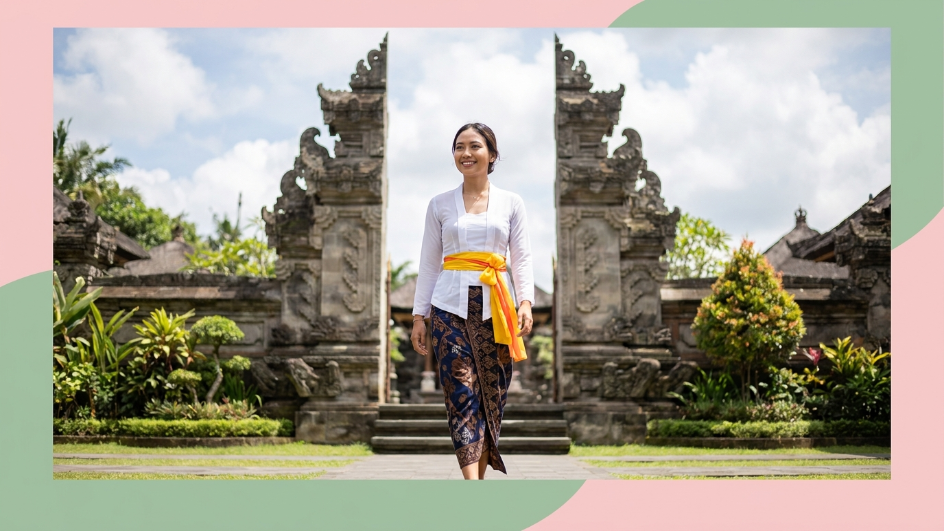
Because the tirta empul holy water temple experiences massive volumes of international visitors daily, the preservation of its intense spiritual sanctity relies entirely on strict adherence to established codes of conduct. The temple is not a theme park or a public swimming pool; it is an active, vital center of faith for millions of people.
The Mandatory, Modest Dress Code
Modesty is the foundational rule of all Balinese temple etiquette. The exposure of bare shoulders, knees, and midriffs is considered highly offensive to the divine presence residing in the shrines.
- The Sarong (Kamen): Every single individual entering the temple complex, regardless of whether they plan to participate in the wet water ritual or merely observe from the dry pathways, must wear a sarong. This large, wrap-around cloth covers the lower body down to the ankles, acting as a visual signifier of respect, humility, and a willingness to conform to the local customs.
- The Sash (Selendang): In addition to the sarong, all visitors must wear a sash tied securely around the waist. Symbolically, the sash is incredibly important; it acts as a spiritual boundary, separating the lower, impure bodily functions (associated with animalistic desires) from the upper, higher chakras associated with the pure heart and the enlightened mind.
Behavioral Guidelines for the Mindful Traveler
Upon entering the gates, visitors are expected to maintain a peaceful, quiet, and composed demeanor. Voices should be lowered. While photography is generally permitted across the complex, it must be conducted discreetly and with the utmost respect. Taking intrusive, posing selfies in front of people deep in prayer, utilizing harsh flash photography directly in the faces of local devotees, or prioritizing content creation over the spiritual gravity of the moment is highly discouraged and deeply frowned upon. Furthermore, visitors must be highly conscious of their physical placement; one must never stand on a higher plane than an officiating priest (pemangku), and must never point the soles of their feet directly toward a shrine or another person, as the feet are considered the lowest and most impure part of the human body.
The Critical Rule Regarding Menstruation
One of the most heavily emphasized, strict rules for female visitors involves menstruation. Out of deep respect for ancient cultural and spiritual traditions, women who are currently menstruating are strictly prohibited from entering the inner temple grounds, and absolutely forbidden from stepping foot into the sacred purification pools.
To the uninitiated western traveler, this rule may initially appear exclusionary, sexist, or confusing, but it is deeply rooted in ancient, highly complex Balinese cosmological beliefs regarding energy, life, death, and purity. In Balinese Hinduism, the concept of cuntaka or sebel refers to a state of temporary spiritual impurity or extreme energetic vulnerability. This vulnerable state applies to various significant life events, including recent contact with a corpse, the recent birth of a child, and the menstrual cycle.
It is believed that the shedding of unsanctified blood carries a massive, distinct, and heavy earthly energy. This raw earthly energy directly and violently conflicts with the pristine, elevated, and carefully cultivated divine energy within the temple space. The prohibition is absolutely not viewed as a judgment on female physiology or a statement that women are “dirty.” Rather, it is a strict adherence to cosmic energetic boundaries designed to protect both the sanctity of the temple’s magic and the spiritual well-being of the woman, who is considered energetically open and highly sensitive to unseen forces during her cycle.
Visitors are kindly requested to respect this ancient custom with grace and understanding. Attempting to hide one’s cycle to bypass the rules just to get a photo in the water is viewed as a severe violation of trust, an insult to the host culture, and a dangerous breach of spiritual law that invites bad karma. Local Balinese are generally very direct about this rule and may politely ask female visitors if they are menstruating; this should not be taken as an offense, but rather as a routine cultural safety check.
A Step-by-Step Guide to the Purification Ceremony
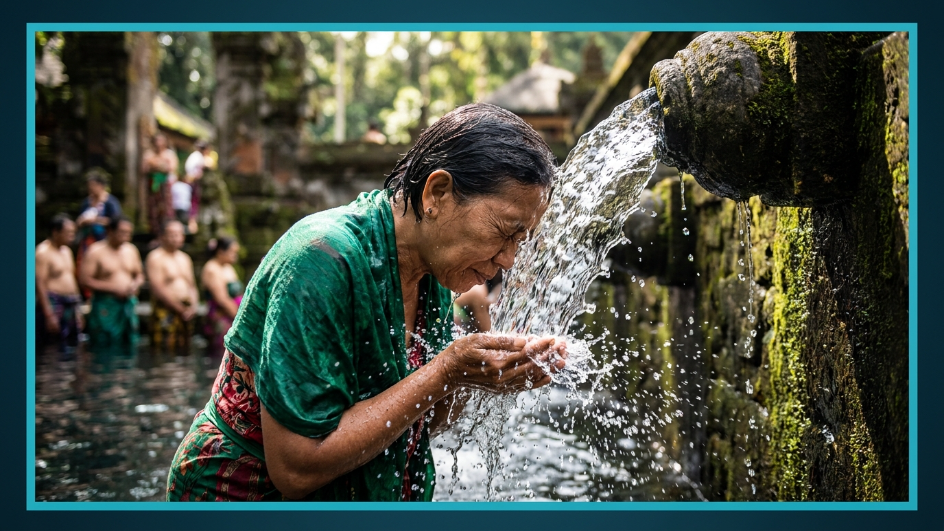
For those cleared to enter the water, the melukat ritual is a highly intentional, meticulously choreographed practice that demands absolute mindfulness at every single stage. It is not a quick dip. It typically requires between one to two hours to complete properly, encompassing the dry preparation, the intense wet water ritual, and the concluding dry prayers in the inner sanctum.
1. The Preparatory Transition
The ritual begins long before a toe ever touches the water. Participants must prepare themselves mentally and physically by donning the appropriate ceremonial bathing attire. Entering the sacred pools in standard western swimwear (like bikinis or board shorts) is considered deeply disrespectful and is strictly prohibited by temple guards. Both men and women must wear a specific, designated bathing sarong (often green with a red sash), typically tied securely around the waist or, for women, occasionally tied tightly over the chest as a modest, makeshift halter dress. This mandatory wet attire acts as a brilliant visual equalizer, instantly stripping away all modern markers of wealth, status, and fashion, ensuring all participants approach the holy water with uniform humility.
2. The Offering of Gratitude (Canang Sari)
The Balinese spiritual principle of reciprocity firmly dictates that one cannot simply take blessings, healing, or favors from the gods without first offering sincere gratitude in return. Before stepping down into the pools, participants must present a physical offering, usually a canang sari—a beautiful, small, square woven palm-leaf basket meticulously filled with colorful, fragrant flower petals, a burning incense stick, and sometimes a small coin.
The participant carefully places the offering at the main stone altar overlooking the bustling pools, lights the incense, and presses their hands together firmly in front of their forehead or heart in a traditional gesture of prayer (sembah). The fragrant, rising smoke of the incense is not merely atmospheric; it is believed to act as a literal vehicle, carrying the participant’s prayers upward to the divine realm.
3. Setting the Internal Intention
During this initial, quiet prayer by the altar, the participant must establish a crystal-clear mental and spiritual intention for the ritual ahead. Because the water acts as a conduit for release, the individual must silently articulate exactly what they are seeking to wash away—be it a specific past trauma, chronic anxiety, feelings of heavy grief, anger, or general negativity—while simultaneously asking the universe for blessings, mental clarity, and future protection. This psychological anchoring is what transforms the act from a bath into a profound ritual.
4. The Shock of the Sacred Water
With intentions firmly set, participants finally step down into the waist-deep water of the Jaba Tengah pools. The spring water is naturally, shockingly cold, bubbling fresh from the deep mountain aquifer. This intense physical shock of cold water is not an accident; it is a crucial, vital component of the ritual. The temperature serves to immediately snap the wandering mind violently into the present moment, heightening sensory awareness, dispelling lethargy, and forcing the participant to focus entirely on their physical and spiritual state.
5. Navigating the Spouts (The Rule of Three)
The ritual proceeds in a strictly linear, orderly fashion, with participants moving methodically through the long pools from left to right. The participant joins the queue standing in the water for the first spout on the far left. When it is finally their turn, they approach the heavy, gushing stream of water with pressed palms, bowing their head slightly in a gesture of profound respect.
The physical cleansing at each spout traditionally follows the ancient “Rule of Three”. While slight variations exist depending on the specific guiding priest or the individual’s family tradition, the standard, universally accepted sequence involves:
- Cupping the hands together to catch the water and washing the face three distinct times. This act symbolizes the cleansing of negative thoughts, bad intentions, and poor decisions.
- Cupping the hands again to take three small, deliberate sips of the holy water. This purifies the internal organs, the soul, and cleanses the spoken word of lies and harshness.
- Finally, bowing forward completely to fully submerge the crown of the head directly under the heavy, pounding stream of the spout three times. The participant allows the cold water to aggressively cascade over their head and shoulders, washing away deep-seated spiritual impurities and bad karma out into the surrounding pool.
After completing this intense sequence, the participant steps back, presses their hands together in a final gesture of thanks to that specific spout, and moves to the right to patiently join the queue for the next adjacent stream. This highly meditative, repetitive, rhythmic process continues across the vast breadth of the temple’s pools.
Decoding the 30 Spouts: A Spiritual Pharmacy
The 30 waterspouts at Tirta Empul are absolutely not uniform in their spiritual utility. They are not simply a row of showers. Each spout, or specific cluster of spouts, is intricately attributed to a completely different form of cleansing, divine intervention, or psychological healing. While interpretations can occasionally vary slightly between different high priests or local family lineages, the overarching framework provides what can best be described as a highly specialized, ancient spiritual pharmacy.
Functional Categories of the Healing Fountains
The spouts are designed to address a vast, comprehensive spectrum of human afflictions and aspirations. According to traditional texts and local guides, specific spouts are dedicated to:
- Physical Healing (Tirta Penyakit Berat): Certain spouts are believed to possess the power to cure severe, chronic illnesses or unexplained physical ailments that have resisted conventional medicine, requiring direct divine intervention.
- Mental and Emotional Clarity: Other fountains focus on washing away terrifying nightmares, persistent mental confusion, depression, and crippling anxiety, restoring a sense of calm.
- Karmic Cleansing (Tirta Pelebur Kutukan): These highly potent spouts are dedicated to exterminating the heavy weight of unfulfilled obligations to ancestors, lifting generational family curses, and restoring harmony within a fractured, fighting family unit.
- Protection and Prosperity (Tirta Bepergian Jauh): These spouts provide a spiritual shield of protection for those embarking on long, dangerous journeys or traveling abroad for work, as well as attracting material abundance and success in business ventures.
The Critical Exception: The Forbidden Spouts of the Dead
While the vast majority of the spouts in the complex are vibrantly life-affirming and designed for the general melukat ritual, there is a massive, critical exception that all visitors must be acutely aware of. Within the sequence of the very first main pool, there are two specific spouts that are strictly, unequivocally prohibited for use by the living during a standard purification ceremony.
These spouts—frequently and specifically identified as spouts number 11 and 12 from the left, or the final two spouts at the far right end of the first pool—are reserved exclusively for dark funeral rites and ceremonies pertaining to the dead. In the Balinese Hindu cosmology, the vibrant energies of life and the heavy energies of death are kept highly compartmentalized to avoid cosmic contamination. The water from these two specific fountains is utilized by priests solely for cleansing deceased bodies prior to burial, or for rituals associated with the complex cremation ceremonies (Ngaben).
To carelessly bathe beneath these spouts while living is considered a severe spiritual transgression and a massive insult to the balance of the temple. Doing so risks the attachment of heavy, death-associated energies and terrible luck to the bather. Local guides and watchful temple staff are highly vigilant in ensuring participants skip these specific spouts, directing them to simply walk past the prohibited streams, exit the first pool, and seamlessly resume the ritual at the subsequent, permissible fountains in the next pool.
| Spout Category / Name | Primary Spiritual Function | Ritual Rule & Action |
| General Purification | Cleansing everyday negativity, modern stress, and general spiritual pollution. | Follow the strict Rule of Three (face, drink, head). |
| Tirta Penyakit Berat | Curing severe illness and providing water for complex home ceremonies. | Follow Rule of Three with deep, focused intention on healing. |
| Tirta Pelebur Kutukan | Abolishing ancestral curses and restoring family peace. | Follow Rule of Three with prayers directed to ancestors. |
| Tirta Bepergian Jauh | Providing a protective aura for long travels and chaotic situations. | Follow Rule of Three while visualizing safe passage. |
| Funeral Spouts (11 & 12) | Strictly reserved for cleansing the dead and cremation ceremonies. | DO NOT TOUCH. Walk past immediately to the next pool. |
The Culmination of the Pools
As the weary but refreshed participant reaches the final spouts in the easternmost pool, the wet sequence draws to a close. The very last fountain is often regarded with particular reverence by the locals. According to deep local lore, this final spout represents the pure, undiluted essence of Tirta Empul itself, the very spot where Indra’s staff struck. Participants are encouraged to spend a few extra, quiet moments here, swallowing the water, and offering a profound, silent prayer of absolute gratitude to the universe, the resident spirits, and their ancestors before finally exiting the freezing waters feeling radically lighter.
The Jeroan: Priestly Blessings and the Tri Datu Talisman
The physical, shocking immersion in the Jaba Tengah pools represents only the first, kinetic phase of the purification. To properly seal the ritual and lock in the positive energy, participants must exit the pools, dry off entirely, and change out of their wet, clinging bathing garments. They must then dress in dry, formal temple attire (a dry sarong, a sash, and a modest shirt with sleeves), and enter the Jeroan, or inner sanctum.
The Final Blessing by the Pemangku
Within the serene, deeply quiet confines of the main prayer courtyard, participants kneel respectfully on the cool stone floor before the towering primary shrines, joining local families and devotees in silent meditation. A temple priest, known as a pemangku, dressed in pristine, flowing white robes, approaches the kneeling group to deliver the closing ceremonial blessings.
The priest chants ancient, hypnotic Sanskrit mantras, flicking drops of freshly drawn holy water from an intricately carved coconut shell over the bowed heads of the participants. This is typically done using a tightly bound brush of sweet-smelling alang-alang grass or a vibrantly colored frangipani flower. Following the water blessing, the priest places small pinches of blessed, water-soaked rice grains, known as bija, onto the participant. The rice is firmly pressed onto the center of the forehead (symbolizing the opening of the third eye and spiritual awakening), the temples, and sometimes the base of the throat. The participant is also expected to consume a few grains of this blessed rice, an act that symbolizes the internal absorption of divine grace, prosperity, and the seeds of a new, purified beginning.
The Tri Datu Bracelet: A Shield of the Trinity
The grand culmination of the guided ritual often involves the tying of a sacred, colorful thread around the participant’s right wrist. This is the Tri Datu bracelet, a potent, universally recognized, and ubiquitous symbol of Balinese Hindu faith and daily protection.
Etymologically, the word Tri means three, and Datu signifies power, element, or king. The bracelet consists of three distinct, tightly interwoven threads colored red, white, and black. These specific colors are not decorative; they powerfully represent the Trimurti, the supreme manifestation of the Hindu divine trinity, as well as the fundamental, inescapable cycle of all existence :
- Red: Symbolizes Lord Brahma, the Creator. It represents the element of fire, the creative life force, the spark of genesis, and the dawn of existence.
- White: Symbolizes Lord Vishnu, the Preserver. It represents the element of water, ultimate purity, divinity, and the gentle, nurturing aspects of life that sustain humanity.
- Black: Symbolizes Lord Shiva, the Destroyer (or more accurately, the Transformer). It represents the element of wind, fierce protection, the inevitable void, and the necessary destruction that precedes rebirth.
The bracelet is rigorously purified by a high priest using holy water and mantras before being bestowed upon a devotee. It acts as an invisible spiritual boundary, warding off dark magic and evil intentions. More importantly, it serves as a continuous physical reminder of the individual’s connection to the divine, encouraging them to live daily in strict accordance with the core Balinese principle of Tri Kaya Parisudha—the alignment of good thoughts, good words, and good deeds. Participants are sternly instructed never to cut the bracelet off with scissors. Instead, they must wear it continuously through showers and sleep until it naturally frays and falls away on its own, an event that signifies that its protective energy has run its full course and absorbed all the negativity it was meant to catch. While high-end variations of these bracelets can be sold in boutiques for millions of Rupiah (up to IDR 44,100,000 for luxury versions) , the simple thread versions given during the ceremony possess an incalculable spiritual value that cannot be bought.
Practical Logistics: Navigating an Ubud Water Temple Tour
For those seeking to incorporate the magic of Tirta Empul into a broader travel itinerary, understanding the practical, on-the-ground logistics ensures a smooth, respectful, and deeply enriching experience free from modern frustrations. The temple is conveniently situated in Manukaya village, which is approximately a beautiful 30 to 45-minute drive north through lush rice terraces from central Ubud. This strategic location makes it an absolute staple and highlight of any comprehensive ubud water temple tour circuit.
Admission Fees and Facilities (Updated for 2025/2026)
As the ancient site undergoes continuous, expensive maintenance to preserve its thousand-year-old infrastructure against the heavy foot traffic of millions of annual visitors, entry fees undergo necessary periodic adjustments. As of January 1, 2025, the standard entrance fee to the temple grounds is set at IDR 75,000 for adults and IDR 50,000 for children aged 5 to 12 (children under the age of 5 are granted free admission).
This basic entry ticket provides access to explore the sprawling temple courtyards, admire the ancient architecture, and observe the intense rituals from a respectful, dry distance. It also includes the free loan of a standard green sarong at the main entrance gate to ensure modesty while walking the grounds.
However, travelers must be acutely aware that the standard ticket does not include participation in the wet melukat ceremony. For those seeking to cross the boundary and enter the holy water, several additional logistical steps and minor fees are required to facilitate the process.
- Changing Facilities: The temple complex provides dedicated, clean changing rooms and a bank of secure lockers situated conveniently in the courtyard near the entrance to the bathing pools (Petirtaan).
- Locker Rental: Securing valuables, phones, and dry clothes in a locker requires an additional small fee, typically ranging from IDR 10,000 to IDR 15,000.
- The Ritual Bathing Sarong: The standard, free sarong provided at the main gate cannot be worn into the water. Participants must rent a specific, specialized bathing sarong from the locker area for an additional fee of IDR 10,000.
| Required Service / Item | Estimated Cost (IDR) | Important Details |
| General Admission (Adult) | 75,000 | Mandatory for entry. Includes standard temple sarong (for dry use only). |
| General Admission (Child) | 50,000 | Mandatory for ages 5-12. |
| Secure Locker Rental | 10,000 – 15,000 | Highly recommended to store valuables, electronics, and dry clothes while bathing. |
| Wet Bathing Sarong Rental | 10,000 | Mandatory for entering the purification pools. Cannot use the dry entry sarong. |
| Floral Offerings (Canang Sari) | Variable (approx. 10,000) | Strictly necessary for the initial prayer to the gods before entering the water. |
Timing the Visit to Avoid the Crowds
The temple is open to the public daily, generally operating from 7:00 AM or 8:00 AM until 6:00 PM. Because of its immense global popularity and cultural significance, the pools can become heavily congested by mid-morning as large, air-conditioned tour buses arrive from the southern beach resorts. To experience the deep spiritual serenity of the site as it was originally intended, arriving as close to opening time as humanly possible is highly recommended.
Furthermore, visitors should be keenly aware of the complex Balinese lunar calendar when planning their trip. On particularly auspicious days—such as Purnama (the Full Moon), Tilem (the New Moon), or major island-wide holidays like Galungan and Kuningan—the temple will be absolutely thronged with thousands of local worshippers dressed in their finest ceremonial clothing. While the spiritual energy crackling in the air on these specific days is incredibly potent and beautiful to witness from the sidelines, the sheer, crushing volume of local devotees makes it exceptionally difficult and chaotic for a tourist to undergo the ritual smoothly.
The Immense Value of Local Guidance
While it is technically possible for an independent traveler to arrive, pay the individual fees, figure out the lockers, and attempt the ritual completely unassisted, navigating the subtle nuances of the ceremony without guidance often leads to a stressful experience riddled with unintentional missteps. Unguided tourists often find themselves clumsily fumbling with offerings, misunderstanding the precise mechanics of the Rule of Three, feeling awkward in the water, or, most dangerously, accidentally bathing beneath the forbidden funeral spouts because they couldn’t read the subtle signs.
Engaging a deeply knowledgeable local guide or booking a comprehensive tour package elevates the experience from a confusing, crowded, touristy bath into a deeply moving, seamless spiritual journey. A professional guide acts as an invaluable cultural bridge. They handle all the logistical friction of purchasing tickets and securing locker rentals, provide the correct, blessed ritual offerings, ensure proper sartorial modesty is maintained, and, crucially, translate the profound philosophical meanings of the chanted mantras, the specific healing spouts, and the final priestly blessings in the inner sanctum. They ensure the traveler is totally protected, informed, and free to simply experience the magic.
Read also:
The tirta empul holy water temple stands as an enduring, roaring testament to the unbreakable power of Balinese faith. It is a rare place on earth where ancient mythology physically bubbles to the surface, offering deep solace, profound physical healing, and brilliant mental clarity to all who approach its cold waters with a sincere and open heart. The bali purification ceremony is not merely a quaint relic of a forgotten past; it is a vital, breathing, necessary practice that provides a profound psychological and spiritual reset in an increasingly chaotic, stressful modern world. By understanding the epic history of Indra’s triumph over evil, navigating the complex architecture of the sacred courtyards, strictly adhering to the vital codes of modesty and purity, and respectfully executing the meditative steps of the melukat ritual, visitors can participate in a truly transformative human experience that transcends religion and borders.
Experience a profound spiritual cleansing. Book our Tirta Empul Holy Water Temple Tour. Bali Agung Tours provides the mandatory sarongs, offerings, and a guide to explain every step of the ritual.