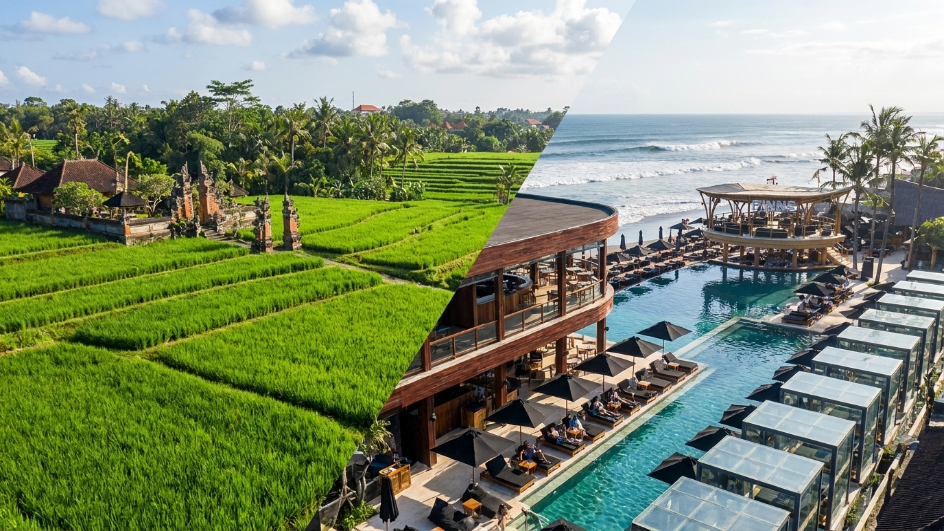
The southwestern coastline of Bali has undergone a metamorphosis that is practically unprecedented in the history of global tourism. Over the span of a single decade, the district of Canggu has completely shed its former identity as a sleepy, agrarian enclave defined by its terraced rice paddies and obscure surf breaks. Today, it stands as an undisputed global epicenter for high-energy entertainment, digital nomadism, and experiential luxury. This staggering transformation has redefined the traditional hospitality model. The conventional paradigm—where tourists would book a hotel room, venture out for sightseeing, and perhaps visit a standalone restaurant or nightclub—has been heavily augmented, and in some cases entirely replaced, by the all-encompassing lifestyle ecosystem of the mega beach club.
When analyzing the modern trajectory of global leisure, canggu beach clubs represent a masterclass in destination engineering. These venues are no longer just places to grab a cocktail by the ocean; they have evolved into massive, self-contained micro-destinations that dominate a visitor’s entire daily itinerary. They blend world-class musical curation, premium culinary offerings, sophisticated architectural design, and highly structured luxury lounging into a single, seamless, day-to-night experience. For traveling groups, corporate retreats, bachelor and bachelorette parties, and lifestyle enthusiasts, spending a day at one of these sprawling complexes is not merely an option on the itinerary—it is the definitive anchor of the Bali experience.
At the absolute forefront of this localized revolution is Finns Beach Club. Situated on an expansive, highly coveted stretch of beachfront property directly facing the famous Berawa surf break, this specific venue has meticulously engineered its physical space and service protocols to accommodate thousands of daily visitors. Yet, it manages to do so while maintaining rigorously segmented tiers of exclusivity and personalized service. The sheer scale of the operation is difficult to overstate. Operating 364 days a year from 11:00 AM until midnight (closing only for the Hindu Day of Silence, Nyepi), the venue processes a staggering volume of international guests, blending relaxed daytime lounging with high-octane evening entertainment.
However, the astronomical success of these mega-venues has created a fascinating and frequently frustrating paradox. The rapid, unchecked commercial development inside the walls of these luxury enclaves has vastly outpaced the development of the public infrastructure outside of them. The friction between the ultra-luxury, frictionless experiences curated inside the beach clubs and the severe logistical and infrastructural challenges immediately outside their doors presents a unique dynamic that every visitor must navigate. A truly successful visit for any group requires far more than just showing up. It demands a comprehensive, nuanced understanding of venue booking models, the intricate psychology of minimum spend requirements, the granular benefits of VIP service tiers, and, perhaps most crucially, the absolute necessity of strategic transportation planning to combat Canggu’s notorious gridlock.
The Operational Architecture of the Modern Beach Club
To truly grasp how to optimize a visit, one must first understand the fundamental economic and operational paradigm that dictates how venues like Finns Beach Club function. Unlike traditional nightlife venues in Europe or North America that rely heavily on high baseline entry fees or exorbitant cover charges to generate baseline revenue and filter their clientele, the modern Balinese beach club operates on a highly decentralized, consumption-based model.
Finns Beach Club deliberately and entirely waives general admission fees. It is completely free for standard entry. Guests can walk through the doors, soak in the atmosphere, and access the venue without paying a cover charge, assuming there is no specialized ticketed event occurring, such as their massive New Year’s Eve or Anniversary parties. This strategic decision maximizes foot traffic, effectively transforming the sprawling property into a high-volume hospitality funnel. By removing the financial barrier to entry, the venue encourages maximum attendance.
Once inside, this massive influx of walk-in guests is accommodated by over 1,500 non-reserved seats scattered across a variety of immersive bar and restaurant areas. Areas such as Flippas Restaurant, the Surf Deck, the Manta Bar, the Gazebo Bar, the Ocean Bar, and the Garden Bar allow guests to participate in the energy of the club and consume food and beverages strictly a la carte, without any pre-defined financial commitment. For solo travelers, casual couples, or those who simply want to drop in for a quick sunset drink, this accessible model is highly attractive.
However, for groups planning a dedicated event, a celebration, or a prolonged stay, relying on the walk-in model is a highly volatile strategy. The average visitor dwells at the club for four to six hours, and the most coveted ocean-facing real estate is claimed almost immediately upon opening. Attempting to secure contiguous seating for a group of six to ten people without a reservation in a venue that frequently sells out before the doors even open is a recipe for logistical failure. This is where the core economic engine of the venue comes into play: the monetization of premium lounging real estate through the minimum spend model.
Decoding the Minimum Spend Economy
The concept of the minimum spend is perhaps the most misunderstood aspect of the beach club experience for first-time visitors, yet it is the absolute foundational pillar of the industry’s profitability. Access to the venue’s premium daybeds, cabanas, and highly coveted ocean-front lounging areas is not governed by a flat rental fee. Instead, guests are required to commit to spending a predetermined monetary threshold—the minimum spend—in exchange for the exclusive use of that designated space for the duration of the day.
The psychological and economic brilliance of this specific model cannot be overstated. From the consumer’s perspective, they do not feel penalized by a “sunk cost.” If a group is charged a $500 flat fee simply to rent a bed, that money is gone before they have even ordered a glass of water. Under the minimum spend system, the entire deposit functions as a highly liquid credit that is applied 100% toward their food, beverage, and even tobacco purchases throughout the day. The bed itself, in practical terms, costs nothing; the guests are simply pre-paying for their consumption. For a group planning to spend the day drinking premium cocktails, ordering sharing platters, and perhaps indulging in bottle service, hitting the minimum spend happens naturally and effortlessly.
From the venue’s operational perspective, this mechanism is a stroke of genius. It establishes a guaranteed, non-refundable minimum transaction value for the most valuable square footage on the property. This aggressively shields the business from “campers”—guests who might otherwise arrive at 11:00 AM, claim a prime ocean-front daybed, and sit there for eight hours nursing a single bottle of water and a bowl of french fries. The minimum spend mechanism acts as an invisible, financial filter that naturally distributes the demographic across the venue’s various zones. Budget-conscious visitors self-select into the communal, free-seating bar areas, while high-demand, high-visibility ocean-front real estate is strictly reserved for premium clientele who are willing to invest in the full hospitality experience.
Temporal Yield Management and Pricing Dynamics
Furthermore, the minimum spend requirements are not static figures. They fluctuate based on the time of day and the season, acting as a highly sophisticated form of dynamic yield management. The venue’s management acutely understands its own traffic patterns. The primary operational peak consistently occurs during the late afternoon. Specifically, the window between 5:00 PM and 8:00 PM is an absolute pressure cooker, because the spectacular daily sunset draws both the daytime lounging guests (who are extending their stay) and the evening party crowds (who are just arriving) into the exact same ocean-facing areas simultaneously.
To manage this intense surge and incentivize off-peak attendance, the venue aggressively manipulates its pricing. Guests who arrive as walk-ins before 2:00 PM—when the club is noticeably calmer and the sun is at its peak intensity—are frequently granted a massive 50% reduction in minimum spend requirements for available daybeds. Conversely, after 8:00 PM, when the crucial sunset transition concludes, the older demographic often departs for dinner, and the venue shifts its identity into a high-volume, pure nightlife atmosphere focused around the DJ booths. At this point, the remaining daybeds frequently become available to walk-ins with absolutely no minimum spend requirement, subject entirely to whatever inventory happens to be vacant.
For travelers arriving in February, which is traditionally considered a low-season month in Bali, the venue often deploys special seasonal offers, where a minimum spend of roughly IDR 500,000 per person might be sufficient to secure highly desirable seating. However, the golden rule of the beach club ecosystem remains absolute: booking online through the official platform in advance almost universally guarantees a lower minimum spend threshold than attempting to walk in and negotiate on the day, and it is the only way to guarantee group contiguous seating.
Spatial Design: Mapping the Seating and Vibe Zones
Finns Beach Club is not a monolithic space; it is a sprawling, carefully zoned complex that is meticulously tiered to cater to varying group sizes, entertainment budgets, and desired social experiences. By segregating the massive property into distinct architectural zones, the venue successfully prevents operational bottlenecks and allows vastly different demographics to co-exist without friction. Understanding this spatial architecture is vital for groups looking to curate their specific vibe. The seating hierarchy is broadly divided into three primary categories: the Garden Party Area, the Beach Party Area, and the highly insulated VIP Beach Club Section.
The Standard and Premium Daybed Tiers
The Garden Party Area is strategically situated slightly set back from the direct ocean front. While it lacks the immediate, unobstructed views of the crashing surf, it provides a highly immersive, slightly shaded environment that feels distinct from the intense energy of the main pool. It is specifically engineered for budget-conscious groups, casual gatherings, and those who wish to participate fully in the club’s atmosphere without committing to the premium price tags associated with the front row.
Moving closer to the action, the Beach Party Area is the beating heart of the complex. Positioned adjacent to the main infinity pool, the primary DJ zones, and the shoreline, this area commands significantly higher minimum spends due to its proximity to the venue’s core entertainment and its unobstructed sunset vistas.
The following table provides a granular breakdown of the specific seating options, capacities, and financial requirements within these standard zones, allowing groups to strategically plan their investments:
| Venue Zone / Specific Bed Type | Maximum Capacity | Baseline Minimum Spend (IDR) | Strategic Positional Advantages |
| Garden Party Bed | Up to 6 guests | Starts at 650,000 | Located in a shaded, slightly removed garden area. Ideal for budget-conscious groups. |
| Garden Party Sofa | 4 to 6 guests | Around 1,000,000 | Provides highly comfortable shaded seating with excellent, rapid pool access. |
| Beach Party Sofa | 4 to 6 guests | Starts at 1,500,000 | Positioned significantly closer to the ocean, offering elevated views. Perfect for small groups. |
| Beach Party Lagoon Bed | Varies | Approx. 2,000,000 | Offers direct, step-in access to the lagoon pool. Highly favored by families and couples seeking water proximity. |
| Beach Party Deluxe Bed | Up to 6 guests | Approx. 2,600,000 | Features premium, front-row positioning with unobstructed, world-class sunset vistas. |
| Super Deluxe Bed | Up to 10 guests | Approx. 6,000,000 | Boasts the absolute apex positioning within the Beach Party zone. Specifically designed for large parties and celebrations. |
While these standard and premium areas offer an incredible atmosphere, they still require guests to manage elements of their own minor logistics. For instance, if guests in the Beach Party area wish to use the pool, they must physically go to a kiosk to hire a towel and pay a deposit for a locker to secure their belongings, as leaving valuables unattended on a daybed while swimming is generally discouraged. For those seeking an elevated, entirely frictionless experience devoid of these minor administrative tasks, upgrading to the VIP tier becomes the only logical choice.
The Pinnacle of Exclusivity: The finns beach club vip Experience
The introduction of the finns beach club vip tier represents a fundamental shift in the hospitality paradigm. It moves away from a standard, volume-based food-and-beverage transaction and steps firmly into the realm of comprehensive, high-touch luxury hospitality. Located in a dedicated, visually distinct section of the property featuring absolute beachfront vantage points to take in the Berawa surf break, the VIP club is meticulously designed to insulate premium guests from the high-density crowds and kinetic energy of the main venue.
Securing a space in this exclusive enclave naturally requires a higher financial commitment. The VIP Ocean Front Pool Beds initiate at a minimum spend of IDR 2,800,000 for two individuals, while the expansive VIP Cabana Beds utilize premium pricing structures to offer an environment of ultimate, walled-off privacy, making them highly sought after by luxury couples, executives, and small groups demanding seclusion.
However, the true, profound value proposition of the VIP tier does not merely lie in a better view or a softer mattress. The real return on investment is found in its exhaustive, highly curated list of complimentary perks and logistical circumventions. These benefits are carefully designed to anticipate needs and entirely remove every conceivable friction point from the guest experience.
A Granular Analysis of VIP Service Mechanisms
- Logistical Insulation (Escorted Entry and Valet): The physical entrance to any mega-club can frequently be a chaotic environment, characterized by large crowds attempting to walk in, aggressive taxi drivers, and ride-hailing congestion. The VIP tier neutralizes this stress immediately. Guests are provided with complimentary, secure valet service for both cars and motorbikes, alongside an escorted entry protocol. This ensures a seamless, VIP-only transition from the dusty, gridlocked street directly into the sanctuary of the club.
- Psychological and Physiological Reset: Upon being escorted to their premium bed, VIP guests are immediately presented with complimentary welcome Mimosas and ice-cold face towels. This is not merely a polite gesture; it is a deliberate psychological reset, actively designed to lower the cortisol and stress levels inevitably induced by navigating Bali’s surrounding traffic conditions. Furthermore, the inclusion of afternoon spritz services, complimentary morning tea and coffee, and endless free-flowing water ensures that continuous hydration and comfort are maintained without the guest ever having to flag down a waiter.
- Infrastructural Conveniences: Unlike the standard sections where guests must interrupt their leisure to queue at rental kiosks, the VIP packages automatically integrate all necessary infrastructure. Guests receive complimentary plush towel rentals, access to completely private change rooms, and unrestricted, complimentary use of secure lockers.
- Exclusive Service Modalities and Micro-Luxuries: The physical lounging apparatus is elevated to “Premium Beds.” Guests are provided with an exclusive menu selection that is entirely unavailable in the broader, high-volume venue, alongside priority booking privileges at the venue’s upscale on-site restaurant, Monsoon. It is the hyper-specific, micro-luxuries that truly define the tier: complimentary high-end sunscreen, afternoon gelato drops, portable power banks to keep phones charged for photos, amenity pouches, and even a dedicated sunglasses cleaning service.
The synthesis of these VIP perks demonstrates a highly evolved, deeply analytical understanding of the modern luxury consumer. The VIP tier does not merely offer spatial exclusivity; it fundamentally alters the temporal and emotional flow of the day. It prioritizes extreme convenience, personalized attention, and the complete elimination of minor annoyances, allowing the guest to exist in a state of uninterrupted leisure.
Event Logistics and Comprehensive bali party packages
The logistical complexities of managing a large group—whether for a corporate team-building retreat, a lavish pre- or post-wedding function, or an elaborate bachelor or bachelorette celebration—add massive layers of difficulty to the beach club experience. Arriving with twelve people and hoping for the best is an impossible strategy. To address this highly lucrative demographic, the Balinese hospitality ecosystem has developed comprehensive bali party packages that entirely externalize the burden of planning, scheduling, and logistical execution.
Mega-venues like Finns cater specifically to this market by offering seven stunning, specialized event areas. Each area features individual styling, design elements, and dedicated facilities, allowing groups to partition off private sections of the property for their exclusive use. For groups seeking to maximize their value while easily meeting the higher minimum spends associated with large spaces (such as the IDR 6,000,000 Super Deluxe Bed), Finns offers the “Ultimate Experience Package.” This highly structured offering features pre-booked premium bottle service combined with exclusive discounts, optimizing the minimum spend requirements for higher-volume, predictable consumption. Given the intense global demand for these spaces, event planners and large groups are systematically advised to secure their daybeds, cabanas, or VIP zones a minimum of two to three weeks in advance to guarantee availability.
The Broader Market for Group Buyouts and Concierge Services
Beyond the perimeter of Finns Beach Club, the wider Balinese market offers incredibly sophisticated, highly customized group entertainment solutions. Venues such as Roosterfish Beach Club, located further south at the pristine Pandawa Beach, capitalize heavily on the corporate and large-scale event sector by offering complete, absolute buyout packages. With a sprawling 5,300 square meter footprint, Roosterfish can accommodate up to 180 guests for a formal seated dinner or a massive 2,000 guests for a standing beach party. This buyout model requires a heavily negotiated minimum spend covering all food and beverages for the duration of the event, but in return, it grants the group complete exclusivity over the indoor restaurant, alfresco dining spaces, and the massive beachside pool, alongside fully customizable security parameters and privacy.
Concurrently, a massive secondary industry of external concierge services and boutique event management agencies has emerged to service these groups. Companies like Inside VVIP provide granular, highly detailed a la carte additions to elevate standard party packages. These services allow group organizers to micro-manage their events by hiring specialized, on-demand personnel. A quick review of their a la carte pricing reveals the depth of this industry: VIP hosts ($300), professional male or female DJs ($400-$600), private security bodyguards ($200), dedicated paparazzi to document the day ($200), and a wide array of specialized entertainers including fire dancers ($330) and belly dancers ($250). They can even arrange portable JBL Boombox rentals and private shisha sets. This allows a group to take a standard venue booking and transform it into a highly bespoke, private production.
Furthermore, tour operators like Life is a Beach Party consolidate these fragmented experiences into seamless, multi-day itineraries. They offer comprehensive packages that combine VIP beach club entry with private yacht parties, exclusive drink discounts, and curated networking environments, allowing international travelers to experience the absolute peak of the island’s party scene without lifting a finger to plan it.
Other specialized agencies like Luxury Escapes provide broader “Party Vibe” holiday packages that bundle luxury accommodation, such as stays near Lovina Beach, with guaranteed room upgrades, daily spa treatments, and cocktail inclusions. For the adventurous groups, operators offer combo packages, such as pairing a VIP reserved daybed at Tropical Temptation Uluwatu (starting at $39 AUD) with a 2-hour jungle Quad Biking adventure ($120 AUD) that includes return transfers, meals, and safety gear.
However, regardless of how meticulously a group package is curated inside the venue, or how many fire dancers and VIP hosts have been hired, its ultimate success is entirely, undeniably contingent upon the group’s ability to successfully navigate the macro-environment outside the venue’s walls. This introduces the single most significant, most stressful disruptive factor in the Balinese hospitality sector: total infrastructural gridlock.
The Infrastructural Paradox: Analyzing the Canggu Traffic Crisis
The defining paradox of the modern Canggu experience—and the element that most frequently ruins poorly planned vacations—is the stark, jarring juxtaposition between the hyper-efficient, luxurious micro-environments inside the beach clubs and the near-total infrastructural collapse of the surrounding road networks. The traffic congestion in Canggu, particularly around the Berawa area where Finns is located, is not just bad; it is legendary. It frequently turns a geographical distance of mere kilometers into a deeply frustrating, hour-long logistical ordeal.
Understanding the specific etiology and timing of this congestion is not just helpful; it is absolutely crucial for any strategic travel planning. The gridlock is not merely a symptom of a standard “rush hour” as experienced in Western cities; it is the catastrophic result of a severe, structural imbalance between incredibly rapid commercial development and a static, inherently limited agrarian infrastructure.
The Root Causes of Systemic Gridlock
The primary, undeniable catalyst for the traffic crisis is the sheer, overwhelming volume of vehicles relative to available road capacity. Recent data indicates that Bali currently registers an astronomical fleet of over 5.2 million vehicles. This number significantly overshadows the island’s entire residential population of approximately 4.3 million. A wildly disproportionate percentage of this massive vehicular mass is continuously funneled into the narrow corridors of the Badung regency, specifically Canggu.
The arterial roads of this district—most notably Jalan Pantai Batu Bolong and Jalan Pantai Berawa—were never designed for commercial traffic. Historically, they were small, narrow farm paths utilized by locals to access rice terraces and the beach. Today, these same narrow paths are subjected to the heavy, continuous flow of massive commercial delivery trucks supplying the beach clubs, large tourist vans, and tens of thousands of private scooters.
This historical infrastructure has violently collided with the uncontrolled tourism and development boom. Canggu’s explosive global popularity has led to a frantic, ceaseless building surge of luxury villas, resorts, beach clubs, and trendy cafes. Because zoning laws are frequently loose or selectively enforced, every square meter has been transformed into a high-yield commercial zone. Consequently, every single new venue acts as a massive traffic generator, drawing in staff, suppliers, and patrons, overwhelming an infrastructure that cannot physically be widened due to existing property lines.
Compounding these severe structural deficits is the near-total absence of reliable mass public transportation. Unlike major metropolitan tourist hubs, Canggu lacks a centralized bus or rail transit system. This catastrophic planning failure forces the entirety of the population—locals, expatriates, and millions of tourists alike—to rely exclusively on private motorbikes and cars. This drastically increases the volume of vehicles per kilometer of road to unsustainable levels.
Furthermore, problematic local driving behavior dramatically exacerbates the physical limitations of the roads. The aggressive disregard for traffic flow and basic courtesy is rampant. This is most vividly characterized by the local phenomenon of “rebut jalur”—an aggressive maneuver where drivers forcefully seize the right-of-way or pull into an intersection without the space to clear it. When a key intersection gets blocked by just two or three impatient vehicles executing a rebut jalur, the entire traffic matrix seizes up instantly, sending massive ripples of congestion backward for kilometers.
The Berawa Bottleneck and Peak Congestion Dynamics
The area immediately surrounding Finns Beach Club on Jalan Pantai Berawa is exceptionally vulnerable to these systemic failures. While Jalan Pantai Berawa is marginally wider than neighboring routes like Batu Bolong, it sustains an intense, localized concentration of high-volume destinations. The flow of traffic on this main artery is continuously fractured and paused by vehicles attempting to turn into or slowly exit from the myriad of extremely narrow access alleys (gangs) that lead into private villa complexes and resort drop-offs.
The most critical failure point in this immediate road network is the Simpang Padonan junction. This major intersection sits precisely on the critical Berawa-Canggu-Dalung route. Because multiple dense, high-volume traffic streams converge at this single, poorly managed node, it serves as a notorious hotspot that frequently triggers severe, cascading traffic jams that effectively paralyze the entire Berawa district. Beyond Canggu, this congestion is mirrored in other tourist hotspots like Jalan Raya Kuta near the airport (heavy from 10:00 to 13:00 and 16:00 to 19:00), Sunset Road at the Simpang Siur junction, and the tight lanes of Legian and Poppies Lane, which become essentially impassable from 19:00 to 23:00 due to nightlife foot traffic.
Temporal analysis of this congestion in Canggu reveals distinct, highly predictable patterns that directly impact venue attendance and travel times. The daily congestion cycle begins to noticeably build in the early afternoon, reliably around 2:00 PM. However, the absolute peak of the crisis—the critical red zone—reliably occurs at 5:00 PM.
This specific hour represents a perfect storm of logistical movement. It is the exact moment when early afternoon commuters finishing work, late-day sunset chasers rushing desperately toward the beach clubs, and early dinner-goers all converge simultaneously on the exact same narrow arteries. During this window, GPS applications frequently show travel times of over an hour to cover a mere 9 kilometers. This severe congestion remains critically high through the evening until approximately 8:00 PM or 9:00 PM, creating a massive, highly stressful barrier for groups attempting to travel between venues, head to dinner, or simply return to their accommodations after a day of partying. To maintain sanity, experts strongly advise planning any required travel outside the severe windows of 10:00 AM to 1:00 PM and 7:00 PM to 9:00 PM.
Read also:
- Bali 7 Days Tour Package: 2026 Itinerary & Costs
- Bali Yoga Retreat Package: Total Awakening
- Bali Money Changer Guide: Best Rates, Zero Scams!
Navigating the Gridlock: Strategic Transit Solutions
The severe logistical realities of Canggu dictate a hard truth: securing a premium daybed, negotiating a great minimum spend, or booking a luxury VIP cabana at Finns Beach Club is only half of the required planning equation. The luxury of an escorted entry, the refreshment of welcome mimosas, and the relaxation of premium lounging are all immediately, brutally negated if a group is subjected to a 90-minute ordeal sitting in a hot, stationary taxi, or worse, if they are left stranded on a narrow roadside at midnight attempting to frantically coordinate multiple ride-hailing applications that keep canceling on them.
For groups, the transportation challenge is exponentially multiplied. Transporting a party of six to twelve people requires a coordinated effort. Attempting to flag down multiple local taxis on the street is a fool’s errand; during peak hours, drivers frequently refuse to enter deeply congested zones like Berawa, or they flatly refuse to use the meter, demanding exorbitant, extortionate off-meter fares.
Alternatively, relying on ride-hailing apps (like Gojek or Grab) for a large group means ordering three or four separate cars. Because of the traffic, these cars will arrive at different times, get stuck in different parts of the gridlock, and drop the group members off at the venue half an hour apart, completely ruining the cohesive group arrival experience.
The other common option—attempting to navigate unfamiliar, poorly lit, and highly congested roads on rented scooters—introduces massive safety and liability risks. Driving a scooter in Bali requires hyper-vigilance and local experience even on a quiet day. Doing so in gridlocked traffic, in the dark, potentially after a long day of consuming alcohol at a beach club, is highly dangerous and strongly discouraged for tourist groups.
Therefore, pre-arranged, private group transportation is not a supplementary luxury or an optional add-on; it is an absolute operational necessity for any successful party package. By securing dedicated, large-capacity transport, groups entirely bypass the chaotic, stressful, and unpredictable nature of the local transit market.
A private vehicle with a professional driver serves as a mobile extension of the VIP experience. It provides a climate-controlled, secure environment for the group to stay together, socialize, and safely transition between the venue and their accommodation. Furthermore, experienced local drivers possess an intimate, highly valuable knowledge of secondary neighborhood shortcuts—known locally as “jalan tikus” (mouse paths). These incredibly narrow, winding residential alleys rarely register effectively on standard GPS applications, but they allow seasoned drivers to seamlessly bypass the most severe, stationary bottlenecks at Simpang Padonan or the main stretches of Jalan Raya Canggu.
Enjoy the ultimate beach club experience safely. Bali Agung Tours offers private group transport to Finns Beach Club, so you can party without worrying about navigating Canggu’s nighttime traffic. By booking professional transit, groups ensure that the end of their night is as smooth and luxurious as the beginning.
Conclusion: Engineering the Flawless Group Experience
The modern mega beach club represents the absolute zenith of experiential hospitality. It requires massive, highly complex operational infrastructure to maintain the incredibly delicate balance between high-volume public accessibility and segmented, ultra-premium luxury. Finns Beach Club exemplifies this modern model with absolute precision. The implementation of their fully credited minimum spend system effectively democratizes access to the general venue while brilliantly monetizing their prime ocean-front real estate, ensuring profitability while providing flexibility to the consumer.
For those seeking the ultimate manifestation of this lifestyle environment, the VIP tier delivers a masterclass in targeted, high-touch hospitality. By systematically identifying and removing logistical frictions—through the deployment of valet services, escorted entries, private change rooms, and highly curated premium amenities—the venue ensures that the guest’s psychological state remains entirely focused on unburdened leisure and celebration.
However, the analytical consensus of the broader Balinese ecosystem indicates that the primary threat to this carefully curated luxury experience lies entirely outside the venue’s control. The staggering, systemic imbalance between the millions of vehicles on the island and the antiquated, narrow agrarian road networks of Canggu guarantees severe, daily gridlock. With peak congestion viciously seizing the Berawa area from mid-afternoon, peaking during the critical 5:00 PM sunset window, and lasting well into the dark nighttime hours, relying on spontaneous transportation solutions is a remarkably high-risk strategy that routinely compromises the safety, cohesion, and enjoyment of large groups.
To preserve the integrity of the financial investment made in premium party packages and VIP daybeds, the strategic integration of reliable, pre-planned logistics is paramount. By delegating the immense complexities of geographical navigation to local professionals, guests ensure that the luxury, safety, and exclusivity of the beach club extend seamlessly from the moment they leave their villa’s driveway to the moment they safely return. Thorough planning transforms a potentially stressful logistical nightmare into a flawlessly executed, unforgettable Bali experience.