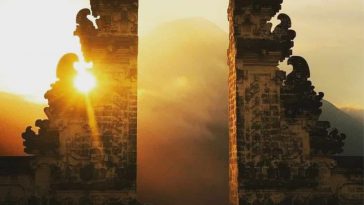
The island of Bali has undergone a massive transformation in the eyes of the global travel community. While the destination has historically been celebrated as a tranquil haven for meditation, wellness retreats, and sunset cocktails on the beach, the modern iteration of this Indonesian paradise caters heavily to the adrenaline-obsessed. Today, the island stands as a premier global hub for extreme sports, deep-jungle off-roading, and world-class underwater exploration. For those diving into serious holiday trip planning, the ultimate Balinese itinerary demands far more than just lounging by a resort pool. It requires getting mud on the tires, navigating white-water rapids, swinging out over massive ravines, and descending into the deep ocean currents of the Coral Triangle.
Travelers building out their bucket list travel ideas are increasingly pointing their compasses toward the rugged interior of Ubud for jungle treks, the subterranean dirt tracks of Payangan for motorized mayhem, the expansive agrotourism estates of Tegallalang for aerial thrills, and the complex, pelagic-heavy ocean straits separating Bali from Nusa Penida.
However, navigating the sheer volume of high-octane activities available across the island requires serious strategic foresight. The absolute core of a stress-free, budget-optimized travel strategy lies in securing comprehensive bali adventure packages and bali scuba diving packages. A well-known reality in the travel industry dictates that acquiring individual tickets directly at the venue is almost always more expensive, highly inefficient, and logistically exhausting compared to securing pre-bundled itineraries in advance.
This exhaustive, deep-dive report breaks down everything thrill-seekers need to know about Bali’s top-tier adventure offerings. The analysis will cover the splashy, culture-rich rapids of the Ayung River, the insane subterranean and waterfall tracks of Kuber ATV, the sky-high aerial mechanics of alas adventure by alas harum, and the wildly contrasting underwater worlds of Tulamben and Nusa Penida.
The Economics of Adventure: Why Bundled Packages Beat On-The-Spot Pricing

A critical component of planning any weekend getaway in Bali, or even a month-long expedition, involves ruthless budget optimization. The internet is full of conflicting stories regarding local travel costs: one camp claims the island is a budget-friendly backpacker utopia, while another warns of premium “lifestyle hub” pricing where simple activities drain wallets instantly. The truth actually lies in how these activities are booked and paid for.
Data and on-the-ground experiences consistently reveal that booking bundled bali adventure packages in advance is significantly cheaper than showing up at a venue and buying tickets at the counter. When activities are purchased individually as a walk-in, the base ticket price rarely reflects the true, total cost of the day out. Walk-in rates notoriously exclude essential logistical elements such as round-trip hotel transfers, buffet meals, locker rentals, and sometimes even the localized insurance coverage required for extreme sports.
Furthermore, local transport costs can escalate wildly. Hiring a private driver for a day of point-to-point travel across the island’s heavily congested districts can cost anywhere from $35 to $50 USD per day, depending on negotiation skills and the distance covered. Relying on ride-hailing apps for long distances into rural jungle areas often leaves travelers stranded, as drivers are reluctant to venture far from the main tourist hubs of Seminyak, Kuta, or Canggu without charging exorbitant return fees.
Bundled packages entirely bypass these headaches by leveraging economies of scale. Tour operators maintain established, high-volume contracts with the actual activity providers, allowing them to pass wholesale discounts directly to the consumer. A standard, high-quality adventure bundle seamlessly integrates the activity ticket, all specialized safety equipment, a certified professional guide, a buffet lunch, access to shower facilities, and, most crucially, round-trip private transportation from the traveler’s hotel.
The financial contrast is impossible to ignore. Purchasing an individual ATV ride walk-in ticket, hiring a private driver for the day, and buying a separate lunch at a tourist-priced restaurant can easily exceed the cost of a pre-booked, all-inclusive package by a massive 30% to 40% margin. Additionally, booking online in advance shields international travelers from dynamic local pricing structures, ensuring total transparency and preventing the sudden inflation of rates that walk-in tourists occasionally face.
For an even more comprehensive breakdown of how to navigate local transportation economics, driver negotiations, and route planning, travelers are highly encouraged to consult Artikel #1.
| Expense Category | Estimated On-The-Spot / DIY Cost (USD) | Estimated Cost within a Bundled Package (USD) |
| Core Activity Ticket (e.g., ATV or Rafting) | $45 – $60 | Included in base package price |
| Round-Trip Private Driver/Transfer | $35 – $50 | Included in base package price |
| Buffet Lunch & Refreshments | $10 – $20 | Included in base package price |
| Equipment, Lockers, Towels & Insurance | $5 – $15 | Included in base package price |
| Total Estimated Daily Spend | $95 – $145 | $50 – $85 |
The numbers speak for themselves. The absolute best way to maximize time, preserve travel funds, and eliminate stress is through bundled reservations. This strategy is especially vital for couples looking for seamless romantic travel destinations or large groups needing airtight logistics.
Ayung River Rafting: Jungle Gorges, Splashy Rapids, and Ancient Stone Art
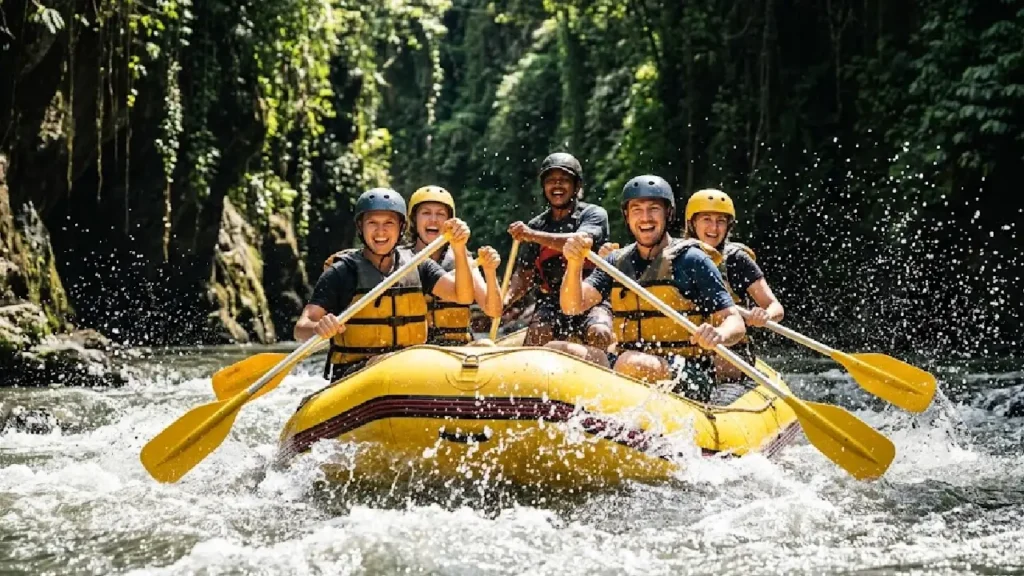
For those looking to get their feet wet—literally—in the world of white-water sports, the Ayung River is the undisputed king of Bali’s rafting scene. Located just a short drive from the cultural heart of Ubud, the Ayung stretches an impressive 75 kilometers from the cool northern highlands all the way down to the Badung Strait. However, it is the specific 10 to 12-kilometer stretch that carves through the deep, emerald-green gorges of Ubud that attracts thrill-seekers from around the globe.
Hydrology and the Sweet Spot of Difficulty
The Ayung River is officially classified as offering Class II to Class III rapids. In the wild world of river hydrology, this specific classification is the ultimate sweet spot. It denotes moderate, highly predictable currents with clear, navigable passages. The Class II segments feature gentle, playful waves perfect for cruising, while the Class III sections turn up the volume with faster water velocities, sudden fun drops, and irregular waves that demand synchronized team paddling and a lot of laughing.
This distinct hydrological profile makes the Ayung River legendary for being beginner-friendly. It delivers enough adrenaline and splash to qualify as a genuine adventure sport, yet it remains incredibly safe for families, completely inexperienced paddlers, non-swimmers, and kids as young as seven. The heart-pumping rapids are perfectly broken up by long, lazy stretches of calm water, giving everyone in the raft a chance to catch their breath, float along, and stare up at the insane jungle canopy.
This vibe stands in stark contrast to the Telaga Waja River over in East Bali. Telaga Waja is the Ayung’s wilder, more aggressive cousin, featuring intense Class III-IV rapids, continuous fast flows, and a totally crazy 4-meter dam drop. While hardcore adrenaline junkies love Telaga Waja, the Ayung remains the top recommendation for those wanting a perfectly balanced, incredibly scenic adventure without feeling like they are fighting for survival.
The Ramayana Stone Carvings: A Floating Museum
What truly elevates Ayung River rafting from a simple boat ride into a deeply immersive cultural expedition is the artwork hidden along its banks. Carved directly into the towering limestone and volcanic rock cliffs alongside the river are hundreds of meters of breathtaking, intricate stone reliefs.
These massive, moss-covered carvings depict intense scenes from the Ramayana, the revered 9th-century Hindu epic. As the rafts drift quietly through the shaded jungle gorges, adventurers are treated to a sequential stone storyboard. The art illustrates the legendary trials of Prince Rama, the dramatic abduction of his wife Sita, and the mythological, world-shaking battles against the demon king Ravana.
These carvings are not ancient ruins, but rather a brilliant modern tribute. They were meticulously chiseled by local Balinese artisans in the early 2000s to honor the island’s deep spiritual roots and connection to nature. Viewing these massive, green-hued deities from the water, surrounded by the sounds of cascading waterfalls and tropical birds, creates an atmosphere that feels entirely cinematic and profoundly magical.
The Physical Reality of the Gorge
An Ayung rafting trip generally guarantees about 1.5 to 2 hours of actual time on the water. But the physical workout definitely starts before the paddles even touch the river. Accessing the launch points deep inside the gorge requires navigating a massive descent—often involving 300 to 400 stone steps carved steeply into the jungle hillside. The trek down is insanely beautiful, but it requires a moderate baseline of fitness. The climb back up the gorge after the rafting finishes is a legitimate leg-burner.
Top-tier operators completely make up for this physical exertion by providing epic facilities at the top. Once the climb is conquered, rafters are rewarded with ultra-clean changing areas, hot showers stocked with fresh towels and bath gels, and a massive Indonesian buffet lunch. Eating spicy Nasi Goreng in an open-air pavilion while looking out over the panoramic Ayung Valley is the ultimate post-adventure cooldown.
| Feature | Ayung River Rafting Profile | Telaga Waja River Comparison |
| Geographic Location | Ubud, Central Bali | Karangasem, East Bali |
| Rapid Classification | Class II – III (Mild to Moderate Thrills) | Class III – IV (Aggressive & Fast) |
| Track Distance | Approx. 10 – 12 Kilometers | Approx. 14 – 16 Kilometers |
| Duration on Water | 1.5 – 2 Hours | 2.5 – 3 Hours |
| Signature Highlights | Ramayana Stone Carvings, Hidden Waterfalls, Lush Canopies | Open Valleys, Mount Agung Views, 4-Meter Dam Drop |
| Target Demographic | Beginners, Families, Cultural Enthusiasts, Casual Adventurers | Experienced Rafters, Hardcore Adrenaline Seekers |
Kuber ATV Adventure: Subterranean Tunnels, Waterfalls, and Absolute Mud
While renting a scooter to cruise to a beach club is fun, tearing through the jungle on a massive four-wheeler is a completely different beast. ATV (All-Terrain Vehicle) tours are absolutely everywhere in Bali, but the Kuber Bali Adventure track located in Payangan (just north of Ubud) has completely rewritten the rulebook. Moving lightyears beyond the basic, flat, dusty circuits offered by budget operators, the Kuber track is a 1.5-hour, 8-kilometer immersive off-road masterpiece. It is designed to aggressively test the handling of the machines and the sheer nerve of the riders.
The 700-Meter Natural Cave Tunnel
The undisputed crown jewel of the Kuber ATV experience is its insane subterranean passage. Midway through the jungle route, riders pilot their quad bikes directly into a massive, naturally formed underground cave system. This is not a cheap, fake theme-park tunnel; it is a historic passage originally excavated during the Dutch colonial era, stretching an incredible 400 to 700 meters long depending on the specific route loop taken.
Breaching the entrance of the tunnel triggers a wild sensory shift. The heavy, humid tropical heat is instantly replaced by a deep, chilling subterranean coolness. Daylight completely vanishes, forcing riders to rely entirely on the piercing beams of the ATV headlights to navigate the narrow, rocky, water-logged passage. The stone acoustics inside the cave amplify the roaring, echoing sound of a dozen quad bike engines, creating an intensely cinematic, high-adrenaline atmosphere. Travelers constantly compare the vibe to being completely lost in an Indiana Jones movie. This specific underground feature is entirely exclusive to the Kuber track, making it a legendary staple of modern bali adventure packages.
The Waterfall Ride and The Mud Zones
As if surviving a pitch-black colonial tunnel wasn’t enough, emerging back into the daylight immediately presents the next massive obstacle: a cascading hidden waterfall. And this isn’t just a scenic photo stop where riders park and look from a distance. The Kuber track engineers routed the path so that the ATVs must be driven directly through the falling water and across the underlying riverbed. Getting absolutely soaked by the waterfall while gunning the throttle is a massive, refreshing shock to the system and easily one of the most insanely fun moments of the entire expedition.
The rest of the circuit is a masterclass in topographical variety. The ride kicks off smoothly, cruising through the traditional Balinese subak irrigation systems and glowing green rice paddies. But it quickly escalates, plunging riders into dense, dark bamboo forests and specifically engineered “Mud Zones”. These mud zones are deep, thick, slippery trenches of wet earth that require serious throttle control and momentum to conquer without getting stuck. The track also throws in steep uphill climbs, sharp descents, and sketchy bamboo bridges that require riders to actively shift their body weight to keep the vehicle grounded.
Single vs. Tandem Riding Dynamics: Choose Your Weapon
When booking an ATV adventure, travelers must choose between two distinct riding styles, which drastically changes the price and the vibe of the day:
- Single Ride (Solo): One person, one machine. This is the ultimate choice for adrenaline junkies, solo travelers, or anyone who wants total, uninterrupted control over the speed, drifting, and braking. It is physically demanding, as the solo rider absorbs every single bump, rock, and mud-slide.
- Tandem Ride (Shared): Two people sharing one ATV (one driving, one holding on for dear life on the back). This setup is incredibly popular for couples on romantic travel destinations, or parents riding with kids (usually allowed for ages 6 and up, though they ride at their own risk without specific insurance coverage). The massive benefit of tandem riding is that the passenger can safely act as the designated videographer, capturing all the mud splashes and tunnel echoes without having to steer a heavy 250cc machine.
Safety is heavily prioritized by premium operators. The Kuber packages inherently include the mandatory use of sterilized safety helmets and heavy-duty rubber gumboots (essential for the deep mud), a comprehensive test-drive briefing, and highly trained guides scattered throughout the trickiest sections of the track to pull out anyone who gets their tires stuck.
Alas Adventure by Alas Harum: Mastering the Jungle Canopy
Transitioning from the deep mud of the valleys to the dizzying heights of the canopy, the Alas Harum estate in the Tegallalang district offers a flawlessly curated mix of extreme heights, luxury lounging, and premium agrotourism. The adventure wing of this facility, officially branded as alas adventure by alas harum (or Alasan Adventure), occupies a massive, beautifully landscaped 8-hectare playground carved directly into the sides of the world-famous northern Ubud rice terraces.
The Physics and Engineering of the Jungle Swings
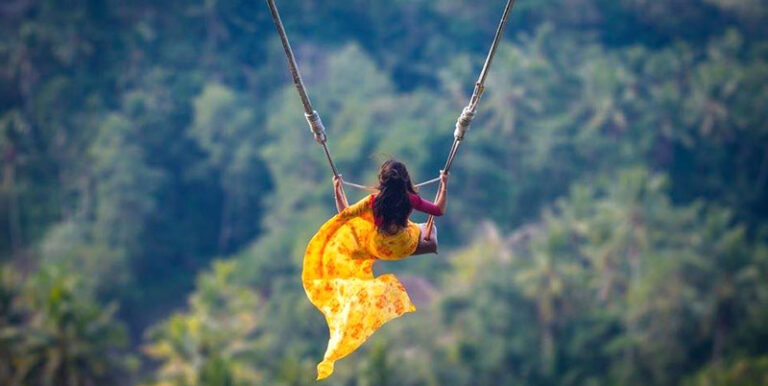
The “Bali Swing” phenomenon has basically owned global travel social media for a decade, but Alas Harum takes the concept and injects it with massive structural scale and terrifying variety.
The absolute monster of the park is the Super Extreme Swing. This towering pendulum mechanism straps participants into a highly engineered double harness and launches them a mind-bending 25 meters (over 80 feet) straight out into the open air. Suspended over the steep, plunging jungle ravine, riders experience a wild sensation of zero-gravity weightlessness at the apex of the swing, paired with an incredible, unobstructed panoramic view of the emerald terraces below.
Because not everyone wants to be launched into the stratosphere, the park offers a highly structured, multi-tier system of aerial rides to suit different courage levels:
- Extreme Swing: A slightly tamer, but still heart-pounding option that launches riders from 15 meters above the ground.
- Couple Swing: A tandem setup where two people are harnessed either side-by-side or face-to-face. It supports a combined maximum weight of 150 kg to 200 kg, making it a massive hit for honeymooners.
- Bed Swing: A huge, stable, rectangular platform designed for groups. It accommodates up to four people simultaneously (maximum 350 kg), allowing squads to swing together.
The Sky Bike and The 300-Meter Flying Fox
Beyond the classic pendulum swings, the alas adventure by alas harum complex introduces some seriously creative cable-based rides. The Sky Bike requires participants to mount a specially modified, harness-equipped bicycle that operates entirely on a high-tension steel tightrope suspended 15 meters above the valley floor. The 30-meter pedal across the void completely messes with your equilibrium and offers a highly surreal, floating perspective of the agricultural landscape.
For those who just want pure, unadulterated velocity, the Flying Fox (Zipline) stretches an insane 300 meters straight across the jungle canopy. Because physics matters when you’re flying through the air, the park enforces strict safety protocols: participants must weigh a minimum of 35 kg and cannot exceed 90 kg (or 100 kg for tandem setups). These strict limits ensure that the kinetic forces applied to the zipline’s braking systems remain perfectly within safety tolerances.
Luwak Coffee and the Cretya Ubud Day Club
The massive adrenaline spikes of the rides are perfectly balanced by the estate’s high-end culinary and relaxation options. Alas Harum is built around a fully functioning coffee plantation, and general admission tickets grant access to fascinating educational walking tours detailing the production of Kopi Luwak. Visitors get to observe the bizarre, traditional fermentation process involving the Asian palm civet, which results in one of the rarest, smoothest, and most astronomically expensive coffee beans on the global market.
Furthermore, the estate completely nails the luxury vibe via the Cretya Ubud Day Club. After sweating it out on the sky bikes and zip lines, guests can seamlessly transition to a spectacular three-tiered, adults-only infinity pool that is built directly into the curving contours of the rice paddies. The flawless integration of extreme canopy sports with high-end Mediterranean gastronomy, bubbling jacuzzis, and DJ-curated chill atmospheres represents the absolute pinnacle of modern Bali holiday trip planning.
| Alas Harum Attraction | Altitude / Distance | Strict Weight & Height Requirements | The Vibe / Highlight |
| Super Extreme Swing | 25 meters high | Min 35kg, Max 150kg | The ultimate adrenaline rush; maximum pendulum arc over the deep valley. |
| Extreme Swing | 15 meters high | Min 35kg, Max 150kg | Moderate thrill level; still incredibly photogenic. |
| Sky Bike | 15m high, 30m long | Min 165cm tall, Max 90kg | A surreal, balancing act; pedaling a bicycle across a tightrope. |
| Flying Fox (Zipline) | 300 meters long | Min 35kg, Max 90kg | High-velocity canopy transit; zooming over the terraces. |
| Bed Swing | Variable height | Max 350kg total (up to 4 pax) | Perfect for group shots and families wanting to swing together. |
Bali Scuba Diving Packages: WWII Wrecks, Coral Walls, and Ocean Giants
While the terrestrial jungles offer high-speed mechanics and mud, the true biological, historical, and sheer awe-inspiring weight of Bali is found beneath the crashing waves. Bali is strategically positioned right inside the Coral Triangle—the undisputed global epicenter of marine biodiversity, harboring over 76% of all known coral species on earth and thousands of unique reef fish varieties.
For certified divers, freedivers, and ambitious novices looking to get their PADI certification, sourcing the absolute best bali scuba diving packages is the most important decision of the trip. The island’s underwater topography is distinctly split into two legendary, polar-opposite zones: the calm, warm, macro-rich volcanic black sands of Tulamben in the northeast, and the turbulent, freezing, pelagic-heavy limestone cliffs of Nusa Penida in the southeast.
Tulamben: The Ghostly USAT Liberty and Macro Paradises
The sleepy, laid-back coastal village of Tulamben is famous globally for one specific, massive structure: the USAT Liberty Shipwreck. The history of this vessel is just as crazy as its current biological state. Originally an American military cargo ship, the Liberty was torpedoed by a Japanese submarine in the Lombok Strait during World War II in 1942. Limping badly, the ship was intentionally beached at Tulamben to salvage whatever cargo was left. It sat rusting on the stony beach for over two decades.
Then, in 1963, the catastrophic, violent eruption of the adjacent Mount Agung volcano triggered massive seismic tremors and rivers of lava. The force of the pyroclastic flows physically pushed the massive 120-meter steel hull off the beach and entirely into the ocean, sinking it for good.
Today, the wreck lies perfectly parallel to the shoreline. What makes it so famous is that it is uniquely accessible via a simple shore dive—requiring no expensive boat charters or tricky back-roll entries. The shallowest sections of the ship rest a mere 3 to 5 meters beneath the surface, making the upper decks and the coral-encrusted bow completely accessible to snorkelers and newly certified Open Water divers. The hull slopes downward along the sand, with the deepest structural remnants touching the 30-meter mark, providing an expansive, complex playground of swim-throughs, cargo holds, and dark engine rooms for advanced divers to explore.
Decades of saltwater immersion have completely transformed the mangled steel into an artificial reef of unprecedented, mind-blowing density. The metal skeleton is overwhelmed by massive gorgonian sea fans, huge barrel sponges, and vibrant soft corals. The wreck serves as a sanctuary for massive swirling schools of big-eye trevally, lurking resident great barracudas, and the famous, bizarre-looking bumphead parrotfish that sleep in the wreckage at night.
Furthermore, the dark, volcanic black sand surrounding the wreck and adjacent dive sites like Seraya Secrets has made Tulamben a globally recognized “muck diving” destination. The black substrate provides perfect, striking visual contrast for underwater macro photographers hunting for rare, microscopic species. The sands hide incredibly bizarre creatures, including ornate ghost pipefish, harlequin shrimp, highly venomous lionfish, weirdly shaped frogfish, and a staggering, colorful variety of fluorescent nudibranchs. With warm waters (typically 27°C–29°C), virtually zero currents, and exceptional ease of access, Tulamben is the ultimate relaxed, high-yield diving environment.
Nusa Penida: Manta Rays, Freezing Thermoclines, and the Elusive Mola Mola
On the complete opposite end of the spectrum is the island of Nusa Penida. Located a choppy 45-minute speedboat ride across the strait from mainland Sanur, Penida presents a radically different, highly aggressive oceanographic profile. The waters here are completely exposed to the massive, violent tidal exchanges between the Pacific and Indian Oceans. This results in deep oceanic upwellings, sheer limestone drop-offs, and powerful, unpredictable drift currents that can sweep divers along the reefs at high speeds.
The primary, massive draw for divers venturing to the rugged southern cliffs of Penida is Manta Point. Here, huge oceanic swells crash endlessly against the sheer limestone cliffs, creating a nutrient-rich soup of phytoplankton. Just 5 to 15 meters below the surface lie large limestone boulders that serve as established “cleaning stations”. Reef manta rays (Manta alfredi), boasting massive wingspans of up to 4 meters, congregate here year-round. They hover effortlessly in the heavy surge, allowing tiny parasitic copepods to be plucked from their skin and gills by resident cleaner wrasses. The sheer size and grace of these alien-like animals, swooping within inches of divers’ masks, creates an unparalleled, humbling interaction that defines bucket list travel ideas.
The second major, world-famous phenomenon of Nusa Penida occurs at sites like Crystal Bay, situated in the channel between Penida and Nusa Ceningan. Crystal Bay is globally famous for its bizarre seasonal visitors: the Mola Mola, or Oceanic Sunfish. From July to October, deep, freezing upwellings (thermoclines) sweep through the channel, dropping the comfortable 28°C water temperatures abruptly down to a bone-chilling 18°C-20°C. It is within these freezing thermoclines that the bizarre, massive, disc-shaped Mola Mola—weighing up to 1,000 kilograms—ascend from the pitch-black ocean trenches to the shallower reefs to be cleaned by schooling bannerfish.
Diving in Nusa Penida is wild, unpredictable, and heavily dictated by the lunar cycle and tidal charts. While sheltered sites or Manta Point on a calm day can be accessed by beginners, the volatile, terrifying down-currents and ripping drifts found at Crystal Bay and the northern wall sites (SD Point, Ped) strictly require Advanced Open Water certifications and incredibly solid buoyancy control.
| Diving Metric | Tulamben (USAT Liberty & Black Sand) | Nusa Penida (Manta Point & Crystal Bay) |
| Marine Life Focus | Macro critters (nudibranchs, seahorses), dense reef fish, historic wrecks. | Pelagic giants (Manta Rays, Mola Mola, reef sharks). |
| Water Conditions | Warm (27°C-29°C), zero to minimal current, highly calm. | Colder thermoclines (18°C-26°C), heavy surge, wild drift currents. |
| Accessibility | Walk-in shore entry from a black pebble beach. | 45-minute speedboat from mainland, open ocean mooring. |
| Experience Level | Excellent for absolute beginners up to advanced tech divers. | Best suited for Advanced divers due to unpredictable currents. |
Because these two zones offer such vastly different experiences, securing dive packages that encompass both regions over a 3-to-5 day itinerary is the absolute smartest move. Multi-day bundles effectively drive down the per-dive cost and, more importantly, seamlessly integrate the complex road and fast-boat transfers required to move heavy scuba gear between the quiet northeastern coast and the bustling southern ports.
Strategic Pro-Tips: Packing, Timing, and Surviving the Elements
Executing a flawless, non-stop adventure itinerary requires more than just booking the right tickets; it requires a deep understanding of Bali’s distinct meteorological cycles and daily environmental rhythms.
Mastering the Dry and Wet Seasons
Bali operates on a very strict two-season climate, and each season drastically alters the adventure landscape.
The Dry Season (April to October) is characterized by brilliant blue skies, lower humidity, consistent eastern trade winds, and highly predictable ocean conditions. For the Kuber ATV tracks, the dry season ensures the jungle trails are firm and dusty, allowing for higher speeds, tighter cornering, and precise handling (though the signature mud zones remain artificially flooded for the requisite splash factor). For scuba diving, the dry season represents absolute peak visibility in Nusa Penida (often exceeding a crystal-clear 30 meters) and coincides exactly with the arrival of the cold thermoclines that bring the massive Mola Mola up to the reefs.
Conversely, the Wet Season (November to March) introduces daily, heavy tropical downpours and intense humidity. While this might sound terrible for a beach holiday, it actually fundamentally enhances certain adventure profiles. Heavy rainfall swells the Ayung River, dramatically increasing the water volume and pushing the rapids toward the higher end of the Class III spectrum. This results in a significantly faster, more aggressive, and wildly fun rafting experience. Similarly, the Kuber ATV trails degrade into deep, slippery, chaotic mud, transforming a scenic scenic ride into a highly technical, traction-heavy battle against the jungle floor—an absolute dream condition for off-road purists.
The Importance of the Clock
Within any given day, timing completely dictates the quality of the experience. Morning slots (typically booking between 8:00 AM to 10:00 AM) are universally recommended for both ATV riding and river rafting. Early departures guarantee much cooler ambient temperatures, significantly reducing the physical fatigue associated with wrestling a heavy 250cc quad bike through a swamp or hiking the brutal 400 steps out of the Ayung gorge.
Furthermore, morning light strikes the deep river valleys and terraced rice fields at a low, diffused angle. This eliminates the harsh, blown-out shadows of midday and provides optimal, golden conditions for photography. Afternoon rides, while definitely warmer and more humid, often see fewer crowds and benefit from the softer lighting of the impending sunset. Booking an afternoon slot at Alas Harum is ideal, as it perfectly transitions into relaxing at the Cretya Ubud pool with a cocktail as the sun goes down.
The Ultimate Adventure Packing List
The transition from a luxury air-conditioned resort to dense jungle mud or deep ocean requires highly specific packing strategies. When embarking on these rugged excursions, travelers must prioritize sheer utility over resort aesthetics.
- Heavy-Duty Dry Bags: An absolute, non-negotiable necessity for safeguarding smartphones, passports, and cash from the relentless splashes of the Ayung River rapids and the direct hit of the Kuber waterfall track.
- Proper Footwear: Sturdy, enclosed water shoes or highly secure sport sandals are critical. Basic flip-flops will be instantly ripped off in the river rapids or sucked straight into the thick ATV mud, leaving you barefoot in the jungle.
- Tactical Clothing: Lightweight, quick-drying synthetic fabrics (rash guards, board shorts) are mandatory for water sports. For ATV riding, long-sleeved shirts and long pants are highly recommended to protect against abrasive jungle foliage, flying mud, and the intense equatorial sun.
- Thermal Ocean Protection: For divers heading to Nusa Penida between July and October, upgrading from a standard 3mm tropical shorty to a full 5mm wetsuit (potentially supplemented with a neoprene hood) is essential to combat the shocking 18°C thermoclines waiting at Crystal Bay and Manta Point.
For an even more exhaustive breakdown of tactical gear requirements, localized packing tips, and what not to bring, adventurers should definitely dive into Artikel #6.
Read Also:
- Nusa Penida 2 Day Tour: Ultimate Overnight Itinerary
- Bali Tour Package 5 Days 4 Nights: Day-by-Day Itinerary & Real Costs for 2026
The Final Verdict
The modern Balinese landscape offers an entirely unmatched concentration of raw ecological diversity and highly engineered thrills. From the ancient mythological stone faces observing the foaming rapids of the Ayung River, to the echoing, pitch-black darkness of the Kuber cave tunnels; from the terrifying, gravity-defying pendulums of Alas Harum sweeping out over the rice terraces, to the silent, massive shadows of manta rays gliding through the freezing currents of Nusa Penida, the island delivers a comprehensive sensory overload that redefines adventure travel.
However, navigating this extreme environment demands serious logistical efficiency. By fully understanding the massive cost benefits of bundled tours versus the inflated, hidden-fee premiums of on-the-spot ticketing, travelers can intelligently allocate their budgets toward richer, longer experiences rather than wasting cash on administrative fees and overpriced taxis.
Whether plunging into volcanic black muck to photograph microscopic marine life, throttling a quad bike through a subterranean waterfall, or screaming on a 25-meter jungle swing, the ultimate key to unlocking the island’s raw potential is seamless integration.
Maximize your adrenaline rush with our bundled Bali Adventure Packages. Bali Agung Tours offers VIP access and private transport to all major activities across the island.