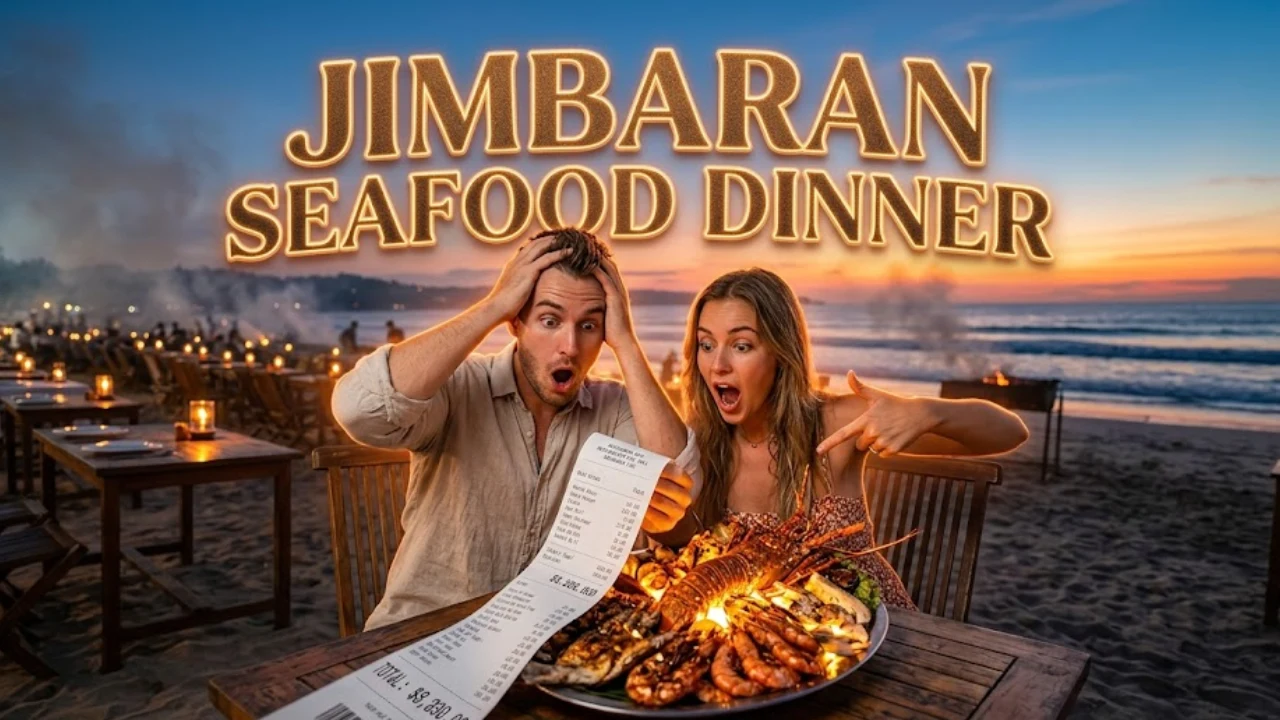
Have you ever pictured yourself sitting at a candlelit table, your toes buried in soft, cool sand, watching the sky explode into brilliant shades of pink and tangerine while dining on massive, freshly grilled lobsters? You’re definitely not the only one. Experiencing a true jimbaran seafood dinner is practically a mandatory rite of passage for anyone visiting the Island of the Gods.
But let’s be completely honest for a second—navigating that endless, chaotic row of smoky beachfront cafes at Jimbaran Beach Bali can feel incredibly overwhelming. How do you know if you’re actually getting a fair, honest price per gram, or if you’re just another victim of the dreaded “tourist tax”? Are the scales rigged? Will the driver demand a massive hidden commission from the restaurant?
After spending countless evenings exploring every hidden corner of this legendary coastline, I’ve learned exactly how the system works. I’ve made the mistakes so you don’t have to. In this deeply comprehensive guide, I’m pulling back the curtain on everything you need to know. We’re going to break down transparent pricing, decode the local fish market hustle, and seamlessly integrate this magical evening into your ultimate bali honeymoon itinerary. Grab a coffee, get comfortable, and let’s plan the perfect romantic escape.
The Anatomy of a Jimbaran Seafood Dinner

If you’ve never been, it’s crucial to understand that dining here is not just about consuming food; it’s an intensely immersive, multi-sensory cultural event. You aren’t just walking into an air-conditioned room and pointing at a paper menu. You are participating in a local tradition that has evolved over decades, transforming a humble fishing village into a globally recognized culinary hotspot.
Before you even take a bite, you need to understand the mechanics of what makes the food here so completely unique compared to any other seafood you’ve eaten around the world.
The Authentic Beachfront Vibe
Imagine a massive, crescent-shaped bay where the ocean is relatively calm and the sand stretches for miles. As the afternoon fades, the local warungs (cafes) begin hauling hundreds of wooden tables and plastic chairs directly out onto the beach, setting them up just mere steps from where the gentle waves break on the shore.
The atmosphere is beautifully raw and vibrant. You’ll hear the constant, rhythmic crashing of the tide mixed with the chaotic sizzle of dozens of grills firing up simultaneously. Wandering acoustic musicians often stroll between the tables, serenading couples with classic love songs, while the distinct, mouth-watering aroma of garlic, chili, and burning coconut shells drifts heavily through the warm evening air. It’s a beautifully unpretentious, laid-back vibe that forces you to immediately slow down, kick off your sandals, and sink your bare feet into the sand while you wait for your feast.
The Traditional Coconut Husk Grill Method
The absolute secret weapon of a Jimbaran feast lies in the fiercely traditional cooking methodology. You won’t find standard Western charcoal briquettes or propane gas grills here. Instead, the local chefs exclusively utilize massive piles of dried coconut husks (sabut kelapa) to fuel their open-flame grills.
Why coconut husks? It’s simple physics and flavor chemistry. Coconut husks burn at an exceptionally high, intense heat, which is absolutely critical for rapidly searing the seafood to lock in its natural moisture. More importantly, as the husks burn, they release incredibly thick, aromatic plumes of smoke that deeply permeate the flesh of the fish, imparting a distinct, slightly sweet, and heavily charred flavor profile that simply cannot be replicated by any other fuel source.
The culinary process itself is a mesmerizing art form. Once you select your fresh catch, it is expertly cleaned, heavily scored to allow maximum flavor penetration, and then slathered in a traditional, highly guarded Balinese spice paste known as bumbu rajang. This potent base marinade typically features a vibrant blend of crushed garlic, turmeric, fresh ginger, shallots, coriander seeds, and local bird’s eye chilies.
As the seafood hits the blistering heat of the coconut fire, the chefs continuously baste it with a customized mixture of sweet Indonesian soy sauce (kecap manis), a touch of honey, and a squeeze of fresh lime. The sugars in this basting liquid hit the extreme heat and trigger a rapid Maillard reaction, creating a sticky, caramelized, and slightly charred crust on the outside, while the interior remains incredibly tender and juicy. When the plate finally arrives at your table, it is traditionally served alongside a generous mound of steaming white rice, plecing kangkung (water spinach tossed in a fiery chili and shrimp paste dressing), and an array of crucial local dipping sauces like the legendary sambal matah—a raw, fragrant salsa made of finely diced shallots, lemongrass, kaffir lime leaves, and hot coconut oil.
Why This Belongs in Your Bali Honeymoon Itinerary
If you are traveling to Bali with your significant other, you are likely bombarded with a million different recommendations for romantic activities. You might be debating whether to book a cliffside dinner in Uluwatu, a jungle retreat in Ubud, or a beachfront party in Seminyak.
While all of those are fantastic, there is a very specific reason why this particular dining experience is consistently ranked as the ultimate romantic evening on the island.
The Golden Hour Sunset Magic
Timing is absolutely everything on this island, and Jimbaran is geographically blessed with a direct, unobstructed west-facing view over the Indian Ocean. This orientation means that every single evening, diners are treated to one of the most spectacular, fiery sunsets on the planet.
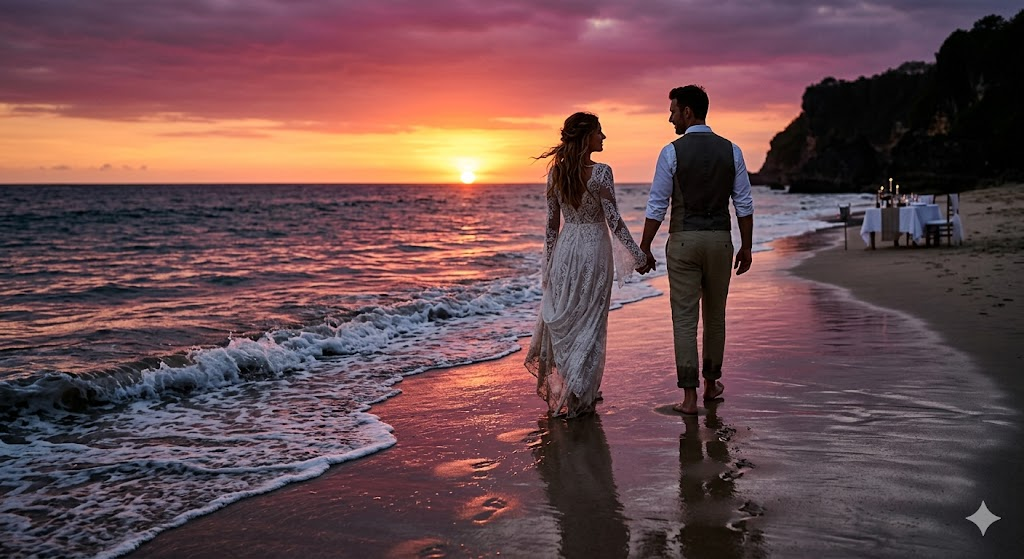
The “Golden Hour” here is not just a passing phase; it is a profound visual transformation. If you time your arrival perfectly (which we will cover in detail later), you will watch the sky shift from a brilliant, piercing blue into deep, saturated layers of gold, magenta, pink, and eventually a deep, bruising purple. Sitting there with your partner, sharing a plate of grilled prawns as the sun literally dips below the horizon line, casting long reflections across the wet sand, is the kind of cinematic moment that defines a honeymoon. It’s the visual aesthetic that every travel magazine tries to capture, but you get to live it in real-time.
Unforgettable Romantic Ambiance
The local restaurant operators are highly aware of their primary demographic, and they lean heavily into engineering the perfect romantic atmosphere. While the standard setup of a table on the beach is already beautiful, many of the more reputable venues offer specialized, highly curated experiences designed specifically for couples celebrating anniversaries, proposals, or honeymoons.
For a very reasonable premium, you can completely elevate the evening. We are talking about private, cordoned-off sections of the beach featuring professional, heavy-linen tablecloths, intricately carved sand art (usually in the shape of a massive heart surrounding your table), scattered fresh flower blossoms, dozens of flickering candles, and traditional Balinese ceremonial parasols and flags framing your view. Some venues even offer private, traditional Balinese dance performances right on the sand next to your table as you sip your welcome drink. It is this level of dedicated, atmospheric curation that turns a simple meal into an unforgettable, core memory of your trip.
World-Class Freshness from Ocean to Plate
Beyond the romance and the aesthetics, the fundamental reason this experience is so highly sought after is the sheer, undeniable quality of the ingredients. You are not eating seafood that has been flash-frozen, packed in industrial plastic, and shipped halfway across the world in a cargo container.
The geographic reality of this bay means that the fish on your plate was likely swimming in the deep waters of the Indian Ocean just hours before you sat down to eat. The local jukung (traditional outrigger boats) head out into the dark waters overnight and return at dawn to offload their catch directly onto the beach at the legendary Kedonganan Fish Market, located right in the center of the bay. The restaurants lining the beach source their daily inventory directly from this market. When you walk up to the chilled display cases at the front of your chosen cafe, you are looking at the absolute freshest red snapper, massive king prawns, vibrant squid, and live mud crabs available anywhere in Southeast Asia. It is a true, literal translation of the “ocean-to-plate” philosophy.
How to Curate the Perfect Bali Honeymoon Itinerary
Alright, let’s get into the actionable logistics. You can’t just stumble onto the beach at 8:00 PM and expect a flawless, magical evening. Like anything truly worthwhile, a perfect jimbaran seafood dinner requires a bit of strategic planning and insider knowledge.
If you want to experience this without the stress, you need to follow a highly specific set of steps to ensure you hit the right location, at the right time, with the right pricing structure.
Step 1: Choose Your Vibe (Muaya vs. Kedonganan vs. Kelan)
One of the biggest misconceptions tourists have is thinking that “Jimbaran” is just one single, uniform beach. In reality, this massive coastline is subtly divided into three very distinct geographic sectors, each catering to a completely different demographic and offering a vastly different vibe. Choosing the right sector is the foundation of your evening.
1. Muaya Beach (The Luxurious South) Located at the far southern end of the bay, Muaya Beach is the undisputed epicenter of high-end luxury. This strip is heavily anchored by internationally renowned, massive five-star resorts like the Four Seasons Resort Bali at Jimbaran Bay and the InterContinental Bali Resort. If you want a highly sanitized, incredibly refined experience without the intense smoke of the traditional coconut grills or the chaotic energy of plastic chairs in the sand, this is your spot. Venues here, such as Sundara at the Four Seasons, offer a massively elevated, fine-dining interpretation of the seafood barbecue, featuring imported Wagyu beef, Sturia Vintage Caviar, and craft cocktails. The service is impeccable, the privacy is unparalleled, but be prepared for a massive premium; dining in this luxury enclave will easily cost upwards of IDR 1,000,000 to over IDR 2,500,000+ per person.
2. Kedonganan Beach (The Authentic, Chaotic Center) Moving north to the middle of the crescent, you hit Kedonganan Beach. This is the historic, beating heart of the local seafood trade, home to the massive Kedonganan Fish Market (Pasar Ikan Kedonganan). This is where the vast majority of the famous, traditional seafood cafes are clustered. The vibe here is completely unpretentious, incredibly high-energy, very smoky, and profoundly authentic. It’s significantly more crowded than the south, favored by large domestic tour groups and travelers seeking an energetic atmosphere. The prices here are significantly more competitive, offering excellent value if you know how to negotiate and what to look for.
3. Kelan Beach (The Hidden, Serene North) Tucked away at the absolute northernmost point of the bay, right next to the runway of the Ngurah Rai International Airport, is Kelan Beach. For years, this area was completely overlooked by tourists, but it has recently emerged as the ultimate “hidden gem” for couples. Kelan offers a brilliant compromise: it provides the serene, quiet oceanfront experience and authentic food of Kedonganan, but without the chaotic, shoulder-to-shoulder crowds. Venues here, like the highly reputable Bawang Merah Beachfront Restaurant, are famous for their transparent pricing and phenomenal romantic setups. As a massive bonus, you get to watch airplanes dramatically taking off and landing over the water while you eat, providing incredible, dynamic photo opportunities against the sunset.
Step 2: Time Your Arrival for the Perfect Sunset
I cannot stress this enough: arriving at the right time is the single most important variable for this entire experience. If you arrive too late, you miss the entire visual spectacle, and you’ll be eating your expensive lobster in total darkness.
Depending on the month, the sun typically sets in Bali between 6:15 PM and 6:45 PM. Therefore, you need to firmly plan to arrive at the beach and secure your table no later than 5:30 PM. Arriving early serves three massive logistical purposes :
- You get the best seat: The front-row tables closest to the water are strictly first-come, first-served. If you arrive at 6:30 PM, you will be seated four rows back, staring at the backs of other tourists’ heads.
- Stress-free ordering: It gives you plenty of time to calmly approach the iced seafood displays, carefully select your fish without feeling pressured by a massive line behind you, and negotiate the price.
- The transition: You get to comfortably sip a cold Bintang or a fresh coconut while watching the sky slowly transition from bright blue to the stunning golden hour hues as your food cooks.
Step 3: Pick the Right Seafood Package
When you sit down, you essentially have two ways to order: the “A La Carte / By Weight” method, or the “Set Package” method. For tourists, especially those on a romantic trip who don’t want to ruin the mood by aggressively haggling over the price of a squid, Set Packages are vastly superior.
Reputable restaurants have carefully engineered these packages to provide a massive, visually impressive feast at a fixed, predictable cost. Here is a rough breakdown of what you can expect based on late 2024/2025 market pricing :
- The Basic Budget Set: For around IDR 120,000 to IDR 250,000 per person (approx. USD $7–$15), you usually get a modest 300g grilled snapper, a few skewers of squid, some clams, steamed rice, plecing kangkung vegetables, and basic sambals.
- The Standard Platter: This is the sweet spot for most couples. Ranging from IDR 250,000 to IDR 500,000 per person (approx. USD $15–$30), these platters significantly expand the protein, adding massive king prawns, whole grilled mud crabs, and larger portions of high-quality fish.
- The Premium Lobster Package: If you want the ultimate indulgence, you need a package featuring local lobster. For example, the massive “Royal Family” package at Kelan Beach venues costs roughly IDR 2,625,000 for two people (approx. USD $160). It includes a massive 1kg grilled lobster, 10 giant king prawns, 400g of calamari, a 1kg whole fish, 600g of crab, all the sides, and a full bottle of house wine.
Step 4: Pair with Uluwatu and the Kecak Dance
To make this the ultimate day on your bali honeymoon itinerary, you shouldn’t just drive from your hotel straight to dinner. Geographically, Jimbaran sits right at the neck of the Bukit Peninsula, making it the absolute perfect, logical endpoint to a half-day exploration of the southern cliffs.
The most legendary, highly optimized itinerary follows this exact chronological flow :
- 3:00 PM: Get picked up from your hotel in Seminyak, Canggu, or Ubud.
- 4:30 PM: Arrive at the majestic Uluwatu Temple (Pura Luhur Uluwatu). Spend an hour exploring this ancient Hindu sea temple perched precariously on a sheer cliff 70 meters above the crashing waves of the Indian Ocean.
- 6:00 PM: Take your seats in the adjacent open-air amphitheater for the famous Kecak Fire Dance. As the sun sets behind the performers, you’ll watch a mesmerizing, trance-like retelling of the Ramayana epic, powered entirely by the rhythmic, a cappella chanting of dozens of local men.
- 7:30 PM: Hop back in your car and make the short, easy drive down the hill to Jimbaran Beach. While you will miss the actual sunset at the beach, the lingering twilight glow, the cool ocean breeze, and the massive seafood feast serve as the perfect, deeply romantic conclusion to the night.
Advanced Tips for the Best Jimbaran Seafood Dinner
If you really want to flex your travel muscles and experience the beach like an absolute pro, consider utilizing one of these two highly advanced strategies, depending on your personality type.
Master the “Pick and Grill” Fish Market Hustle
Are you highly adventurous, deeply budget-conscious, and unafraid of a little chaos? If so, you can completely bypass the polished beachfront cafes and dive headfirst into the raw, sensory overload of the Kedonganan Fish Market.
Here is how the local DIY hustle works:
- The Purchase: Walk directly into the wet market (wear closed-toe shoes, the floor is wet and smells intensely of fish). Approach the vendors and negotiate hard for your raw ingredients. A whole 500g snapper will cost roughly IDR 80,000–150,000/kg. Huge tiger prawns are IDR 100,000–300,000/kg, and premium live lobster fluctuates between IDR 200,000 and IDR 800,000/kg.
- The Cleaning: The vendor will scale, gut, and clean the fish right in front of you, packing it in a plastic bag.
- The Grilling: Walk out of the market and head down the street to the cluster of small, highly localized warungs. Hand them your bag of raw seafood. For a remarkably cheap, flat service fee of just IDR 20,000 to IDR 50,000 per kilogram (about USD $1.50–$3.50), they will take your fish, marinate it in their secret spices, and grill it perfectly over coconut husks for you. You pay a tiny bit extra for rice and drinks.
It is incredibly cheap, outrageously delicious, and a massive cultural flex, but it definitely lacks the refined, clean romance of the seated beachfront cafes.
Book an Exclusive Romantic Table Setup
If the fish market hustle sounds like a nightmare, and you want extreme, polished luxury, you need to proactively contact a reputable venue (like Bawang Merah at Kelan Beach) at least 24 hours in advance to book their “Exclusive Romantic Table”.
For a flat fee of IDR 800,000 (roughly USD $50), the staff will cordon off a private section of the sand just for you. They will build a massive, intricate heart out of sand, fill it with glowing candles and flower petals, set up traditional Balinese umbrellas, and provide a welcome drink. This fee does not include the food, but the psychological impact, the profound sense of privacy, and the jaw-dropping photos it produces are worth every single penny for honeymooners.
Common Tourist Traps That Will Ruin Your Night
Let’s get serious for a moment. Where there are thousands of tourists, there are people looking to exploit them. The massive commercialization of Jimbaran has created a shadow economy of scams that you must actively avoid.
Here is exactly how they try to get you, the devastating impact it has on your wallet, and exactly how you avoid it:
| Kesalahan (The Trap) | Dampak (The Impact) | Cara Menghindari (The Solution) |
| The Driver Commission Scam | You ask a freelance taxi driver for a recommendation. They drive you to a specific restaurant. That restaurant secretly pays the driver a massive 30% to 50% commission kickback. To cover this loss, the restaurant wildly inflates the price of your food, gives you smaller portions, or serves inferior fish. | Never let a random driver choose your restaurant. Do your own research, pick a reputable spot, and use a standardized ride-hailing app like Grab or Gojek to get there. Better yet, book an all-inclusive tour package. |
| Rigged Analog Scales | You go to pick out your fish by weight. The restaurant uses an old, rusty analog scale that is intentionally miscalibrated to read significantly heavier than the actual weight of the fish. They might claim a medium squid weighs a full kilogram. | Only eat at venues that proudly display modern, digital scales in plain sight. Always ask the staff to give you a rough, written total price calculation before they transfer the seafood to the grill. |
| The 21% Hidden Tax Shock | You carefully calculate your meal based on the menu prices, expecting to pay IDR 500,000. When the bill arrives, it’s magically over IDR 600,000. | Welcome to the Bali 21% Government Tax and Service Charge. Always look at the bottom of the menu to see if prices are “Nett” (tax included) or “Subject to 21% tax and service”. Factor this into your mental budget beforehand. |
FAQ – Your Biggest Jimbaran Questions Answered
How much does a seafood dinner in Jimbaran cost?
It entirely depends on your comfort level and how much luxury you demand. If you do the DIY Kedonganan Fish Market hustle, you can eat like a king for under IDR 150,000 (USD $10). If you sit at a standard, reputable beachfront cafe and order a huge mixed platter with crab and prawns, expect to pay between IDR 250,000 and IDR 500,000 per person (USD $15–$30). If you want a massive live lobster at a luxury resort, you are easily looking at IDR 1,000,000 to IDR 2,500,000+ per person.
Are there non-seafood or vegetarian options?
Absolutely! While the area is famous for marine life, almost every reputable cafe offers alternatives. The menus typically feature excellent Balinese chicken satay (sate ayam), massive plates of vegetable fried rice (nasi goreng), stir-fried noodles (mie goreng), and rich, coconut-milk vegetable curries. You won’t go hungry if fish isn’t your thing.
Read also:
- The Ultimate Bali Temple Tour & Cultural Tour Packages 2026: A Complete Guide
- Bali Honeymoon Package 4 Days 3 Nights: VIP Romantic Trip
Conclusion
At the end of the day, a jimbaran seafood dinner is so much more than just a meal—it is a deeply immersive, sensory experience that perfectly captures the magic of Bali. Yes, you have to be smart about avoiding the rigged scales and the sneaky driver commissions, but once you sit down, feel the sand between your toes, and taste that incredible, smoky coconut-grilled snapper as the sun dips into the ocean, all of that logistical stress simply melts away. It is the absolute crown jewel of any proper honeymoon.
Enjoy a hassle-free romantic evening. Bali Agung Tours partners with the most reputable Jimbaran beachfront restaurants, ensuring fresh seafood and honest pricing.
Have you ever tried the DIY fish market hustle, or do you prefer the luxury setups? Drop a comment below and share your favorite Jimbaran memory—I read and reply to every single one! If you found this guide helpful, share it with that friend who is currently stressing over their Bali itinerary!