Honestly, I used to think putting together a holiday itinerary in Bali was super easy. Just rent a scooter, open Google Maps, and go. But after diving into regular travel for over a decade, it turns out the reality on the ground is much more complex—especially if you’re planning to visit an iconic destination like Tanah Lot during rush hour. The horrific traffic jams from Seminyak or Canggu, fluctuating weather, and miscalculating the ocean tides can easily turn your dream vacation into a frustrating and exhausting episode.
Here’s the thing: most people just show up at Tanah Lot hoping to catch a sunset, without realizing that Bali’s nature has its own rhythm that you need to understand. In this article, I’m going to uncover all the secrets rarely known by average tourists, from how to read the tide forecast (which is crucial for temple access), an honest comparison of the Kecak Dance performances, to crafting the perfect bali day trip. Of course, I’ll also share the most important life hack I always use: why deciding to hire private driver bali is the best investment for your sanity. Let’s break it down so you don’t have to go through the annoying trial-and-error phase!
Uncovering the Deep Charm of Tanah Lot Temple Bali
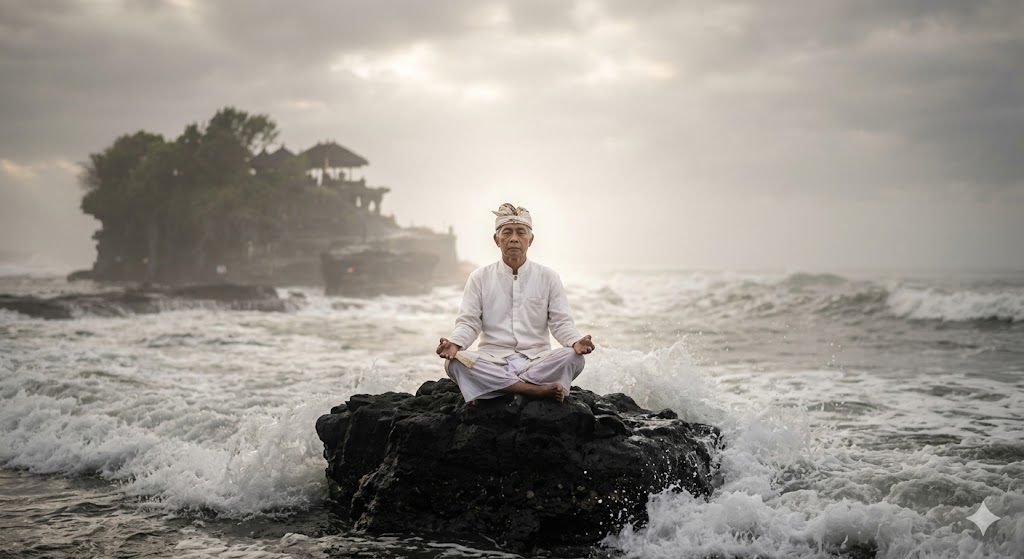
Before we discuss technical things like logistics and transportation, we first need to understand why tanah lot temple bali is so revered, both by locals and international tourists. This isn’t just a pile of coral rocks with an aesthetic ocean view; it’s an epicenter of spirituality with deep historical roots stretching back to the 15th century.
The Footsteps of Bhagawan Dang Hyang Nirartha
If we rewind the clock back to the 15th century (around 1500 AD), the spiritual landscape of Bali was undergoing a massive transformation. According to local literature and legends, the history of the temple is inseparable from the figure of Bhagawan Dang Hyang Nirartha, also known as Dang Hyang Dwijendra. He was a highly respected Hindu priest who made a holy journey from Java to Bali with the mission of spreading and strengthening Hinduism.
During his journey along the southwest coast of Bali, Nirartha saw a holy light shining brightly from the southern sea. Following the magical glow, he arrived at a village called Beraban in the Tabanan area, where he found a massive rock formation resembling a parrot, slightly separated from the mainland. Feeling a massive spiritual energy there, Nirartha decided to meditate on that rock.
However, the local leader at the time, Bendesa Beraban Sakti, strongly opposed Nirartha’s teachings and tried various ways to expel him. Through his high spiritual power, Nirartha successfully defended his position and even convinced the local leader to embrace Hinduism. Before leaving, Nirartha instructed the villagers to build a holy shrine on the rock to worship the sea god, Dewa Baruna. This holy place slowly evolved into Pura Tanah Lot, which literally translates to “Land in the Sea”.
The Legend of the Sacred Sea Snakes (Banded Sea Kraits)
One thing that makes Tanah Lot so unique is the acculturation between mythology and real ecology. According to a legend that is still believed to this day, when Nirartha was about to leave the village, he performed a miracle to ensure the newly built temple remained safe from evil forces. He took off the sash (selendang) tied around his waist and threw it into the open ocean. Instantly, the cloth transformed into a giant venomous sea snake tasked as the eternal guardian of the temple.
Interestingly, this myth manifests in biological reality! If you visit Tanah Lot today, especially during low tide, you can actually see real black-and-white banded sea kraits nesting in the crevices of the coral caves at the base of the temple. This species is highly venomous, but they are known to be quite passive and rarely attack humans unless threatened. Locals and pilgrims highly respect these snakes, treating them as direct descendants of the sacred snake created by Dang Hyang Nirartha.
The Magic of the Holy Spring & Purification Ritual
Behind the magnificent multi-tiered roofs (meru) soaring into the sky, Tanah Lot holds a geological anomaly that is considered a divine miracle. Right at the base of the rock that gets slammed by the salty waves of the Indian Ocean every day, a natural, crystal-clear freshwater spring flows. While science might explain this through land hydrology, to the Balinese people, this is Tirta Suci (holy water) gifted by the gods.
The existence of this spring makes Tanah Lot a primary epicenter for the Tirta Yatra tradition, a holy pilgrimage to cleanse oneself. The great news is this purification ritual is open to everyone; international and domestic tourists from various backgrounds are welcome to participate, as long as they follow the etiquette and dress modestly.
When you approach the spring, a Hindu priest will welcome you. The procession is incredibly calming: you wash your face and hands with the cool freshwater, and then the priest will sprinkle holy water on your head while chanting a prayer for your safety. The ritual concludes with the priest pressing a few grains of rice onto your forehead, symbolizing purity and devotion. Honestly, feeling the splash of holy water on your forehead while listening to the crashing waves in the background is a powerful, cathartic experience that washes all your stress away.
Understanding the Tide Forecast at Tanah Lot
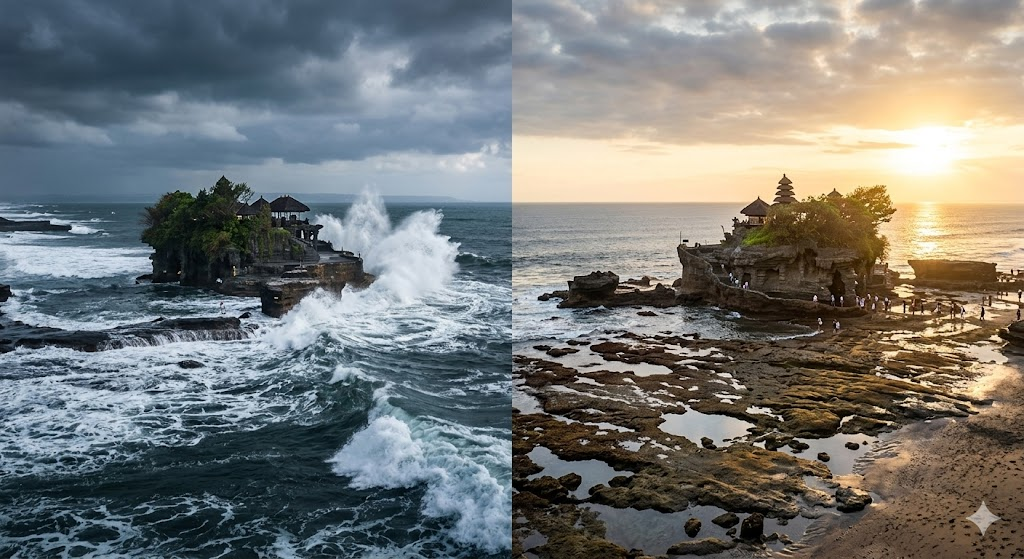
Now, pay close attention to this part. Most tourists think visiting Tanah Lot is as simple as showing up, buying a ticket, walking to the beach, and snapping a photo. This misconception often leads to huge disappointments. Unlike temples situated in the highlands, the topography and accessibility of tanah lot temple bali are completely controlled by the ocean’s gravitational tides. This is why understanding the tide forecast is crucial.
Why the Tide Forecast is Your Key to Success
Every six hours, the Indian Ocean experiences extreme water level fluctuations. This phenomenon literally transforms the geography of Tanah Lot from a coral peninsula you can walk across, into an isolated island trapped by ferocious waves. If you don’t sync your arrival time with nature’s schedule, you lose control over what kind of experience you’ll get.
- High Tide Dynamics: When the tide is high, the natural coral bridge connecting the mainland to the temple’s base is completely submerged by deep, choppy water. During this phase, access to the temple base, the snake cave, and the holy spring is totally closed for safety reasons. Does this mean your visit is ruined? Absolutely not. During high tide, Tanah Lot shows its most dramatic side. From the safety of the mainland cliffs, you’re treated to a spectacular view of the giant temple appearing to float and withstand the explosive ocean waves.
- Low Tide Dynamics: Conversely, when the tide recedes, the ocean pulls back, exposing a vast, jagged coral floor. This is the highly recommended time for tourists wanting direct interaction. You can walk across the volcanic rocks right up to the temple’s base. Most importantly, it’s only during low tide that you can access the sacred snake cave and join the purification ritual at the freshwater spring.
The rarest and most sought-after combination by seasoned travelers is when the lowest point of the tide perfectly coincides with sunset. This magical moment allows you to stand very close to the temple, surrounded by shallow tide pools that reflect the orange sky like a giant mirror.
Recommended Tide Forecast Apps for Tourists
In this digital age, you don’t need to guess or rely on local fishermen’s instincts. Armed with your smartphone, you can plan your tanah lot sunset tour with military precision. Here are some reliable apps and websites that my favorite tour guides and I always use:
- My Tide Times: This is my ultimate secret weapon. It supports over 9,000 tidal stations worldwide and offers a super clean interface. Its best feature is the ability to store data offline. The internet signal around Tanah Lot’s cliffs can sometimes be spotty, so having offline access to daily tide predictions, moon phases, and wind speeds is a lifesaver.
- Tide-Forecast.com (TidePro): If you’re the type to plan vacations way in advance, this website and its official app are very powerful. They provide high-accuracy 30-day tide graphs. They also integrate weather forecasts, temperatures, and wave heights.
- Bali Tide Forecast: Available on iOS and Apple Watch, this app is specifically designed for Indonesian waters. It gives you a free 30-day tide prediction, wave, and wind forecast, making it a favorite for both temple-goers and surfers in Canggu and Seminyak.
Pro Tip: Since Tanah Lot doesn’t always have its own specific tidal station on global apps, you can use the observation data for Seminyak. They share the same southwest coastline, so the tide times are practically identical. For example, if you visit in mid-April 2026, the sunset will happen around 6:15 PM. If you check your app and see the water level hitting its lowest point (around -0.05 meters) at exactly 6:08 PM , congratulations! You’ve just hit the absolute jackpot for perfect natural conditions.
Why the Tanah Lot Sunset Tour is Bali’s Crown Jewel
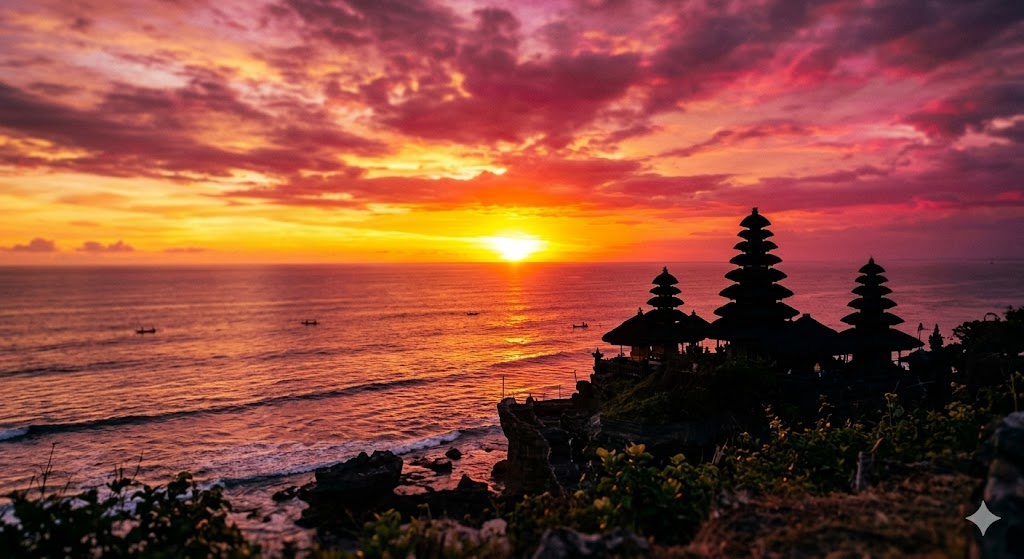
Beyond the spiritual and geological aspects, let’s talk about the main selling point: visual exoticism. Bali has dozens of beautiful beaches, but none offer a theatrical silhouette quite like Tanah Lot. The blend of ancient human architecture and an oceanic sky canvas creates an unparalleled, priceless experience.
The Anatomy of the Perfect Golden Hour
The absolute best period to visit Tanah Lot is during Bali’s dry season, which stretches from April to October. During these months, temperatures range comfortably between 26°C and 31°C, and the skies are generally clear with minimal rainfall.
Around 5:30 PM, the sun starts approaching the horizon of the Indian Ocean. Because of the lack of moisture in the dry season air, the sunlight doesn’t scatter wildly. Instead, it creates an intense spectrum of gold, orange, and magenta—the ultimate golden hour. As the sun slowly dips, the dark volcanic temple transforms into a sharp silhouette contrasting against the blazing sky. This light refraction makes every photo taken at Tanah Lot look like a masterpiece without needing crazy filters.
Compare this to visiting during the rainy season (December to February). Even though the crowds drop significantly, the risk of heavy, thick clouds is very high. The sunset you’ve been dreaming of could easily be blocked by an afternoon storm.
Kecak Fire Dance: Tanah Lot vs Uluwatu
When the orange hues fade and twilight turns to night, the charm of the tanah lot sunset tour isn’t over yet. At the open-air theater within the temple’s cultural park, they hold a daily Kecak Fire Dance performance starting at 6:30 PM. The ticket price is extremely affordable, only 100,000 IDR (about $6.50 USD).
Many tourists face a dilemma: Should I watch the Kecak Dance at Tanah Lot or Uluwatu Temple? Let’s break it down objectively:
| Comparison Aspect | Uluwatu Temple Kecak | Tanah Lot Kecak |
|---|---|---|
| Topography & Setting | Set on a 70-meter vertical limestone cliff. Highly dramatic but can be intimidating. | An open theater near the sea level. A much calmer and serene atmosphere. |
| Crowd Density | Extremely overcrowded. Tickets often sell out, requiring you to book well in advance. | Relatively more relaxed and spacious. Tickets can usually be bought on the spot. |
| Start Time | 6:00 PM. Due to high demand, they often add a second show at 7:00 PM. | 6:30 PM, right after the sun has truly set, providing a seamless evening transition. |
| Overall Vibe | Epic, heroic, and a bit chaotic due to the massive crowds. | Magical, soothing, exclusive, and connected with nature’s spirituality. |
The Verdict: If you’re an adrenaline junkie who loves extreme cliffside views and don’t mind squeezing through crowds, Uluwatu is for you. But, if you want a deep, comfortable, and peaceful end to your day after exploring the ocean floor, the Tanah Lot Kecak Dance wins hands down. The hypnotic “cak-cak-cak” chant from dozens of men, blazing torches in the dark, and the sound of Tanah Lot’s crashing waves in the background is the ultimate recipe for relaxation.
The Perfect Itinerary for a Bali Day Trip
Renting a car just to drive straight to Tanah Lot in the late afternoon is a logistical waste. Geographically, the Badung and Tabanan regencies share a linear cultural route that’s perfect to weave into a solid bali day trip. Based on professional tour agency patterns, here’s a highly efficient half-day itinerary (lasting 6-7 hours):
Step 1: 2:00 PM – Exploring Taman Ayun Temple
Your journey starts with a pickup from your hotel in the southern area (Seminyak/Kuta) right after lunch, around 2:00 PM. The first destination is Taman Ayun Temple in the village of Mengwi. Built by the Mengwi Royal Dynasty, this temple is the perfect antithesis to Tanah Lot.
If Tanah Lot is wild and battered by the open sea, Taman Ayun is the symbol of tranquility and architectural precision. This majestic temple is surrounded by a wide, protective moat. Spending about 45 minutes to an hour here will give you a solid dose of classic Balinese royal history before you transition to the wild coast.
Step 2: 3:30 PM – Greeting the Monkeys at Alas Kedaton
Continuing toward the coast, your car will turn into the village of Kutuh in the Marga district, Tabanan. Here lies Alas Kedaton, a protected monkey forest and sanctuary.
The main attraction here isn’t just the temple, but the hundreds of native long-tailed macaques and giant fruit bats hanging from the canopy. For many travelers, Alas Kedaton is a brilliant alternative to the Ubud Monkey Forest. Because there are fewer tourists, the monkeys here are generally calmer and more docile. Breathing in the fresh oxygen in the middle of this forest is the perfect refresher before facing the coastal crowds.
Step 3: 4:30 PM – Hunting for the Best Sunset Spot at Tanah Lot
Now for the main event. Your car will arrive at the Tanah Lot parking area right before the massive tourist crowds hit (golden rule: always try to arrive by 4:00 PM or 4:30 PM). After exploring the base of the temple (if it’s low tide), the next challenge is securing the best vantage point for the sunset.
Don’t get stuck crowding on the shoreline; immediately head up to the cliffs on the north or south side, which are lined with terraced restaurants. Secure a table at one of these top spots:
- De Jukung Resto & Bar: Located slightly away from the main crowd (about 5 minutes from the main temple area), this restaurant offers an amazing elevated cliff terrace. You get a 180-degree panoramic ocean view facing Tanah Lot. Ordering a fresh seafood platter accompanied by a tropical cocktail while watching the sun go down here is the true definition of holiday luxury.
- Galang Sunset: If you prefer a more authentic and budget-friendly vibe, this warung is a winner. Galang Sunset features an open patio facing Tanah Lot directly. The angle from here ensures you can photograph the entire temple without the heads of hundreds of strangers ruining your frame!
Step 4: 6:30 PM – Kecak Dance & Evening Wrap-up
While you sip the last of your drink on the cliff, the sky will slowly turn dark. This is the perfect time to stroll over to the open theater for the Kecak Dance. This hour-long performance serves as a brilliant transition. Why? Because while you’re engrossed in the show, dozens of giant tour buses and hundreds of cars are gridlocked trying to exit the Tanah Lot parking lot. By staying for the show, by the time you leave around 7:30 PM, the exit roads are much clearer, and you can head back to your hotel comfortably.
Advanced Tips: Why You Must Hire a Private Driver in Bali
Now, let’s address the elephant in the room that tourists often ignore: Bali’s Traffic Infrastructure. This article wouldn’t be complete without a stern warning about this.
The Bitter Reality of Seminyak – Canggu – Tabanan Traffic
Mathematically on paper, the distance from tourist epicenters like Seminyak or Canggu to Tanah Lot is only about 20 kilometers (12 miles). Google Maps might tell you it takes 45 minutes to an hour. Do not be fooled!
In reality, the infrastructure in Badung and Tabanan regencies consists mostly of narrow, two-lane village roads. Starting at 3:00 PM, tens of thousands of tourists from the south simultaneously move toward the southwest coast to chase the exact same sunset. This mass migration triggers severe gridlock traffic, especially at village intersections. In expat forums, the traffic from Seminyak and Canggu is often described as a total nightmare where you might only move a few meters in ten minutes.
Many young tourists try to play the hero by renting a scooter to cut through the traffic. Unless you are a highly skilled rider accustomed to aggressive Southeast Asian traffic, this is a terrible idea. Weaving between trucks, massive tour buses, and stray dogs in the exhausting heat will destroy your holiday mood before you even catch a glimpse of the ocean.
Smart Solutions with Bali Agung Tours (Reviews & Prices)
The only rational and elegant way to mitigate this logistical disaster is to allocate a little budget to hire private driver bali. This isn’t just about renting a taxi; it’s about hiring local navigation expertise, physical safety, and a personal assistant on the ground.
Out of the many transport operators in Bali, Bali Agung Tours consistently emerges as an elite service provider with a phenomenal track record of reviews. They offer clean, air-conditioned cars and—most importantly—talented, English-speaking local drivers.
Why is using their service so vital?
- Secret Route Navigation: Drivers like Agung, Adi, or Kadek Suartika (names frequently praised in 5-star reviews) possess spatial awareness that Google Maps simply doesn’t have. When the main roads are locked up, they know exactly when to detour through quiet, alternative village routes, saving you significant time.
- Mental Peace & Comfort: As noted by clients like Susi Ha, having a reliable driver means you feel safe, and your belongings are secure in a locked car while you explore the temples. You can take a peaceful power nap in the passenger seat, letting the driver battle the chaotic streets.
- Economic Efficiency: Surprisingly, their rates are incredibly value-for-money. For a regular tour package, they charge around IDR 375,000 per car (fits 1-6 people), which includes the private car, petrol, and the English-speaking driver. If you want a completely hassle-free experience, they offer an All-Inclusive package for IDR 450,000 per person (minimum 2 people), which covers the car, petrol, annoying parking fees, entrance tickets, and mineral water.
Paying a few extra dollars to buy your sanity, comfort, and a guarantee that you’ll arrive right on time for the golden hour is an investment you will never regret.
Common Mistakes to Avoid
Based on my observations over the years, tourists consistently repeat the same fatal errors when visiting Tanah Lot. Take note of this list so you don’t become one of them:
| Fatal Mistake | Impact on Your Trip | Solution & How to Avoid |
|---|---|---|
| Ignoring the Tide Forecast | Arriving during high tide. Access to the temple base, snake cave, and holy spring is completely submerged and closed. | Download apps like My Tide Times or check Tide-Forecast.com a day before. Ensure you arrive during low tide. |
| Driving Yourself at Rush Hour | Getting trapped in horrific traffic on the Canggu-Tabanan route. Arriving after dark completely exhausted. | Book a private car from Bali Agung Tours. Let a local driver navigate alternative routes while you relax in the AC. |
| Arriving Too Late (5:30 PM) | Running out of parking space, getting stuck at the ticket counter, and losing your strategic cliff seat for the sunset. | Adjust your itinerary so you pass the entrance gates no later than 4:00 PM or 4:30 PM. |
| Not Bringing Cash | While tickets might accept cards occasionally, parking fees, donations at the spring, and souvenir shopping are strictly cash only. | Withdraw small Indonesian Rupiah bills (like IDR 10,000 and 20,000) from an ATM in Seminyak before leaving. |
| Wearing Swimwear / Too Revealing | You won’t be allowed near the holy areas and risk offending the local culture. | Wear casual but modest clothing (shoulders and knees covered). Bring a sarong in your bag, especially if you plan to join the holy water ritual. |
FAQ – Frequently Asked Questions (2026 Update)
Setting up your budget and understanding the house rules of a tourist site is a must. Here is the most accurate, updated data you need to know:
What is the latest Tanah Lot entrance fee for 2026?
The local government has updated the retribution fees. For international tourists, the entrance ticket is IDR 75,000 (around $5 USD) per adult and IDR 40,000 (around $2.50 USD) for children aged 5-10 years. For domestic tourists (Indonesian citizens), it’s cheaper: IDR 30,000 for adults and IDR 20,000 for kids. Toddlers under 5 years old enter for free. Keep in mind, this ticket is super worth it because it also includes access to Batu Bolong Temple located in the same complex! Prepare exact cash for parking too: IDR 5,000 for a car and IDR 3,000 for a scooter.
What are the operating hours?
The Tanah Lot tourism area is open every day from 7:00 AM to 7:00 PM. If you don’t care much about the sunset and prioritize absolute peace for photography without the crowds, the best time to visit is in the morning between 6:00 AM and 9:30 AM. The morning sunlight shining from the east offers a magical visual effect with much cooler weather!
Can I go inside the main temple?
This is a classic question. The answer is: No. The inner sanctum of Tanah Lot Temple is permanently closed to general tourists. That sacred area is exclusively dedicated to Hindus wearing full traditional attire for prayer. But don’t worry, you are completely free to roam, take photos, and explore the surrounding cultural park, the cliffs, the snake cave, and right up to the bottom stone steps that touch the waves.
Is it safe to bring kids onto the coral rocks?
As long as it’s low tide, the exposed coral rocks are quite safe to walk on, even for kids. However, because the volcanic rocks are jagged, sharp, and covered in slippery green moss in some spots, wearing rubber-soled sneakers or outdoor sandals is highly recommended over standard flip-flops. Always hold your children’s hands and pay attention to safety instructions from the coastal guards on duty.
Read also:
- The Ultimate Bali Temple Tour & Cultural Tour Packages 2026: A Complete Guide
- Uluwatu Sunset Tour 2026: Kecak Tickets & Insider Secrets
- Bedugul & Jatiluwih Rice Terrace Tour: UNESCO Day Trip
Conclusion
There you have it! You now possess the ultimate secret blueprint to execute your vacation to Tanah Lot flawlessly. Combining the mystical knowledge of Balinese Hindu history, the tactical use of tide forecast apps, and crafting a linear route that sandwiches Taman Ayun and Alas Kedaton will elevate your trip from an “average tourist” to a smart traveler. The absolute keys are nailing the timing for the golden hour and avoiding the fatal mistake of torturing yourself in traffic.
Don’t let horrific gridlocks suck the positive energy out of you before you even reach your destination. Navigate the busy roads to Tanah Lot safely. Rent a car with an English-speaking driver from Bali Agung Tours for a relaxing afternoon trip. Sit back in your cool, air-conditioned passenger seat, enjoy the rice paddy views from your window, and let the professionals get you there safely.
Now it’s your turn: out of all the tips above, which one are you most excited to try? Is it checking the tide forecast, or gathering the courage to see the sacred sea snakes? Don’t forget to share this article in your travel group chats if you’re planning a Bali itinerary! Have an amazing time chasing the magic sunset on the Island of the Gods!